.webp&w=384&q=75)

Loading, please wait...
Loading, please wait...
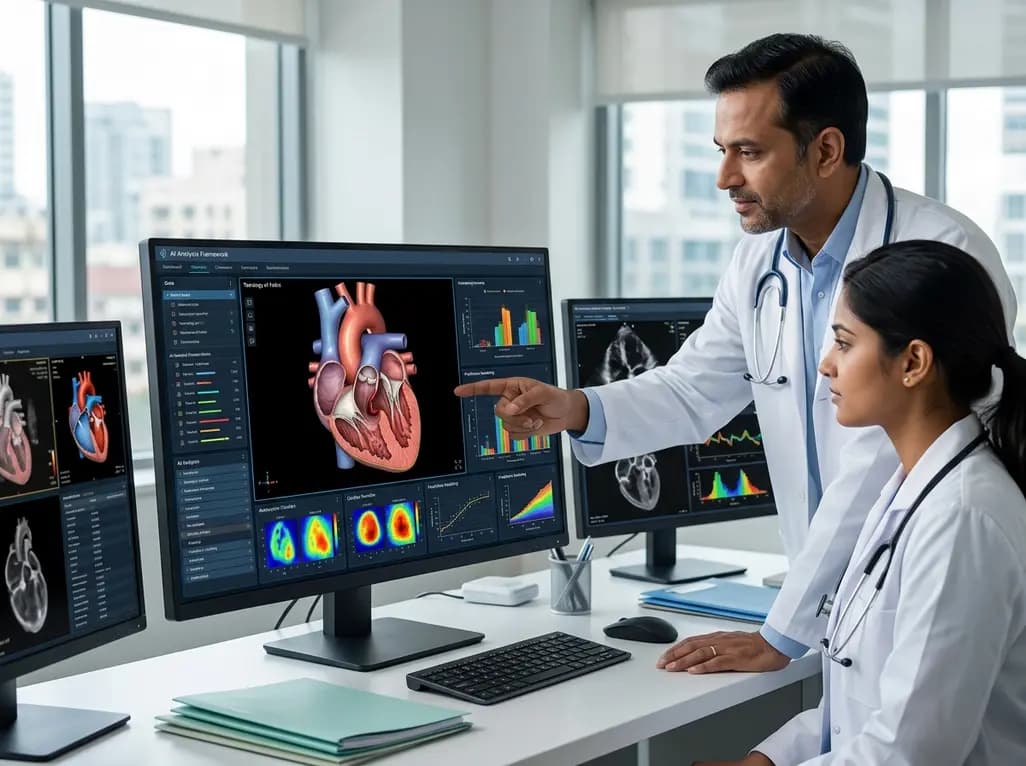
Researchers recently introduced DynaTOF, an innovative automated framework that utilizes AI in TOF diagnosis to improve patient outcomes. Tetralogy of Fallot (TOF) remains a complex congenital heart defect requiring precise preoperative assessment and longitudinal monitoring. This integrated system streamlines the diagnostic process by analyzing echocardiographic data with high precision. Consequently, it represents a major step forward in pediatric cardiology.
The system operates through five specialized modules designed to handle distinct aspects of cardiac assessment. First, it classifies echocardiographic views using a ResNet-18 architecture. Second, it calculates key cardiac diameters through geometric constraints. Third, the multimodal diagnostic module combines video features and physical measurements. This combined approach achieved an accuracy of 0.910, significantly outperforming all single-modality methods.
Beyond initial identification, DynaTOF provides personalized postoperative monitoring. The time-aware prediction module uses a Graph Neural Network to estimate abnormal score dynamics over time. This allows clinicians to differentiate between high- and low-risk patients with high precision. Furthermore, the system helps healthcare providers identify patients who need closer monitoring after surgery. Therefore, it facilitates more tailored and effective clinical care for infants.
Implementing such advanced tools can bridge the gap in specialty care availability. By automating routine measurements and risk assessments, DynaTOF reduces the workload on specialists. Additionally, its high precision in view classification ensures that diagnostic errors are minimized. Specifically, the system holds promise for improving the long-term prognosis of children born with complex heart conditions.
DynaTOF is an end-to-end system that handles both the initial diagnosis and the prediction of postoperative risks. Unlike many tools that focus on single images, it integrates video data and physical measurements for a holistic assessment.
In clinical validation, the multimodal module achieved a diagnostic accuracy of 0.910 and an AUC of 0.989. These results suggest that the AI provides highly reliable support that can surpass traditional single-modality diagnostic approaches.
Yes, the system includes a time-aware prediction module. It uses preoperative data to forecast abnormal score dynamics, helping doctors identify high-risk patients who may require additional interventions.
Disclaimer: This content is for informational and educational purposes only. It does not constitute medical advice or a professional diagnosis. Always seek the advice of your physician or other qualified health provider with any questions you may have regarding a medical condition. Refer to the latest local and national guidelines for clinical practice.
References
Gao Q et al. Echocardiography-based intelligent diagnosis and risk stratification management for tetralogy of Fallot. EBioMedicine. 2026 Jun 04. doi: undefined. PMID: 42241733.
He Y et al. Artificial intelligence in congenital heart disease: Recent advances and future perspectives. Frontiers in Cardiovascular Medicine. 2023. doi: 10.3389/fcvm.2023.1112450.
Tison G et al. New multiview AI architecture improves accuracy of heart disease diagnosis. Nature Cardiovascular Research. 2026 Mar. doi: 10.1038/s44161-026-00451-x.

Read summarized clinical updates, watch expert medical content, and earn CME certifications right from your smartphone.
Open your smartphone camera to scan and install.





DynaTOF is an automated AI framework that enhances the diagnosis, risk stratification, and postoperative monitoring of Tetralogy of Fallot patients....
4 months ago
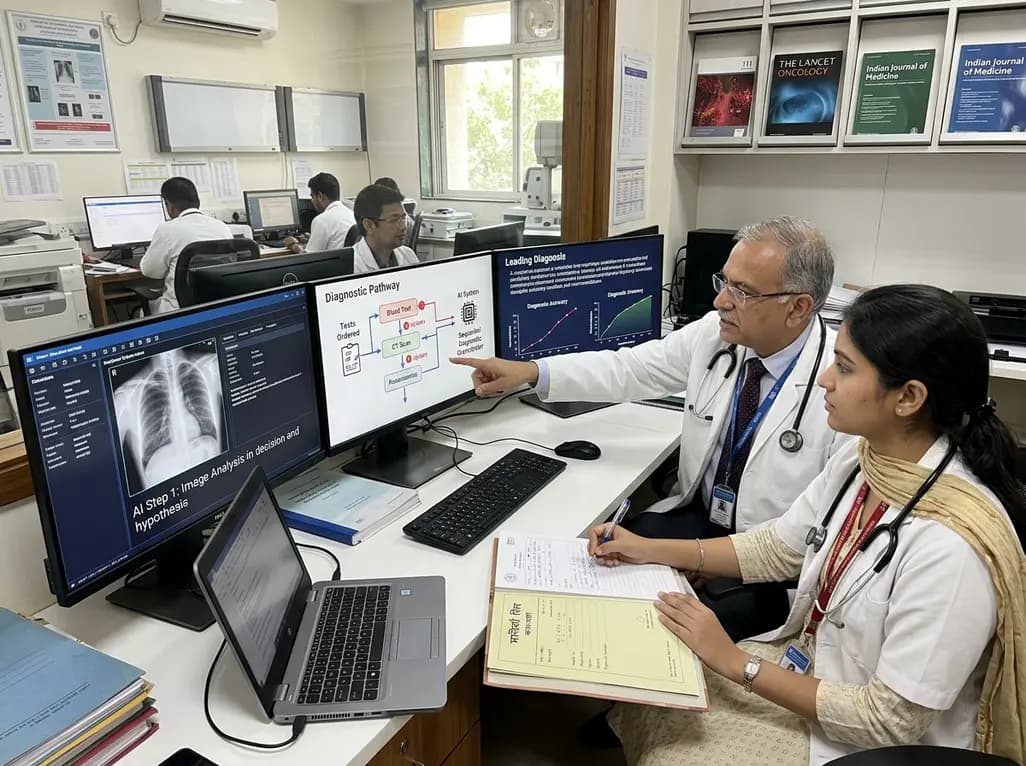
A breakthrough peer-reviewed study demonstrates that a sequential AI diagnosis system can mirror real-world clinical reasoning. By ordering stepwise tests and updating hypotheses dynamically, this multi-agent orchestrator achieved superior diagnostic accuracy while reducing investigative costs.
Today

A prenatal case highlights severe glutaric acidemia type II presenting as bilateral hyperechoic cystic kidneys at 18 weeks. Whole-exome sequencing revealed a novel homozygous ETFDH frameshift variant, demonstrating the power of rapid genetic testing in fetal renal anomalies.
Today

Review how tailored exercise programs benefit frail older patients with heart failure. Explore pathophysiological mechanisms, individualized training prescriptions, and strategies to overcome adherence barriers in clinical practice.
Yesterday

This comparative study evaluates posterior labral tears with and without glenohumeral instability, highlighting distinct demographic patterns, MRI underestimation in stable shoulders, and successful arthroscopic repair outcomes.
Yesterday

A clinical study demonstrates that early intervention with tocilizumab, either as monotherapy or bridged with corticosteroids, achieves significant proptosis reduction and resolves active inflammation in treatment-naive thyroid eye disease.
Yesterday
