.webp&w=384&q=75)

Loading, please wait...
Loading, please wait...

The International Journal of Molecular Medicine recently published an official DTX3L glioma research integrity notice. This Expression of Concern highlights potential data anomalies in a 2017 study regarding the role of DTX3L in brain tumors. While the original paper suggested that DTX3L drives glioma progression, recent observations by a concerned reader have triggered a formal investigation into the scientific accuracy of the reported results.
Specifically, the editorial office identified issues in Figure 2A on page 494. The data panels for Ki-67/Grade III and DTX3L/Grade IV contained an overlapping section. Consequently, this suggests that the images originated from the same source despite representing different experimental groups. Furthermore, the GAPDH control western blots in Figures 1C and 4E appeared strikingly similar. These similarities occurred even though the authors reported different experimental conditions for each figure part.
The editorial office has contacted the authors to request a detailed explanation. However, they are currently awaiting a formal response. In the meantime, the journal issued this Expression of Concern to notify the medical community about these potential problems. Therefore, clinicians and researchers should treat the findings of the original study with caution until the investigation concludes.
Scientific integrity is vital for the development of new oncological therapies. If the data regarding DTX3L upregulation and its correlation with glioma grade are inaccurate, it could mislead future research efforts. Moreover, the duplication of control blots like GAPDH often signals broader issues in laboratory data management. The journal will provide further updates as the investigation continues.
The journal issued the notice because a reader found overlapping image panels in tissue sections and identical western blot controls across different experimental groups, raising concerns about data integrity.
DTX3L was previously identified as a potential biomarker for glioma progression. However, the validity of these findings is currently under question due to the identified anomalies in the original publication.
Medical professionals should consider the findings of the affected study as preliminary or unverified. It is best to wait for the final results of the journal's investigation before applying the data to clinical or laboratory practice.
Disclaimer: This content is for informational and educational purposes only. It does not constitute medical advice or a professional endorsement. Readers should consult original research papers and professional bodies for verification. Refer to the latest local and national guidelines for clinical practice.
References
Xu P et al. [Expression of Concern] DTX3L is upregulated in glioma and is associated with glioma progression. Int J Mol Med. 2026 Jun undefined. doi: undefined. PMID: 41930575.
Xu P, Tao X, Zhao C, et al. DTX3L is upregulated in glioma and is associated with glioma progression. Int J Mol Med. 2017;40(2):491-498. doi:10.3892/ijmm.2017.3023.
Committee on Publication Ethics (COPE). Guidelines for Retracting and Expressing Concern about Research. 2019.

Read summarized clinical updates, watch expert medical content, and earn CME certifications right from your smartphone.
Open your smartphone camera to scan and install.





A 2017 study on DTX3L in glioma faces an Expression of Concern after readers identified overlapping image panels and identical western blot controls....
6 months ago

Recent epidemiological data reveals a dramatic surge in summer heat mortality driven by human-induced climate warming. This analysis explores the pathophysiological impacts on cardiac and renal systems, diagnostic dilemmas in death certification, and essential emergency cooling protocols for acute clinical care.
Today
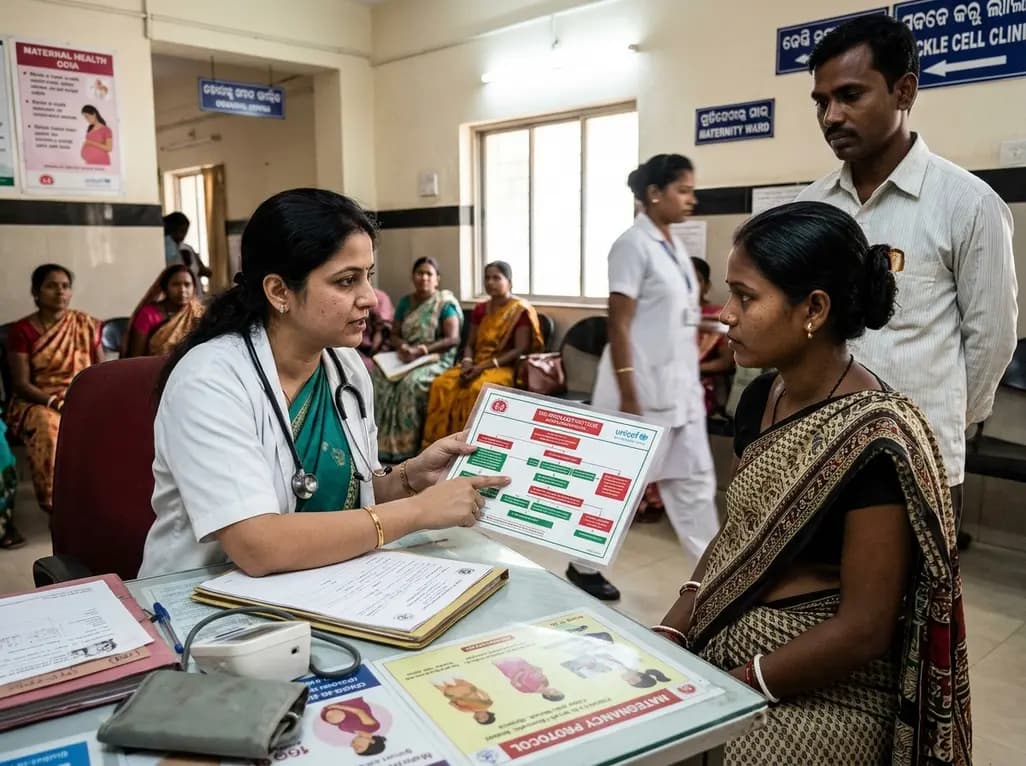
Odisha has established India's first state-level clinical protocol specifically tailored for pregnant women with sickle cell disease. Developed with NHM and UNICEF, the framework provides structured antenatal screening, crisis mitigation, standardized referral pathways, and specialized interdisciplinary care.
Today

India is advancing preventive healthcare by integrating genomics, artificial intelligence, and quantum technologies. With the SANGAM programme sequencing one million Indian genomes, clinicians can unlock personalized therapies, detect cardiometabolic risks early, and curb the burden of diabetes and heart disease.
Today

A randomized controlled trial demonstrates that an eight-week dual-task training intervention significantly improves static and dynamic postural control over standard balance exercises in individuals with chronic ankle instability, addressing critical neurocognitive deficits during athletic and daily activities.
Today

A retrospective cohort study of 7,716 ICU patients from the MIMIC-IV database demonstrates that Gradient Boosting Decision Trees significantly outperform traditional SOFA scores in predicting in-hospital mortality among patients with sepsis and diabetes, with SHAP analysis providing clinical interpretability.
Today
