.webp&w=384&q=75)

Loading, please wait...
Loading, please wait...

Recent clinical findings are expanding the DNM1 encephalopathy phenotype, revealing cases with surprisingly mild presentations. Traditionally, medical literature linked mutations in the DNM1 gene to severe developmental and epileptic encephalopathy (DEE). This classic phenotype often includes intractable epilepsy and profound intellectual disability. However, a new case report describes a female patient with well-controlled seizures and only mild dysmorphic features. This discovery significantly broadens our understanding of how this rare autosomal dominant condition can manifest in diverse ways.
The patient's diagnosis followed trio exome sequencing, which identified a de novo likely pathogenic variant in the GTPase domain. Previously, doctors believed that variants in this specific domain inevitably led to a severe clinical course. Nevertheless, this case demonstrates that some GTPase domain variants allow for a more attenuated phenotype. Because the patient lacks the typical structural brain abnormalities or severe ataxia, clinicians must maintain a high index of suspicion even in milder neurological cases. Consequently, genetic testing plays a vital role in identifying these atypical presentations.
Predicting a patient's future based on their specific genetic mutation remains a complex task. Although certain mutational hotspots usually correlate with severe disability, this case suggests that exceptions exist. Therefore, providing a definitive prognosis based solely on the affected protein domain might be premature. Ongoing research and more case reports will help researchers elucidate the intricate genotype-phenotype correlations within this disorder. Furthermore, these insights may eventually lead to more personalized management strategies for affected individuals.
While the typical phenotype includes severe intellectual disability and refractory epilepsy, newer evidence shows that some patients may present with only well-controlled seizures and mild dysmorphic features.
Historically, mutations in the GTPase and middle domains were associated with severe outcomes. However, recent findings indicate that the DNM1 encephalopathy phenotype can vary significantly, even with variants in these domains.
Disclaimer: This content is for informational and educational purposes only. It does not constitute medical advice and is not a substitute for professional medical judgment. Doctors should consult the full primary research and follow established clinical protocols. Refer to the latest local and national guidelines for clinical practice.
References

Read summarized clinical updates, watch expert medical content, and earn CME certifications right from your smartphone.
Open your smartphone camera to scan and install.





A new case report identifies a mild DNM1 encephalopathy phenotype associated with a GTPase domain variant. This discovery suggests the clinical spectrum is broader than previously recognized, complicating domain-based prognostication but offering hope for more nuanced patient counseling.
4 months ago
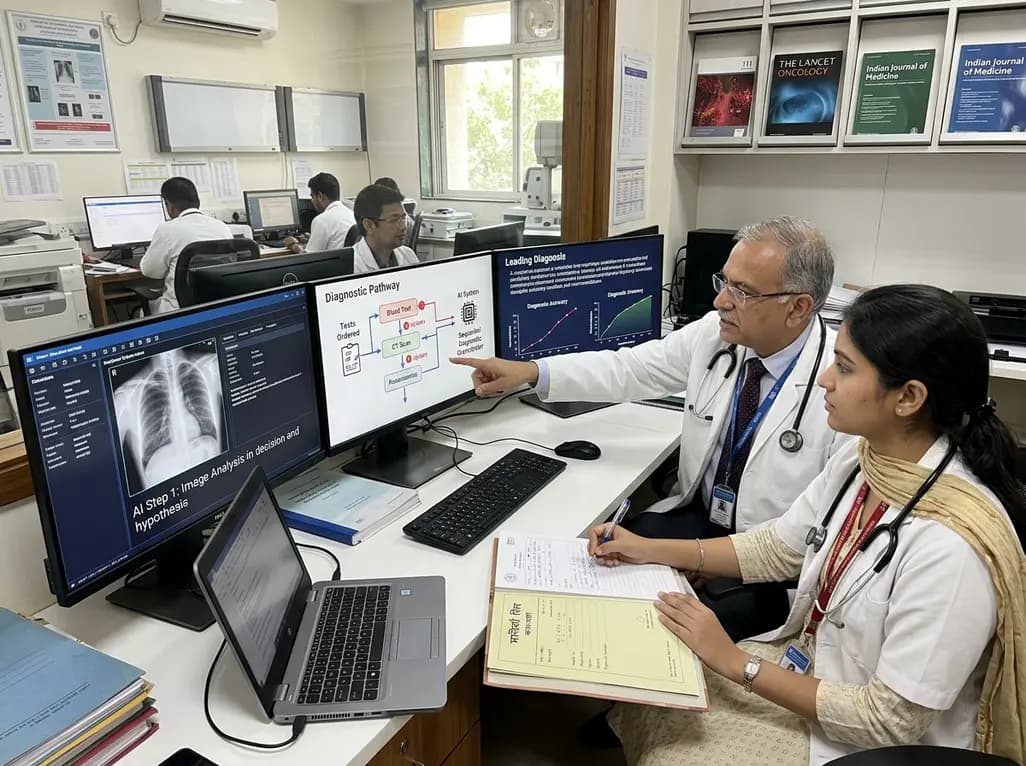
A breakthrough peer-reviewed study demonstrates that a sequential AI diagnosis system can mirror real-world clinical reasoning. By ordering stepwise tests and updating hypotheses dynamically, this multi-agent orchestrator achieved superior diagnostic accuracy while reducing investigative costs.
Today

A prenatal case highlights severe glutaric acidemia type II presenting as bilateral hyperechoic cystic kidneys at 18 weeks. Whole-exome sequencing revealed a novel homozygous ETFDH frameshift variant, demonstrating the power of rapid genetic testing in fetal renal anomalies.
Today

Review how tailored exercise programs benefit frail older patients with heart failure. Explore pathophysiological mechanisms, individualized training prescriptions, and strategies to overcome adherence barriers in clinical practice.
Yesterday

This comparative study evaluates posterior labral tears with and without glenohumeral instability, highlighting distinct demographic patterns, MRI underestimation in stable shoulders, and successful arthroscopic repair outcomes.
Yesterday

A clinical study demonstrates that early intervention with tocilizumab, either as monotherapy or bridged with corticosteroids, achieves significant proptosis reduction and resolves active inflammation in treatment-naive thyroid eye disease.
Yesterday
