.webp&w=384&q=75)

Loading, please wait...
Loading, please wait...

The direct superior approach THA has gained significant traction as a tissue-sparing modification of the traditional posterior approach. Specifically, this technique avoids the iliotibial band and minimizes trauma to the short external rotators of the hip. Consequently, surgeons often implement this method within fast-track protocols to enhance early postoperative recovery and mobility. However, clinical evidence regarding its long-term superiority over traditional methods remains a subject of ongoing investigation among orthopedic experts.
Recent research evaluated fifty primary patients who underwent fast-track surgery utilizing the direct superior approach THA. These procedures integrated short-acting articaine spinal anesthesia to facilitate rapid mobilization within hours of the operation. Notably, the median length of hospital stay was approximately two days. Moreover, patients reported remarkably low in-hospital pain scores, highlighting the effectiveness of the multimodal pain management protocol. Furthermore, most participants expressed high satisfaction with their early recovery phase during the immediate postoperative period.
When comparing results to national registry data, researchers found that the direct superior approach THA yielded excellent patient-reported outcome measures (PROMs). Improvement was clearly evident at both three and twelve months post-surgery across all measured categories. Nevertheless, the study indicated that these outcomes were not clinically superior to those of the traditional posterolateral approach used nationwide. Although the DSA group showed slightly higher absolute scores, the differences lacked statistical significance. Therefore, while the DSA is a safe and effective option for fast-track surgery, it may not offer substantial clinical advantages over established techniques for long-term functional recovery.
The primary benefits include reduced soft tissue trauma, shorter hospital stays, and lower immediate postoperative pain levels. In addition, it preserves the iliotibial band, which can lead to faster early mobilization for many patients.
Early studies suggest that this approach may offer stable results with low dislocation rates due to significant muscle preservation. However, large-scale registry data indicates that the risk remains comparable to the traditional posterolateral approach when performed by experienced surgeons.
Disclaimer: This content is for informational and educational purposes only. It does not constitute medical advice or establish a doctor-patient relationship. Refer to the latest local and national guidelines for clinical practice.
References

Read summarized clinical updates, watch expert medical content, and earn CME certifications right from your smartphone.
Open your smartphone camera to scan and install.





Study compares the direct superior approach (DSA) and posterolateral approach in fast-track THA, focusing on recovery and patient-reported outcomes....
6 months ago

A recent study demonstrates that spinal oxygen sensors do not require mitochondrial electron transport to trigger sympathetic excitation during acute hypoxia, revealing new insights into how mitochondrial oxidative stress modulates autonomic tone in cardiovascular and neurological diseases.
Today

Demanding exhaustive hormonal profiling can inadvertently discourage clinical studies involving females. Methodological standards must align with the specific scientific question to expand, not restrict, equitable evidence for women.
Today

The Directorate General of Health Services directs Indian states to halt the hazardous reuse and reprocessing of single-use medical devices. Discover regulatory implications under the Drugs and Cosmetics Act, critical infection risks, legal liabilities, and operational changes required across clinical specialties.
Today

A novel calcium polyphosphate coacervate enables injectable bone implants with in situ hierarchical porosity via phase separation and gas foaming, significantly enhancing cell proliferation, energy metabolism, and osteogenic differentiation for minimally invasive bone defect repair.
Today
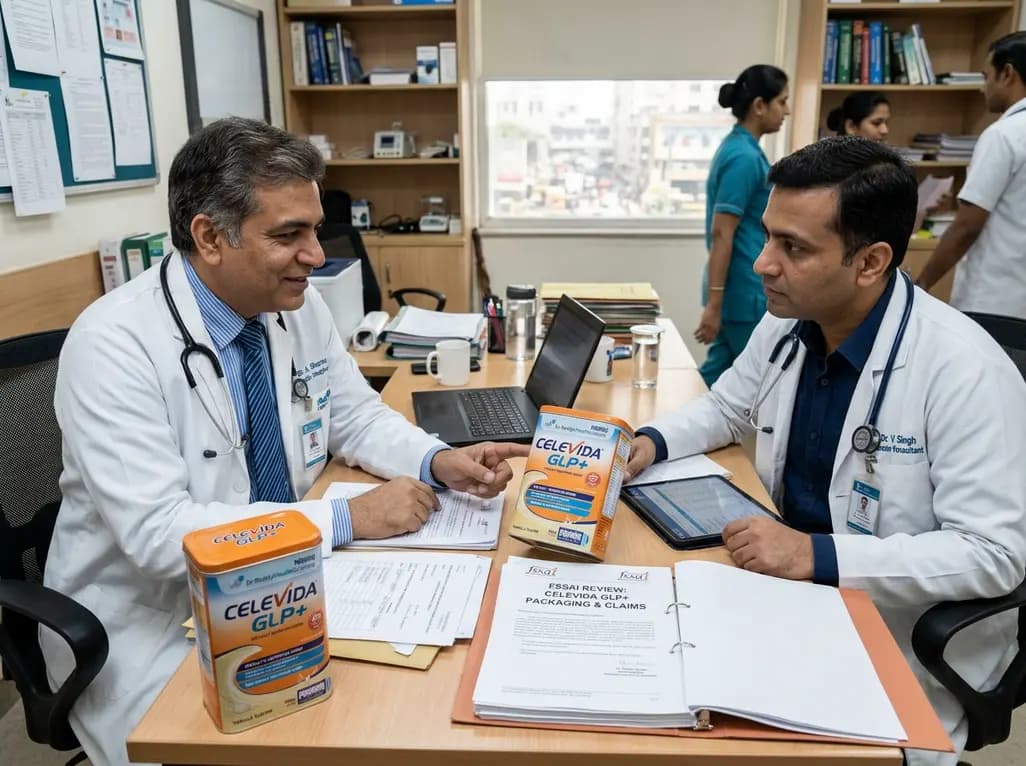
Following regulatory scrutiny from FSSAI regarding promotional representations and lean muscle preservation claims, Dr. Reddy's Laboratories and Nestlé Health Science are currently reviewing the branding and marketing strategy for their joint nutritional supplement Celevida GLP+.
Today
