.webp&w=384&q=75)

Loading, please wait...
Loading, please wait...

Presurgical care for infants with cleft lip often involves complex interventions like NasoAlveolar molding (NAM). While NAM is effective, it requires high caregiver compliance and specialized clinical expertise. Recently, researchers introduced in-house CAD/CAM digital nasal stents as a viable alternative. This innovative approach aims to reduce nasal deformity before primary reconstruction surgery when traditional NAM is not feasible.
The design process utilizes computer-aided design and manufacturing (CAD/CAM) technology. Specifically, a resin-based stereolithography apparatus (SLA) 3D printer fabricates the device. Clinical application involves a series of custom devices delivered alongside lip taping. This combination effectively narrows the alveolar gap while molding the nose. Consequently, surgeons can achieve better symmetry during the primary reconstructive procedure.
Moreover, this method proves highly economical for hospitals and families. Because clinicians can produce these devices in-house, they reduce the overall burden of care. Furthermore, the efficiency of 3D printing allows for rapid adjustments. In addition, digital nasal stents provide a practical solution for patients who cannot undergo full NAM therapy due to underlying medical conditions or logistical challenges.
Digital nasal stents provide a cost-effective and efficient way to improve nasal symmetry before surgery. They require less intensive clinical maintenance than traditional NAM and can be produced quickly using 3D printing technology.
DNS is an excellent alternative when traditional NAM is unsuitable. This might occur due to a lack of experienced NAM clinicians, poor caregiver compliance, or when an infant has underlying medical issues that make oral plates difficult to manage.
Disclaimer: This content is for informational and educational purposes only. It does not constitute medical advice or a professional relationship. Always seek the advice of a qualified healthcare provider for any questions regarding a medical condition. Refer to the latest local and national guidelines for clinical practice.
References

Read summarized clinical updates, watch expert medical content, and earn CME certifications right from your smartphone.
Open your smartphone camera to scan and install.





In-house CAD/CAM digital nasal stents offer a cost-effective alternative to traditional NAM for molding nasal deformities in infants before cleft surgery....
6 months ago
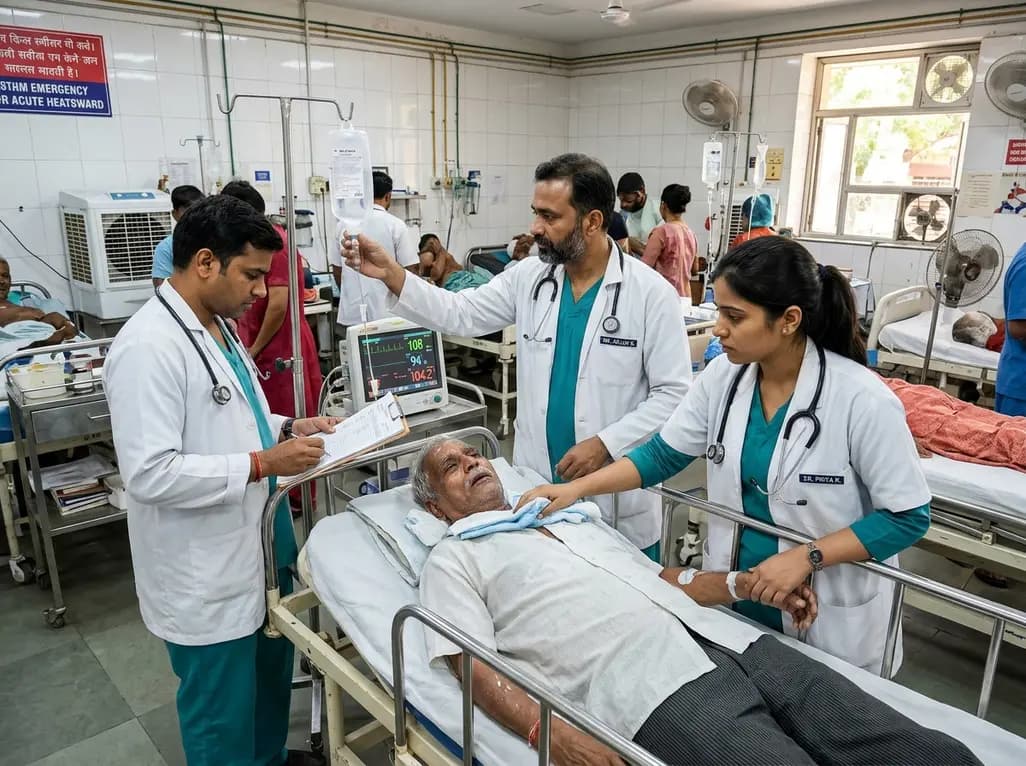
Recent epidemiological data reveals a dramatic surge in summer heat mortality driven by human-induced climate warming. This analysis explores the pathophysiological impacts on cardiac and renal systems, diagnostic dilemmas in death certification, and essential emergency cooling protocols for acute clinical care.
Today

Odisha has established India's first state-level clinical protocol specifically tailored for pregnant women with sickle cell disease. Developed with NHM and UNICEF, the framework provides structured antenatal screening, crisis mitigation, standardized referral pathways, and specialized interdisciplinary care.
Today

India is advancing preventive healthcare by integrating genomics, artificial intelligence, and quantum technologies. With the SANGAM programme sequencing one million Indian genomes, clinicians can unlock personalized therapies, detect cardiometabolic risks early, and curb the burden of diabetes and heart disease.
Today

A randomized controlled trial demonstrates that an eight-week dual-task training intervention significantly improves static and dynamic postural control over standard balance exercises in individuals with chronic ankle instability, addressing critical neurocognitive deficits during athletic and daily activities.
Today

A retrospective cohort study of 7,716 ICU patients from the MIMIC-IV database demonstrates that Gradient Boosting Decision Trees significantly outperform traditional SOFA scores in predicting in-hospital mortality among patients with sepsis and diabetes, with SHAP analysis providing clinical interpretability.
Today
