.webp&w=384&q=75)

Loading, please wait...
Loading, please wait...

Union Health Minister JP Nadda addressed the 79th World Health Assembly (WHA) in Geneva, Switzerland. During this plenary session, he reaffirmed India's commitment to building a robust digital health ecosystem. Under the guiding principle of 'Health for All,' India continues to expand its universal health coverage. Furthermore, this approach relies on a 'whole-of-government' and 'whole-of-society' model.
Significantly, the Ayushman Bharat Digital Mission (ABDM) has emerged as a cornerstone of India's healthcare strategy. Under this initiative, India has created more than 880 million unique digital health identities. Consequently, these identities facilitate longitudinal health records for patients. They also enable a seamless continuum of care across different medical sectors. Additionally, the government has launched a new Strategy for Artificial Intelligence in Healthcare. This strategy aims to build ethical and human-centric systems to improve patient outcomes globally.
To improve accessibility, India has operationalised over 1,85,000 Ayushman Arogya Mandirs across the nation. These primary healthcare centres deliver comprehensive services directly to local communities. Meanwhile, the Ayushman Bharat Pradhan Mantri Jan Arogya Yojana remains the world's largest public health assurance scheme. It currently covers nearly 600 million vulnerable beneficiaries. Thus, the scheme effectively shields families from catastrophic medical expenses. Additionally, India continues to strengthen its pandemic preparedness and response capacities to handle future challenges.
Historically, India has been known as the 'Pharmacy of the World' due to its robust manufacturing sector. Specifically, the country leads in the production of affordable generic medicines and vaccines. During the COVID-19 pandemic, India supplied nearly 300 million vaccine doses to approximately 100 countries under the Vaccine Maitri initiative. This effort demonstrates India's enduring commitment to global health cooperation. Therefore, the nation continues to support international partnerships to achieve health equity for all.
Q1: What is the main objective of the Ayushman Bharat Digital Mission?
The mission aims to strengthen the digital health ecosystem by creating unique digital health IDs, which facilitate longitudinal health records and seamless care.
Q2: How many Ayushman Arogya Mandirs has India established?
India has operationalised over 1,85,000 Ayushman Arogya Mandirs across the country to provide comprehensive primary healthcare services.
Q3: What is the scale of the Ayushman Bharat PM-JAY scheme?
As the world's largest public health assurance scheme, PM-JAY covers nearly 600 million vulnerable beneficiaries.
Disclaimer: This content is for informational and educational purposes only. It does not constitute medical advice or replace professional judgment. Refer to the latest local and national guidelines for clinical practice.
References

Read summarized clinical updates, watch expert medical content, and earn CME certifications right from your smartphone.
Open your smartphone camera to scan and install.





Union Health Minister JP Nadda highlighted India's digital health ecosystem and Universal Health Coverage at the 79th World Health Assembly in Geneva....
5 months ago
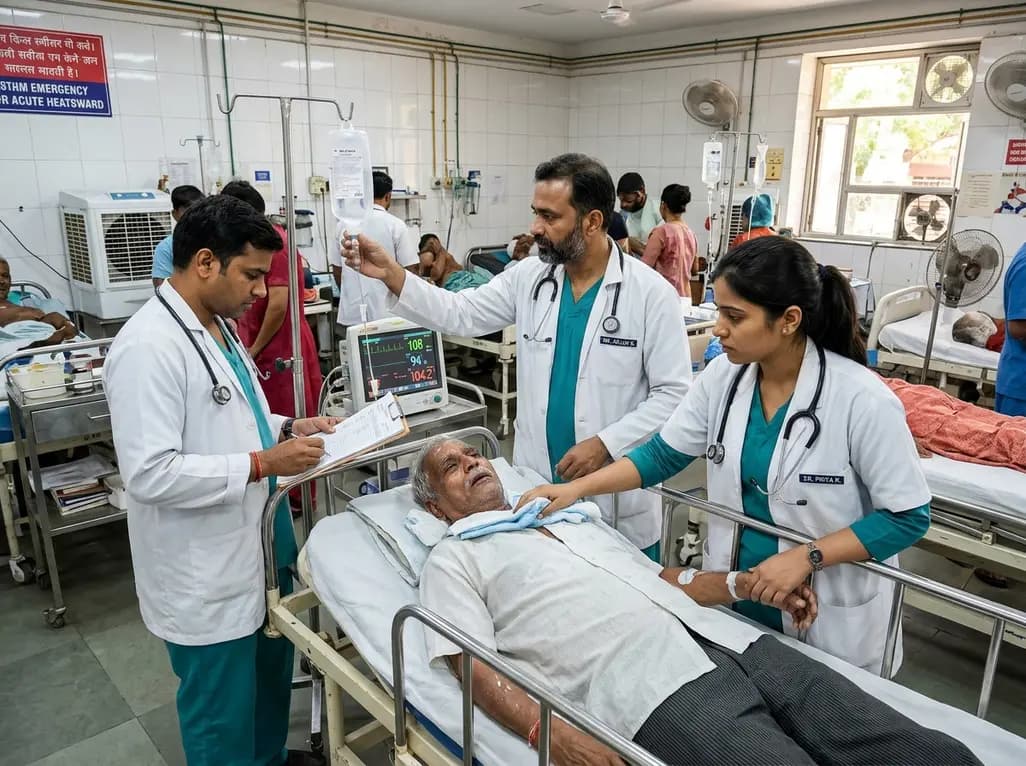
Recent epidemiological data reveals a dramatic surge in summer heat mortality driven by human-induced climate warming. This analysis explores the pathophysiological impacts on cardiac and renal systems, diagnostic dilemmas in death certification, and essential emergency cooling protocols for acute clinical care.
Today
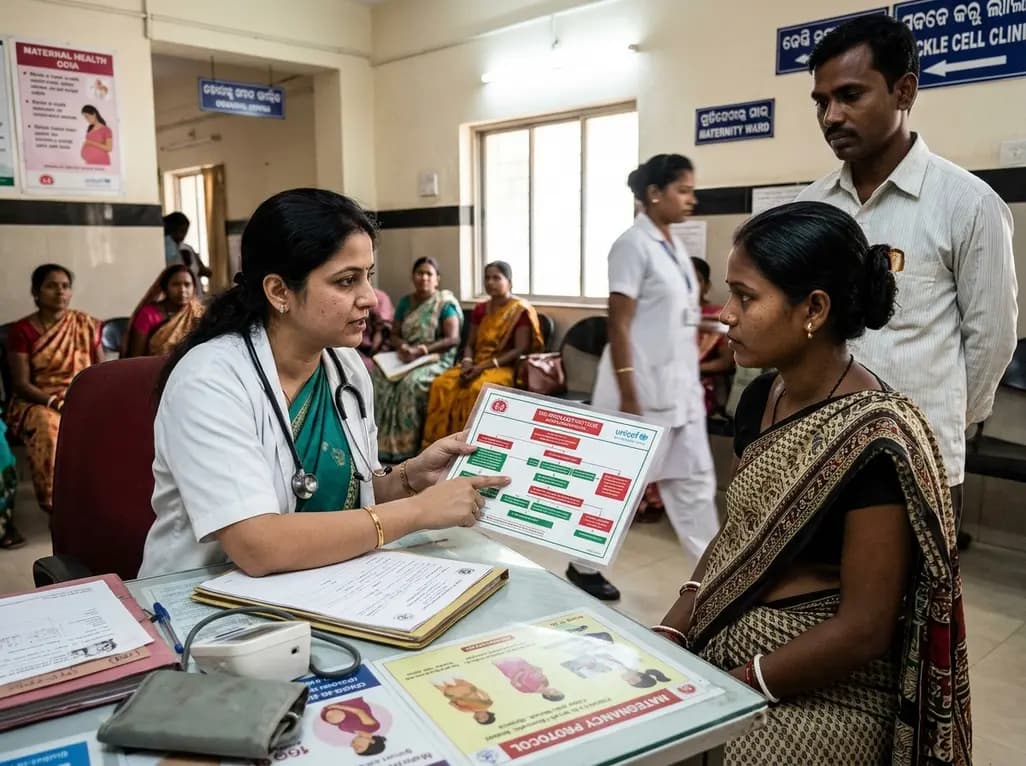
Odisha has established India's first state-level clinical protocol specifically tailored for pregnant women with sickle cell disease. Developed with NHM and UNICEF, the framework provides structured antenatal screening, crisis mitigation, standardized referral pathways, and specialized interdisciplinary care.
Today

India is advancing preventive healthcare by integrating genomics, artificial intelligence, and quantum technologies. With the SANGAM programme sequencing one million Indian genomes, clinicians can unlock personalized therapies, detect cardiometabolic risks early, and curb the burden of diabetes and heart disease.
Today
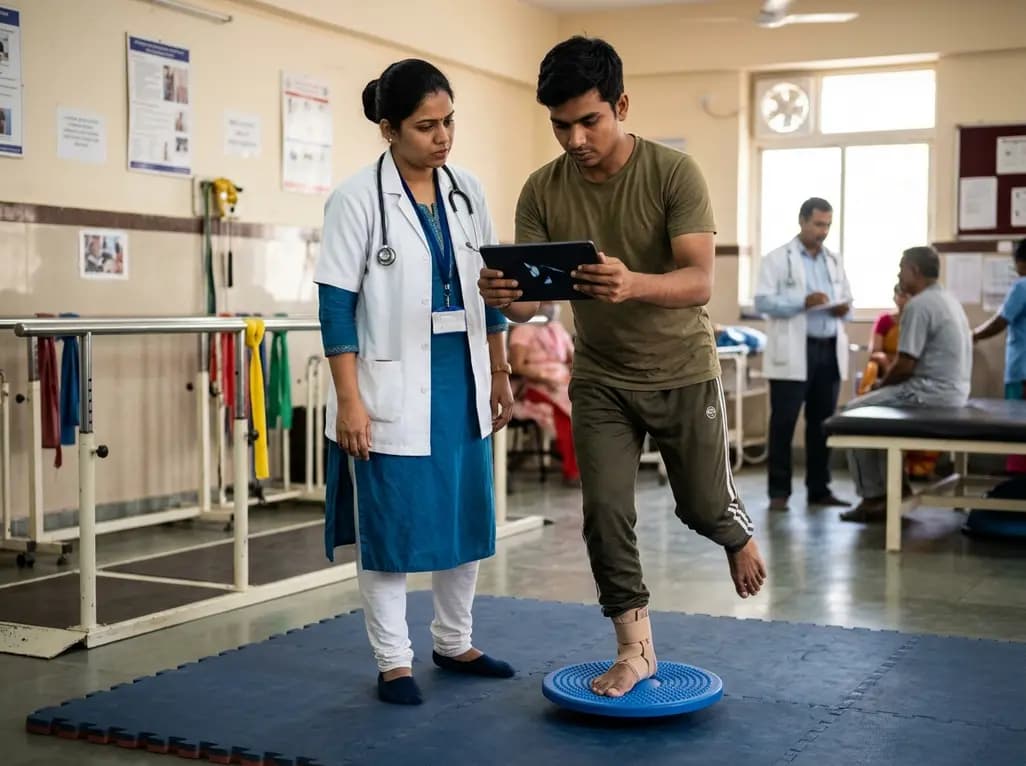
A randomized controlled trial demonstrates that an eight-week dual-task training intervention significantly improves static and dynamic postural control over standard balance exercises in individuals with chronic ankle instability, addressing critical neurocognitive deficits during athletic and daily activities.
Today

A retrospective cohort study of 7,716 ICU patients from the MIMIC-IV database demonstrates that Gradient Boosting Decision Trees significantly outperform traditional SOFA scores in predicting in-hospital mortality among patients with sepsis and diabetes, with SHAP analysis providing clinical interpretability.
Today
