.webp&w=384&q=75)

Loading, please wait...
Loading, please wait...
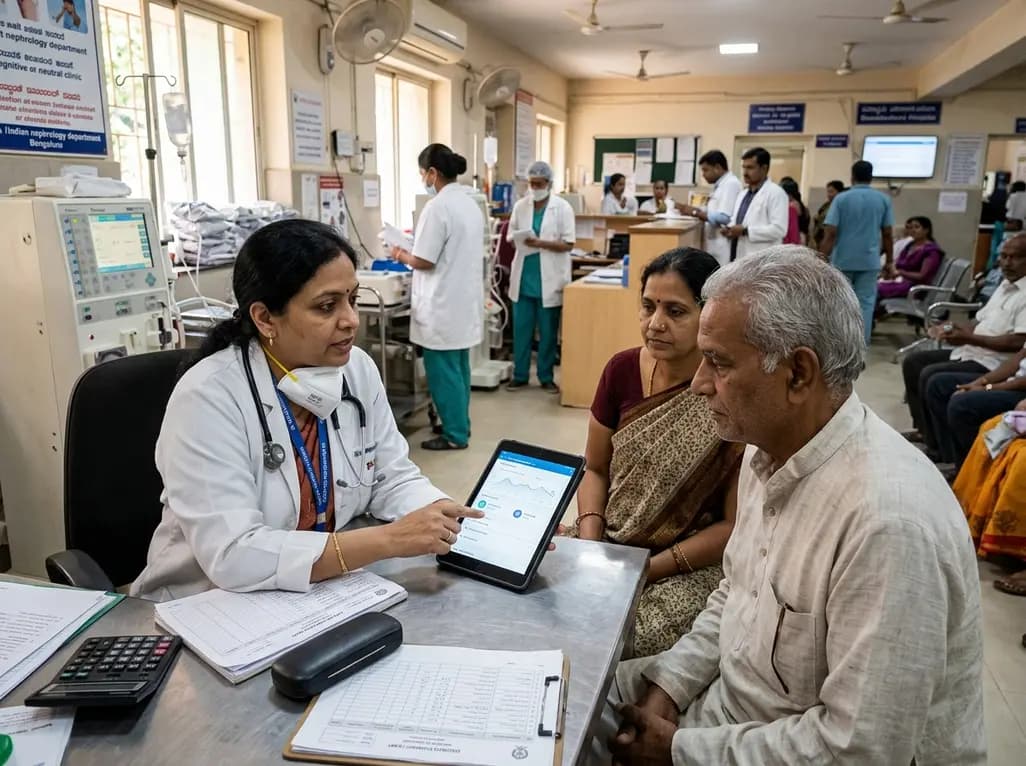
Chronic kidney disease places an immense clinical and psychological burden on patients and healthcare systems worldwide. Effective renal care demands rigorous lifestyle adjustments, strict medication compliance, dietary restrictions, and frequent blood pressure monitoring. Consequently, digital health CKD self-management tools have emerged as promising solutions to assist patients in navigating these intricate daily tasks. Mobile health applications, telemonitoring portals, and wearable devices offer real-time tracking that helps individuals understand their renal health. However, implementing these digital platforms into everyday clinical workflows remains challenging. Clinicians must recognize that technological adoption depends on multifaceted personal, technical, and contextual factors.
A recent systematic review synthesized evidence from thirteen international studies encompassing over three thousand patients with renal disease. The investigators mapped nineteen facilitators and fifteen barriers across five primary domains of the updated Consolidated Framework for Implementation Research. Their findings demonstrate that digital platforms empower individuals while revealing substantial disparities in user access. Therefore, healthcare providers must understand these underlying dynamics to recommend digital health CKD self-management tools that genuinely enhance clinical engagement.
Patient engagement with digital interventions flourishes when technological tools align with daily personal routines and individual cognitive capabilities. Most prominently, investigators identified an uncomplicated user interface as the single most critical facilitator across the reviewed literature. When software developers prioritize intuitive navigation, large fonts, and straightforward dashboards, patients demonstrate significantly higher sustained usage. Furthermore, participants expressed a strong desire for continuous educational updates and tailored content that directly addresses their specific disease stage. Personalized dietary guidance and automated medication reminders offer practical value that encourages daily platform interaction.
Additionally, external support networks play an indispensable role in maintaining long-term digital adherence. Family members, caregivers, and peer groups provide vital emotional reassurance and technical assistance for users navigating complex applications. When relatives actively participate in digital monitoring, patients experience less anxiety regarding disease progression. Moreover, convenient round-the-clock access to validated laboratory results empowers individuals to make informed lifestyle choices. Consequently, high perceived usefulness directly correlates with enthusiastic platform adoption, reinforcing patient autonomy during outpatient nephrology visits.
Despite the undeniable advantages of remote monitoring, several formidable obstacles impede widespread technology utilization. Notably, low health literacy represents the most prominent individual barrier across diverse patient cohorts. Individuals frequently struggle to comprehend complex nephrology terminology, laboratory values, and algorithmic trend analyses. Furthermore, limited digital literacy exacerbates these difficulties, making routine data entry frustrating and demoralizing. As a result, patients who cannot interpret their own diagnostic trends often abandon digital platforms entirely.
Advanced age also poses a consistent challenge to technology uptake. Older individuals frequently experience sensory deficits, diminished fine motor skills, and unfamiliarity with modern smartphone operating systems. Consequently, complex navigation schemes generate cognitive fatigue and resistance among senior cohorts. In addition, socioeconomic disparities significantly constrain device availability and steady internet access. Patients facing financial hardship cannot afford modern smartphones, cellular data packages, or wireless home monitoring peripherals. Hence, economic disadvantages directly widen healthcare disparities, creating a digital divide that excludes vulnerable renal populations from modern self-management support.
Physicians managing chronic renal conditions must recognize that prescribing a mobile application requires the same thoughtful scrutiny as prescribing a pharmacotherapeutic agent. Clinicians should proactively evaluate a patient's baseline digital literacy, visual acuity, and social support before recommending remote monitoring tools. When nephrologists endorse verified platforms during routine outpatient consultations, patients perceive greater legitimacy and adhere more diligently. Moreover, clinicians can utilize patient-generated data to identify subtle changes in fluid status, blood pressure fluctuations, and declining adherence patterns before overt clinical decompensation occurs.
However, technology integration should never overwhelm clinical staff or increase administrative burdens. Healthcare systems must establish structured workflows that aggregate and filter remote physiological metrics efficiently. Primary care physicians and nephrology teams can coordinate to review actionable alerts rather than navigating raw data streams. Furthermore, physicians should involve nursing personnel, clinical pharmacists, and dietitians in remote care pathways. This collaborative approach ensures that patients receive timely clinical feedback and nutritional guidance. Ultimately, structured digital pathways strengthen therapeutic alliances and foster shared disease management.
Deploying digital health interventions in developing healthcare markets demands pragmatic and culturally sensitive implementation strategies. In countries like India, where nephrologist availability remains scarce in rural districts, digital health can bridge substantial geographic divides. Nevertheless, developers and public health administrators must address existing structural hurdles to achieve equitable access. Software engineers should design offline-capable platforms that require minimal bandwidth and function smoothly on affordable entry-level smartphones. Additionally, applications must provide intuitive multilingual interfaces with audio-visual instructions to accommodate individuals with limited textual literacy.
Community health workers and local nursing personnel can serve as vital intermediaries during patient onboarding. By conducting brief hands-on training sessions during clinic visits, frontline workers demystify application interfaces for older adults and hesitant caregivers. Furthermore, public health initiatives can integrate digital self-management tools with subsidized government chronic disease programs. Health systems can also partner with telecommunication networks to provide zero-rated data access for accredited medical portals. Consequently, proactive system-level investments ensure that transformative digital tools reach underserved socioeconomic groups, mitigating pervasive healthcare inequities.
Digital interventions enhance self-management by providing structured daily tracking of blood pressure, fluid consumption, and dietary sodium intake. Moreover, automated medication alerts reinforce therapy adherence, while personalized educational modules empower patients to recognize early symptoms of fluid overload or renal deterioration. Consequently, timely self-monitoring prevents acute metabolic crises, supports collaborative clinical consultations, and helps preserve residual kidney function over extended treatment timelines.
Older adults benefit significantly from simplified digital interfaces that feature prominent typography, high-contrast color schemes, and uncluttered menu structures. In addition, incorporating intuitive voice commands and clear audio-visual instructions reduces visual and cognitive fatigue. Designers should also minimize required daily data inputs and enable automated data syncing from wireless home blood pressure monitors. Consequently, these thoughtful design elements remove frustrating technical hurdles and sustain long-term engagement among elderly cohorts.
Clinicians can mitigate health literacy barriers by prescribing vetted applications that communicate laboratory trends through intuitive visual graphics rather than dense biochemical terminology. Furthermore, healthcare teams should incorporate nurse educators or community health workers to conduct brief, practical walkthroughs during clinic visits. Engaging supportive family members during initial application onboarding also provides continuous home guidance. Therefore, collaborative clinic-based education builds patient confidence, improves self-efficacy, and fosters successful daily digital tracking.
Disclaimer: This content is for informational and educational purposes only... Refer to the latest local and national guidelines for clinical practice.
References
Su F et al. Facilitators and Barriers to Digital Health Technologies for Self-Management in Patients With Chronic Kidney Disease: Systematic Review Based on the Updated CFIR 2.0 Framework. J Med Internet Res. 2026 Sep 21. doi: 10.2196/103560. PMID: 42766847.
Deng T, Chen L, Nong C, et al. Digital health integration in chronic kidney disease. Clin Chim Acta. 2026;554:120749.
Silalahi MK. Digital Health in Kidney Care: The Role of Telemonitoring in Enhancing Self-Management Among Patients with Chronic Kidney Disease. IlcaAgam J. 2025;2(6):240-252.

Read summarized clinical updates, watch expert medical content, and earn CME certifications right from your smartphone.
Open your smartphone camera to scan and install.





A systematic review based on the CFIR 2.0 framework evaluates facilitators and barriers to digital health technologies in chronic kidney disease self-management, highlighting interface usability, family support, digital health literacy, and economic disparities to guide clinical tele-nephrology implementation.
Today

A cross-sectional observational study reveals that insomnia in major depressive disorder remains highly prevalent and debilitating despite pharmacotherapy. Over 60% of patients report moderate-to-severe insomnia, driving functional impairment and highlighting the urgent need for integrated sleep and mood interventions.
Today

A recent longitudinal study evaluated the link between prenatal loss of control eating and cardiovascular health using Life's Essential 8 frameworks. While direct associations across pregnancy were non-significant, the high prevalence of dysregulated eating highlights critical implications for obstetric practice.
Today

A cross-sectional analysis of NHANES 2013-2020 reveals that depressive symptoms and sleep disturbance significantly elevate the odds of cardiometabolic multimorbidity in adults with arthritis. Comprehensive clinical screening and integrated multi-organ interventions are vital to reduce overall cardiovascular burden.
Today

Systematic review comparing labral repair and reconstruction in primary hip arthroscopy shows comparable short- to mid-term patient-reported outcomes, with lower THA conversion after repair but superior outcomes for reconstruction in patients aged 40 and older.
Yesterday

Apollo-IRE1 is a genetically encoded biosensor that monitors real-time endoplasmic reticulum stress dynamics in living pancreatic beta cells. By measuring IRE1 oligomerization through fluorescence anisotropy, it illuminates stress thresholds critical for understanding and treating diabetes.
Today
