

Loading, please wait...
Loading, please wait...

Clinicians frequently evaluate family history to estimate dementia vulnerability and late-life neurodegenerative risk. Emerging epidemiological evidence shows that maternal longevity and cognition share an enduring intergenerational connection. A pivotal cross-sectional investigation evaluated data from the Mexican Health and Aging Study, examining 5,049 adults aged 65 and older. The authors defined parental longevity as maternal or paternal survival to age 85 or older. Approximately 31% of participants reported having a mother who lived to 85, while 31% reported a long-lived father. However, multivariable latent variable regressions uncovered a striking asymmetry between maternal and paternal contributions. Maternal survival independently predicted significantly higher offspring cognitive scores. In contrast, paternal longevity demonstrated no statistically significant association with cognitive preservation in adult children. Importantly, this maternal advantage persisted even after extensive adjustments for offspring cardiovascular health, lifestyle habits, and educational attainment. Consequently, evaluating parental lifespan offers vital diagnostic clues beyond conventional risk calculators. Understanding these maternal associations helps geriatricians identify patients who possess innate familial cognitive resilience.
Previous epidemiological research in high-income countries often attributed familial cognitive advantages entirely to shared socioeconomic advantages. Wealthier households consistently access superior nutrition, safer living environments, and advanced healthcare across multiple generations. However, this study evaluated older Mexican adults to observe patterns within a middle-income developing nation. Families in this cohort experienced substantial mid-century economic transitions and distinct social challenges. Therefore, the investigators controlled meticulously for educational attainment, adult socioeconomic status, and childhood financial conditions. Furthermore, they adjusted for personal health behaviors, including smoking status, alcohol use, and physical exercise routines. The cognitive benefit conferred by a mother surviving past 85 remained robust despite these rigorous adjustments. Paternal longevity, nevertheless, failed to produce any measurable cognitive protection once researchers accounted for baseline socioeconomic parameters. These contrasting findings indicate that maternal longevity and cognition operate beyond purely material or financial inheritance. Furthermore, the findings confirm that maternal survival provides biological and behavioral benefits that survive across distinct social strata. Physicians should recognize that social determinants alone cannot explain this intergenerational neuroprotection.
Genetic inheritance naturally represents a major candidate mechanism underpinning familial longevity and cognitive resilience. The apolipoprotein E epsilon 4 (APOE-ε4) allele remains the strongest known common genetic risk factor for late-onset Alzheimer's disease. Consequently, the researchers controlled directly for offspring APOE-ε4 carrier status in their statistical modeling. Remarkable findings emerged because the protective correlation between maternal longevity and offspring cognition persisted without attenuation. This finding demonstrates that the observed cognitive advantage extends well beyond the absence of this deleterious allele. What biological mechanisms might explain this matrilineal inheritance pattern? First, humans inherit mitochondrial DNA exclusively from their mothers. Healthy maternal mitochondria generate less reactive oxygen species, maintain efficient ATP synthesis, and prevent premature neuronal apoptosis. In addition, maternal longevity may reflect superior epigenetic maintenance, such as favorable DNA methylation patterns passed through transgenerational epigenetic inheritance. Furthermore, maternal metabolic stability during gestation may program lifelong neural vascular health. Consequently, clinicians must recognize that maternal biological integrity confers distinct neuroprotective mechanisms that nuclear genetic screening cannot capture.
Beyond cellular biology, unique social mechanisms explain why mothers exert a profound long-term impact on offspring cognition. In many developing societies, mothers serve as the primary caregivers during early childhood neurodevelopment. Maternal cognitive stimulation, language exposure, and emotional nurturance create durable synaptic connections during critical developmental windows. Moreover, long-lived mothers often provide extended intergenerational support throughout adulthood. A mother who survives past age 85 frequently assists with domestic stability, grandchild rearing, and family guidance. This ongoing maternal relationship reduces chronic psychological stress and cortisol exposure in adult offspring. Chronic distress damages hippocampal structures, accelerating cognitive decline in later life. Therefore, ongoing maternal presence buffers offspring against emotional wear and tear over decades. In contrast, fathers in traditional cohorts often faced different occupational hazards and occupational stress, which truncated their lifespan. As a result, paternal longevity may reflect occupational survival rather than broad constitutional resilience. Thus, the enduring presence of a resilient mother provides cognitive, emotional, and social scaffolds that endure into old age.
These epidemiological insights carry immediate relevance for clinicians managing aging populations worldwide, including in middle-income nations like India. Both Mexico and India share significant demographic features, including rapid population aging, multigenerational households, and high burdens of cardiometabolic multimorbidity. In addition, when assessing cognitive complaints in older adults, physicians should take a thorough multigenerational lifespan history. Asking specifically about maternal survival past 85 provides valuable clinical context regarding an individual patient's cognitive reserve. Patients lacking maternal longevity may possess lower innate resilience against subclinical cerebrovascular or neurodegenerative insults. Consequently, these individuals require earlier, more aggressive management of modifiable dementia risk factors. Clinicians must aggressively optimize blood pressure, control glycemic levels, correct sensory impairments, and encourage social engagement. Conversely, while maternal longevity offers protection, it does not guarantee complete immunity against late-life dementia. Therefore, physicians should reassure patients with long-lived mothers while continuing to emphasize protective lifestyle interventions. Integrating parental longevity into routine clinical risk stratification enables a holistic, personalized approach to neurocognitive health and preventive care.
Maternal longevity exerts a distinctive influence due to a combination of maternal mitochondrial inheritance, epigenetic programming, and long-term psychosocial nurturance. Mothers transmit mitochondrial DNA exclusively, providing essential bioenergetic advantages that protect aging neural tissue against oxidative stress. Furthermore, in many cultural settings, mothers provide sustained emotional scaffolding and early childhood cognitive stimulation. In contrast, paternal longevity often reflects specific occupational factors rather than widespread constitutional neuroprotection, explaining this observed divergence.
No, maternal longevity enhances baseline cognitive reserve but does not confer complete immunity against dementia. While matrilineal longevity provides biological and social advantages, non-genetic risk factors still play a decisive role. For instance, uncontrolled hypertension, diabetes mellitus, physical inactivity, smoking, and social isolation significantly elevate neurodegenerative risk. Therefore, clinicians must emphasize that even individuals with exceptional maternal lifespans must adhere to preventive cardiovascular measures, mental stimulation, and lifestyle interventions to safeguard late-life cognitive function.
Physicians should systematically document parental lifespans and causes of death during routine geriatric and neurological assessments. Identifying patients who lack maternal longevity helps clinicians pinpoint individuals who may possess lower innate cognitive reserve. Consequently, practitioners can implement targeted surveillance and aggressive management of modifiable cardiovascular and metabolic risk factors much earlier. Moreover, this familial history provides an educational opportunity to counsel families on proactive brain health, cognitive screening, and structured physical activities.
Disclaimer: This content is for informational and educational purposes only... Refer to the latest local and national guidelines for clinical practice.
References

Read summarized clinical updates, watch expert medical content, and earn CME certifications right from your smartphone.
Open your smartphone camera to scan and install.





A new study reveals that maternal longevity independently preserves offspring cognitive function into late life, highlighting the impact of matrilineal genetics and intergenerational support on cognitive reserve.
Today

Delhi is undergoing a major healthcare overhaul with enhanced Ayushman Bharat insurance up to ₹10 lakh, increased MBBS and PG medical training seats, expanded primary network mandirs, new tertiary neuro-ICUs, and public-private reproductive technology initiatives to build a resilient, preventative healthcare model.
Today
AI-enhanced remote monitoring successfully unmasks true asystole and high-grade atrioventricular block among numerous false implantable loop recorder alerts, guiding timely pacemaker therapy and preventing diagnostic delays in patients with unexplained recurrent syncope.
Today
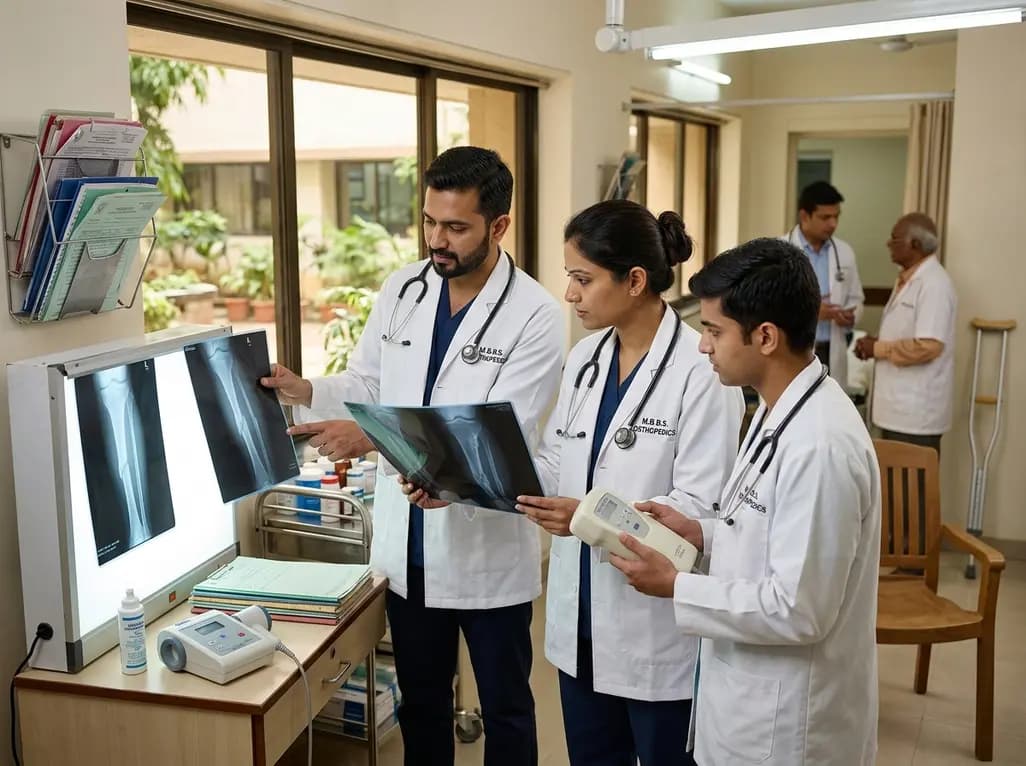
Non-union fractures occur in 2-5% of cases, causing significant disability and cost. Conservative modalities such as LIPUS, PEMF, and focused ESWT offer non-surgical healing options for defects up to 5-10 mm when adequate mechanical stability exists without infection.
Yesterday
The randomized HOBIT-AF trial reveals that while structured weight loss after catheter ablation significantly improves cardiometabolic health in obese patients with paroxysmal atrial fibrillation, it does not reduce arrhythmia recurrence compared to standard care.
Today
