.webp&w=384&q=75)

Loading, please wait...
Loading, please wait...

Digital asthma self-management systems are revolutionizing how patients interact with their chronic conditions. A recent qualitative study conducted at five primary care centers in Sweden explored the experiences of patients and specialist nurses using the Asthmatuner system. The research emphasizes that technical solutions do more than just track data; they foster a profound sense of autonomy. By integrating these tools into daily life, patients can bridge the historical gap between clinical visits and home-based care.
The study identified "data-supported empowerment" as the central theme among participants. Specifically, patients reported that having access to real-time lung function and symptom data increased their health literacy. This awareness allowed them to take a more active role in managing their medications. Furthermore, many participants felt more confident in adjusting their treatment plans based on objective metrics rather than subjective feelings alone. Consequently, the transition from passive patient to active self-manager became a reality for most users.
Implementing digital asthma self-management requires a shift in how healthcare professionals (HCPs) and patients communicate. Nurses in the study observed that the data provided a clearer picture of the patient\'s status between appointments. However, the research also revealed a critical need for role clarity. Some patients expected continuous, personalized follow-ups based on their logged data, which was not always possible within standard workflows. Therefore, clinicians must establish clear expectations regarding data review and responsibilities to ensure long-term success.
While the digital system was well-received, the study highlighted that technology alone is not a panacea. Successful implementation depends on adapting clinical workflows to accommodate new data streams. Moreover, both patients and HCPs need to agree on overlapping responsibilities to avoid communication breakdowns. Ultimately, when used correctly, these systems promote empowerment and improve the overall delivery of respiratory healthcare.
Digital monitoring provides objective data on lung function and symptoms. This allows patients to understand their condition better and empowers them to make proactive adjustments to their treatment, leading to better symptom control.
The primary challenges include mismatched expectations regarding data review and the need to integrate these tools into existing clinical workflows. Clear communication about the roles of both patients and providers is essential.
While digital tools enhance self-management and provide valuable data for clinicians, they are intended to supplement rather than replace professional medical consultations. They facilitate more efficient and data-driven face-to-face interactions.
Disclaimer: This content is for informational and educational purposes only and does not constitute medical advice or a professional relationship. Always seek the advice of a qualified healthcare provider regarding any medical condition. Refer to the latest local and national guidelines for clinical practice.
References

Read summarized clinical updates, watch expert medical content, and earn CME certifications right from your smartphone.
Open your smartphone camera to scan and install.





A qualitative study on the Asthmatuner system reveals how digital tools empower asthma patients and improve clinical collaboration through data-supported aw...
7 months ago
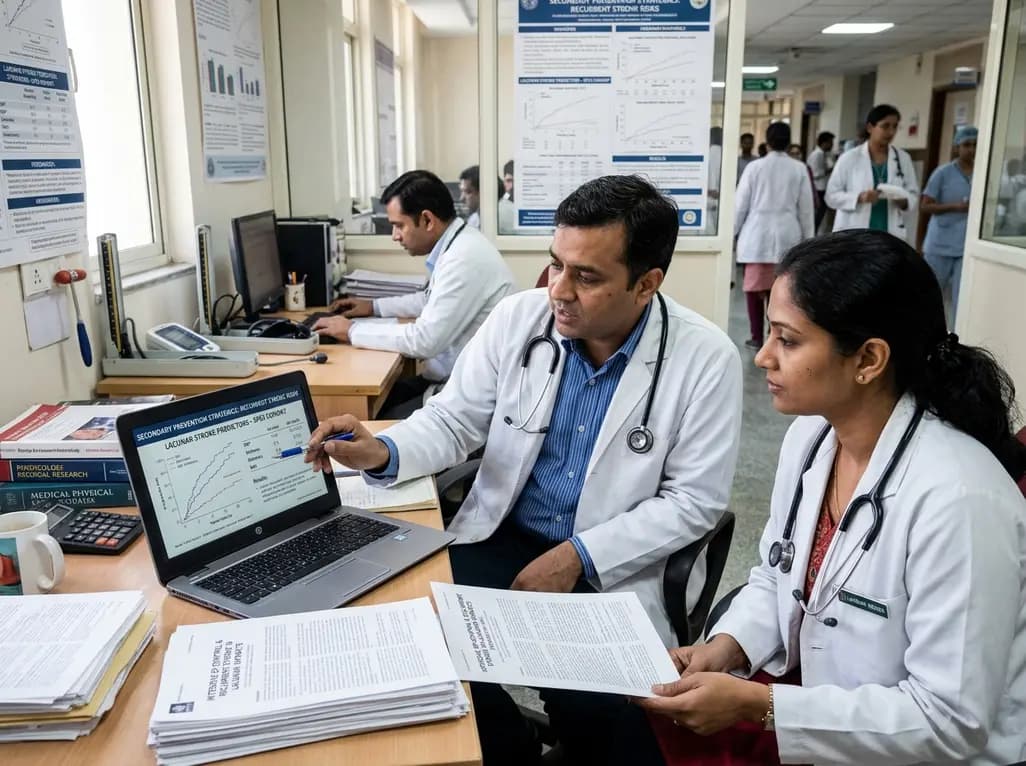
Explore vital recurrent stroke predictors in lacunar stroke patients managed with intensive blood pressure lowering. This analysis examines trial findings from SPS3 to uncover residual vascular risks, metabolic factors, and targeted secondary prevention strategies for high-risk neurological patients.
Today

Odisha has established India's first state-level clinical protocol specifically tailored for pregnant women with sickle cell disease. Developed with NHM and UNICEF, the framework provides structured antenatal screening, crisis mitigation, standardized referral pathways, and specialized interdisciplinary care.
Today

The Directorate General of Health Services directs Indian states to halt the hazardous reuse and reprocessing of single-use medical devices. Discover regulatory implications under the Drugs and Cosmetics Act, critical infection risks, legal liabilities, and operational changes required across clinical specialties.
Today

Mitochondria-targeted nanoparticles self-assembled from EGCG and L-glutamic acid effectively restore mitochondrial homeostasis, suppress synovial inflammation, and attenuate chondrocyte senescence in osteoarthritis, offering a promising disease-modifying nanotherapy.
Today

India is advancing preventive healthcare by integrating genomics, artificial intelligence, and quantum technologies. With the SANGAM programme sequencing one million Indian genomes, clinicians can unlock personalized therapies, detect cardiometabolic risks early, and curb the burden of diabetes and heart disease.
Today
