.webp&w=384&q=75)

Loading, please wait...
Loading, please wait...
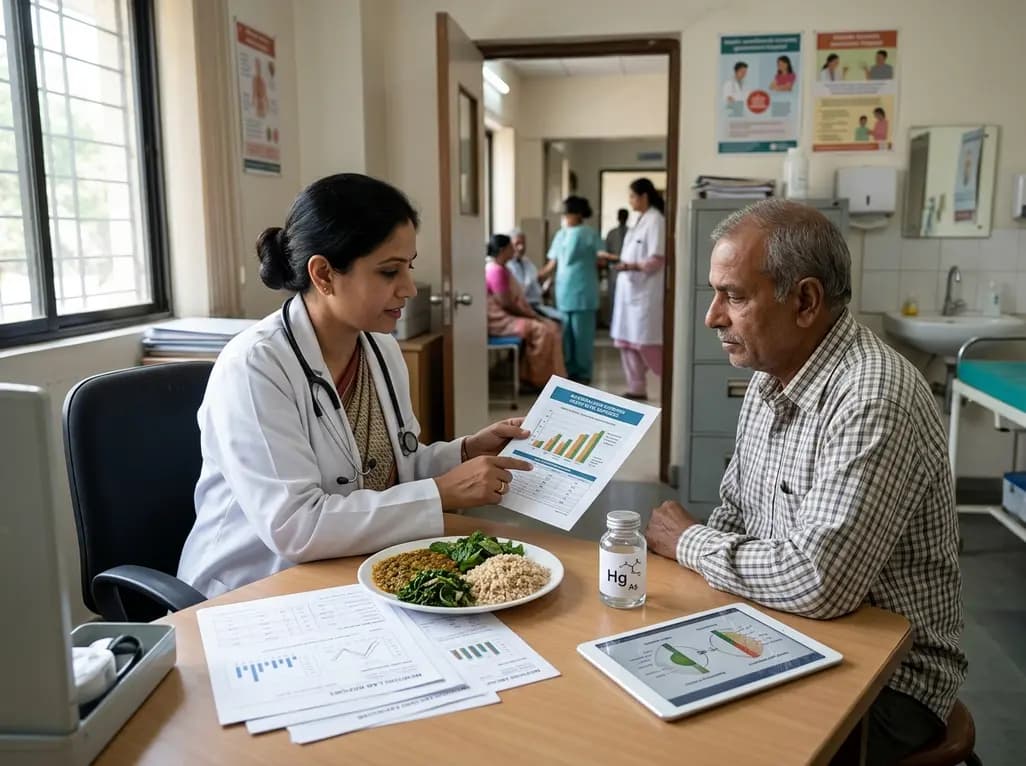
Dietary patterns play a dual role in human health by providing essential nutrients while serving as a primary route for environmental toxin ingestion. Recent research utilizing the Healthy Eating Index 2020 (HEI-2020) has illuminated the complex relationship between diet quality and chemical exposure. This index measures how closely dietary habits align with national guidelines, focusing on nutrient density and variety. However, clinicians are now realizing that a higher score does not always equate to a lower toxic burden. The study analyzed data from the National Health and Nutrition Examination Survey (NHANES) to identify how healthier eating habits correlate with internal concentrations of various chemicals. Consequently, this investigation provides a vital framework for understanding the hidden risks associated with foods traditionally labeled as health-promoting. In the Indian context, where agricultural practices and soil quality vary significantly, these findings are particularly relevant for primary care physicians. Furthermore, the study highlights the necessity of integrating environmental health considerations into routine nutritional counseling. By evaluating both the benefits and the risks, healthcare providers can better guide patients toward truly balanced dietary choices.
One of the most striking findings in recent epidemiological research is the positive association between high HEI-2020 scores and urinary nitrate levels. This phenomenon occurs largely because the healthy eating guidelines emphasize a high intake of vegetables, especially dark green leafy varieties. Vegetables like spinach, arugula, and beets are naturally high in nitrates, which the body absorbs and excretes in urine. While dietary nitrates can offer cardiovascular benefits, such as improved endothelial function, they also serve as biomarkers for agricultural chemical exposure. Specifically, the use of nitrogen-based fertilizers in intensive farming can further increase the nitrate content of produce. Moreover, the study identified that vegetables and greens were the primary drivers behind this specific chemical elevation. For clinicians, this highlights a critical point: even the most nutrient-dense foods carry chemical signatures from their environment. Therefore, understanding the origin of these biomarkers is essential for accurately interpreting patient lab results. Although the health benefits of vegetable consumption usually outweigh the risks, the persistent correlation with nitrates necessitates a more nuanced view of "clean eating" in modern clinical practice.
Transitioning toward a diet rich in seafood and plant-based proteins is a hallmark of high-quality nutrition, yet it also increases exposure to specific heavy metals. The research indicates that higher diet quality scores significantly correlate with increased blood mercury and urinary arsenic levels. This relationship is particularly evident among individuals who substitute red meat with fish or high-protein plant sources like brown rice. Mercury bioaccumulates in aquatic food chains, meaning that even moderate seafood consumption can lead to detectable levels in human blood. Similarly, certain crops like rice are known to efficiently absorb inorganic arsenic from the soil and water. The multi-cycle validation in the study confirmed that these associations remain stable over time, suggesting that these exposures are systemic rather than anecdotal. Consequently, healthcare providers should discuss the importance of variety within protein groups. Specifically, rotating between different types of fish and diversifying grain intake can help mitigate the accumulation of these toxicants. Furthermore, the nonlinear patterns observed for arsenic and mercury suggest that even small dietary shifts can significantly impact internal chemical loads, requiring careful monitoring in vulnerable populations.
While some chemicals increase with higher diet quality, others show a distinct inverse relationship, providing a silver lining for health-conscious individuals. The analysis revealed that higher HEI-2020 scores were negatively associated with blood cadmium and perfluorononanoic acid (PFNA). Cadmium is a toxic metal often linked to industrial pollution and tobacco smoke, but it also contaminates certain food groups. Interestingly, high fruit consumption appeared to be a protective factor, possibly due to competitive absorption or lower concentrations in fruit compared to other staples. Additionally, the reduction in PFNA levels suggests that individuals following high-quality diets consume fewer processed foods. PFNA and other perfluoroalkyl substances (PFAS) are commonly found in grease-resistant food packaging and highly processed commodities. By prioritizing whole foods and minimizing pre-packaged meals, patients naturally reduce their exposure to these persistent environmental chemicals. This discovery reinforces the traditional wisdom that whole-food diets offer multiple layers of protection beyond simple micronutrient intake. Furthermore, these negative associations provide a compelling argument for clinicians to continue promoting the HEI-2020 guidelines while remaining vigilant about heavy metal sources.
For medical practitioners in India, these findings necessitate a shift toward integrated nutrition and environmental health strategies. The Indian food supply chain often faces challenges related to heavy metal contamination in soil and water, making the link between diet and chemical load especially pertinent. When advising patients on healthy eating, doctors must emphasize not just what to eat, but how to source it safely. For instance, suggesting that patients choose seasonal, locally grown produce may reduce the likelihood of high nitrate or pesticide exposure from industrial farming. In addition, clinicians should educate patients on the benefits of washing and peeling vegetables to remove surface residues. Specifically, the paradox of seafood intake requires a balanced approach where the benefits of omega-3 fatty acids are weighed against mercury risks. Moreover, the evidence suggests that dietary diversity is the most effective tool for minimizing toxicant exposure while maximizing nutrient density. Consequently, a multispecialty approach involving nutritionists and environmental health experts may be necessary to develop comprehensive guidelines for the Indian population. Ultimately, the goal is to empower patients to make informed choices that protect their long-term health from both deficiencies and toxicities.
The results of this study underscore the need for a paradigm shift in how dietary guidelines are constructed and communicated. Future nutritional strategies must move beyond simply identifying "good" and "bad" foods and start considering the environmental context of food production. Policymakers should consider integrating chemical exposure assessments into the development of indices like the HEI-2020. This would allow for a more holistic evaluation of diet quality that accounts for the potential toxic burden of specific food groups. Furthermore, more research is needed to understand the long-term health outcomes associated with these low-level, chronic chemical exposures through diet. Specifically, investigating how dietary antioxidants might mitigate the damage caused by heavy metals could lead to more resilient nutritional recommendations. In addition, the general stability of these associations across different NHANES cycles indicates that these patterns are deeply ingrained in modern food environments. As we move forward, the intersection of environmental science and clinical nutrition will become increasingly important for preventing chronic diseases. By fostering a deeper understanding of diet quality and chemical exposure, the medical community can lead the way in promoting a safer, more sustainable approach to human nutrition.
High-quality diets emphasize the consumption of leafy greens and root vegetables, which naturally accumulate nitrates from the soil. The study found that higher HEI-2020 scores were positively associated with urinary nitrates, primarily due to these vegetable components. While nitrates have cardiovascular benefits, they also serve as markers for nitrogen-based fertilizer use. Consequently, patients eating more vegetables will naturally show higher levels of these compounds in their diagnostic tests.
Seafood and plant proteins are key elements of a healthy diet, but they are also significant sources of mercury and arsenic. This research confirmed that individuals with higher diet quality scores often have elevated blood mercury because they prioritize fish over red meat. Mercury bioaccumulates in marine life, leading to higher human exposure. Clinicians should recommend a variety of low-mercury seafood options to balance nutritional benefits with the risks of heavy metal accumulation.
Doctors should advocate for dietary diversity to prevent the over-consumption of any single contaminant. For example, rotating different types of grains and proteins can limit the cumulative intake of arsenic and mercury. Additionally, emphasizing whole fruits may help lower cadmium exposure. By focusing on integrated nutrition strategies, healthcare providers ensure that patients receive the essential nutrients of a high-quality diet while minimizing the potential for chronic exposure to environmental toxicants.
Disclaimer: This content is for informational and educational purposes only and does not constitute medical advice, diagnosis, or treatment. Always seek the advice of your physician or other qualified health provider with any questions you may have regarding a medical condition. Never disregard professional medical advice or delay in seeking it because of something you have read here. Refer to the latest local and national guidelines for clinical practice.
References
Pei Z et al. Associations between diet quality and multiple chemical exposures. Ecotoxicol Environ Saf. 2026 Jul 04. doi: undefined. PMID: 42401000.
Luo T et al. Diet quality as assessed by the healthy eating index-2020 among different smoking status: an analysis of national health and nutrition examination survey (NHANES) data from 2005 to 2018. BMC Public Health. 2024. PMID: 38693488.
Shi Z et al. Association between dietary patterns, cadmium intake and chronic kidney disease among adults. Clin Nutr. 2018. PMID: 28434645.
"
Read summarized clinical updates, watch expert medical content, and earn CME certifications right from your smartphone.
Open your smartphone camera to scan and install.





A new study reveals a complex link between high diet quality and chemical exposure. While healthier eating patterns improve nutrient intake, they may also increase levels of arsenic and mercury, requiring a balanced clinical approach to nutrition and environmental health.
3 months ago

A breakthrough study evaluated H5N1 transmission efficiency across mammalian isolates. Researchers discovered that human-derived D1.1 harboring the PB2 D701N mutation spread efficiently in ferrets, unlike strains carrying PB2 E627K. This finding highlights critical genetic markers for zoonotic surveillance.
Today

A comparative cohort study evaluates vNOTES vs TLH hysterectomy for benign conditions, demonstrating shorter operative duration, faster return to daily activities, and equivalent female sexual function scores without increased dyspareunia.
Today

Review how tailored exercise programs benefit frail older patients with heart failure. Explore pathophysiological mechanisms, individualized training prescriptions, and strategies to overcome adherence barriers in clinical practice.
Yesterday

This comparative study evaluates posterior labral tears with and without glenohumeral instability, highlighting distinct demographic patterns, MRI underestimation in stable shoulders, and successful arthroscopic repair outcomes.
Yesterday

A clinical study demonstrates that early intervention with tocilizumab, either as monotherapy or bridged with corticosteroids, achieves significant proptosis reduction and resolves active inflammation in treatment-naive thyroid eye disease.
Today
