.webp&w=384&q=75)

Loading, please wait...
Loading, please wait...

Diabetes and tendon health are intrinsically linked, yet the specific biomechanical reasons for exercise intolerance in diabetic patients have remained elusive. Obesity affects billions of people globally and often leads to secondary conditions like type 2 diabetes mellitus (T2DM). Although clinicians recommend exercise as a primary therapy, patients with diabetes frequently present with severe physical limitations. Recent research using the db/db mouse model explores how functional declines in tendons directly impair locomotor ability.
Firstly, the researchers examined the viscoelastic and tensile properties of the Achilles tendon. The study revealed that diabetic tendons suffer from impaired uncrimping of collagen fibers. Consequently, these tendons exhibit an increased strain even at physiological levels of stress. Moreover, the viscoelastic properties, such as hysteresis and relaxation, remained surprisingly stable compared to wild-type mice. This suggests that the primary mechanical deficit lies in the structural compliance of the tendon rather than its energy-dissipating features.
Furthermore, the scientists developed mouse-specific musculoskeletal models to predict how these physiological changes affect daily movement. These models incorporated both increased body mass and altered tendon material properties. The diabetic models demonstrated significant increases in muscle activation and metabolic output during locomotion. Interestingly, the movement shifted from a spring-like function to a brake-like, negative work-dominated mechanism. This shift occurred most prominently in the highly tendinous muscles of the hindlimb.
Together, the experimental and modeling data indicate that diabetic mice must generate significantly more muscle power to travel the same distance. The combined effects of increased body weight and tendon compliance drive this excessive energy demand. Therefore, these mechanical issues directly contribute to the exercise intolerance observed in patients. Alleviating these specific physiological barriers may help recover patient mobility and improve overall quality of life. In addition, addressing tendon integrity alongside weight management could offer a more holistic approach to diabetes care.
In type 2 diabetes, tendons often show impaired collagen fiber uncrimping. This structural change results in increased tendon compliance and higher strain under normal physiological stress levels.
The intolerance stems from a combination of increased body mass and altered tendon mechanics. These factors force muscles to work harder, increasing metabolic output and shifting movement to a less efficient, brake-like function.
Disclaimer: This content is for informational and educational purposes only and does not constitute medical advice or a professional relationship. Always seek the advice of a qualified healthcare provider for any questions regarding a medical condition. Refer to the latest local and national guidelines for clinical practice.
References
Charles JP et al. The impact of type 2 diabetes on tendon material properties and locomotor function in the db/db mouse. Exp Physiol. 2026 Feb 15. doi: 10.1113/EP093650. PMID: 41691594.
Zellers JA et al. Effect of Diabetes on Tendon Structure and Function: Not Limited to Collagen Crosslinking. J Orthop Res. 2023;41(1):15-26.
Lee Han-Seok et al. The impact of diabetes mellitus on tendon pathology: a review. Front Cell Dev Biol. 2024 Nov 05;12:1484197.
"
Read summarized clinical updates, watch expert medical content, and earn CME certifications right from your smartphone.
Open your smartphone camera to scan and install.





A study on db/db mice reveals how type 2 diabetes impairs tendon collagen uncrimping and locomotion, leading to higher metabolic costs and exercise intolera...
8 months ago
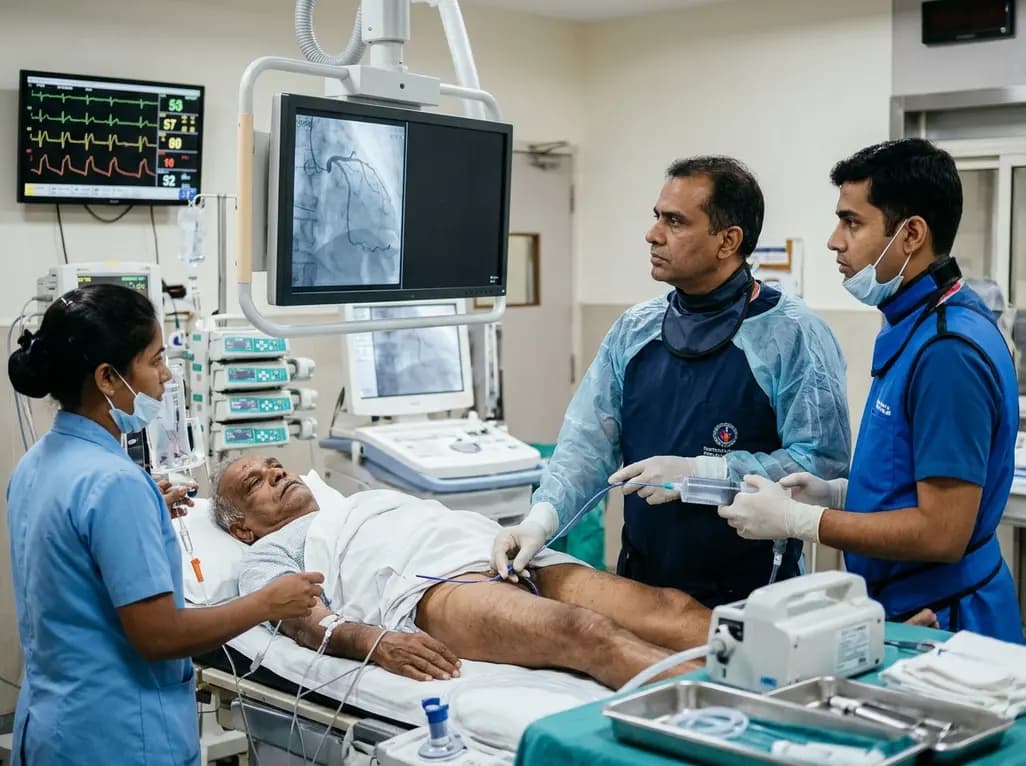
An elderly man with partially repaired Tetralogy of Fallot presented with STEMI caused by coronary embolism rather than atherosclerosis. Successful treatment with sustained mechanical aspiration thrombectomy underscores the vital need for high clinical vigilance in adult congenital heart disease.
Today

Demanding exhaustive hormonal profiling can inadvertently discourage clinical studies involving females. Methodological standards must align with the specific scientific question to expand, not restrict, equitable evidence for women.
Today

A recent study demonstrates that spinal oxygen sensors do not require mitochondrial electron transport to trigger sympathetic excitation during acute hypoxia, revealing new insights into how mitochondrial oxidative stress modulates autonomic tone in cardiovascular and neurological diseases.
Today

A comparative review of tension band wiring and intramedullary screw fixation in thumb metacarpophalangeal arthrodesis, evaluating union rates, hardware complications, and clinical outcomes.
Today

Following regulatory scrutiny from FSSAI regarding promotional representations and lean muscle preservation claims, Dr. Reddy's Laboratories and Nestlé Health Science are currently reviewing the branding and marketing strategy for their joint nutritional supplement Celevida GLP+.
Today
