

Loading, please wait...
Loading, please wait...

Pediatric mental health challenges have increased significantly across global populations. Consequently, healthcare providers must evaluate the psychological well-being of neurodiverse youth with precision. Specifically, investigating the connection between developmental disabilities and anxiety offers vital guidance for everyday practice. Neurodevelopmental challenges often provoke intense emotional distress in vulnerable young patients. Unfortunately, clinicians frequently miss internalizing symptoms due to diagnostic overshadowing. In addition, gender differences alter how emotional distress presents across different age groups. Understanding these complex patterns helps pediatricians and psychiatrists identify co-occurring disorders early. Therefore, comprehensive clinical assessment remains crucial for optimizing developmental outcomes and supporting families.
Recently published national data provide valuable insights into pediatric emotional health. Researchers evaluated 6,092 children aged 5 to 17 years using the 2021 National Health Interview Survey. Overall, the investigators identified an anxiety prevalence of 14.8 percent and a depression prevalence of 5.1 percent. However, children with neurodevelopmental conditions experienced markedly higher rates of both affective disorders. Specifically, attention-deficit/hyperactivity disorder, autism spectrum disorder, learning disabilities, and developmental delays significantly increased vulnerability. Multivariable logistic regression revealed that neurodivergent youth had substantially higher odds of anxiety and depression than neurotypical peers. Furthermore, the analysis demonstrated that prior COVID-19 infection did not independently influence anxiety or depression rates. Consequently, developmental vulnerabilities and social factors represent the primary drivers of psychiatric distress. In countries like India, these findings highlight an urgent clinical priority. Many children present to outpatient clinics with somatic complaints that actually reflect unrecognized internalizing disorders. Therefore, physicians must maintain a high index of suspicion when evaluating children with developmental variations.
Gender significantly influences psychiatric manifestations among children with developmental challenges. In the 2021 survey, females exhibited higher anxiety rates at 17.0 percent compared to 12.8 percent in males. Similarly, depressive symptoms affected 6.0 percent of girls versus 4.2 percent of boys. Moreover, regression models confirmed that female gender independently elevated the risk for affective symptoms. Notably, girls with neurodevelopmental conditions face distinct neurobiological and social pressures. In contrast to boys, who frequently display externalizing behaviors, girls tend to internalize emotional struggles. Consequently, neurodivergent females often mask their symptoms to fit in socially with peers. However, persistent camouflaging requires intense cognitive effort and creates profound mental exhaustion. In addition, academic expectations and social pressures disproportionately impact adolescent females. Thus, their anxiety often remains unnoticed until secondary depression develops. In Indian society, cultural expectations often discourage open emotional discussion among girls. As a result, families frequently seek medical help only during severe academic decline. Clinicians must therefore actively investigate hidden affective symptoms during regular pediatric consultations.
Different neurodevelopmental diagnoses present distinct risk profiles for co-occurring emotional disorders. The survey indicated that ADHD, autism spectrum disorder, learning disabilities, and developmental delays elevated odds for both conditions. However, intellectual disability displayed an interesting divergence in the statistical analysis. Specifically, intellectual disability correlated with increased anxiety odds but showed no independent link to depression. This divergence highlights unique diagnostic challenges in non-verbal or cognitively impaired youth. For instance, children with intellectual disability readily experience sensory overload and panic reactions. Conversely, conventional screening tools often fail to detect subtle depressive indicators in this population. Furthermore, learning disabilities generated significant psychological stress across both sexes. Children struggling with reading and numerical literacy experience repeated academic failure and embarrassment. Consequently, these adverse experiences erode self-esteem and promote chronic learned helplessness. Moreover, developmental delays disrupt social development, compounding isolation and peer rejection. Therefore, clinicians must avoid viewing developmental disabilities as a single clinical entity. Instead, providers should customize psychiatric evaluations based on specific cognitive and communication capabilities.
Several biological and environmental mechanisms explain why neurodiverse children suffer heightened psychiatric morbidity. Neurologically, atypical frontostriatal connectivity and amygdala reactivity disrupt emotional self-regulation. In addition, executive dysfunction impairs cognitive shifting, which limits a child's ability to navigate unexpected stressors. Consequently, routine transitions and noisy environments frequently trigger intense autonomic distress. Furthermore, psychosocial adversity exacerbates underlying neurological vulnerabilities. Neurodivergent children encounter high rates of bullying, ostracism, and punitive disciplinary measures. Because these individuals struggle with pragmatic language, they often misread social interactions and anticipate rejection. Over time, chronic relational stress causes persistent hypothalamic-pituitary-adrenal axis activation. As a result, chronic hypercortisolemia alters neural plasticity and depletes monoaminergic neurotransmitters. In neurodivergent girls, internalizing distress often manifests as recurrent headaches, gastrointestinal upset, or sleep disruption. Similarly, repeated academic struggle reinforces cognitive schemas of perceived worthlessness. Therefore, anxiety and depression arise from the cumulative friction between neurodevelopmental vulnerabilities and unsupportive environments.
Healthcare practitioners in India face distinct challenges when addressing emotional comorbidity in neurodevelopmental conditions. Stigma surrounding psychiatric diagnoses frequently leads parents to delay medical consultation. Furthermore, diagnostic overshadowing prompts clinicians to ascribe behavioral changes solely to the underlying developmental disability. Therefore, pediatricians must incorporate validated screening tools into routine outpatient visits. For instance, clinicians can utilize the Pediatric Symptom Checklist, the Screen for Child Anxiety Related Disorders, and the Patient Health Questionnaire-9. In addition, physicians should counsel caregivers that affective symptoms represent treatable conditions rather than willful misbehavior. Comprehensive management requires integrated psychosocial interventions. Specifically, cognitive-behavioral therapy adapted for neurodivergent youth helps build emotional awareness and resilience. Moreover, clinicians should advocate for practical school accommodations, such as quiet spaces and modified test formats. When symptoms remain severe, physicians may consider cautious pharmacotherapy with selective serotonin reuptake inhibitors. Careful monitoring is necessary because neurodivergent patients frequently experience heightened sensitivity to medication adverse effects. Ultimately, structured multidisciplinary care fosters emotional stability and improves functional independence.
Children with developmental disabilities face heightened emotional vulnerability due to impaired executive function, sensory hypersensitivity, and frontostriatal dysregulation. Furthermore, persistent academic struggle, social exclusion, and communication barriers create chronic environmental stress. Over time, this cumulative distress overactivates the hypothalamic-pituitary-adrenal axis, precipitating anxiety and depressive disorders.
Girls often experience greater societal pressure to conform socially, prompting them to mask or camouflage their neurodivergent traits. However, continuous camouflaging demands tremendous cognitive effort, resulting in severe psychological exhaustion. In addition, girls tend to internalize distress rather than acting out externally, which delays clinical detection and fosters deeper depressive pathology.
Clinicians should routinely utilize validated parent- and child-reported tools, including the Screen for Child Anxiety Related Disorders and the Patient Health Questionnaire-9 modified for adolescents. Additionally, providers must actively query subtle somatic indicators like unexplained headaches or fatigue. Regular developmental surveillance helps identify emotional comorbidity before severe academic or functional impairment develops.
Disclaimer: This content is for informational and educational purposes only and does not constitute medical advice, diagnosis, or treatment. Always consult qualified healthcare professionals for clinical decisions. The opinions expressed reflect current scientific literature and do not substitute independent professional judgment. Refer to the latest local and national guidelines for clinical practice.
References

Read summarized clinical updates, watch expert medical content, and earn CME certifications right from your smartphone.
Open your smartphone camera to scan and install.





A large study reveals significant links between developmental disabilities and anxiety or depression in children. With girls facing distinct vulnerabilities, clinicians in India must adopt proactive, gender-sensitive screening to detect internalizing comorbidities early and improve pediatric outcomes.
Today

Standardizing continuous physiological waveforms in EHRs has long challenged clinical teams. The novel TIDE framework leverages HL7 FHIR R4 to decouple queryable clinical metadata from massive raw signal repositories, unlocking scalable telemetry exchange for bedside care and predictive research.
Today

A secondary analysis of the MOMS clinical trial reveals that infant sex does not influence neonatal opioid withdrawal syndrome severity in buprenorphine-exposed newborns. Maternal co-exposures and clinical factors drive outcomes, highlighting the need for objective assessment and supportive breastfeeding.
Today
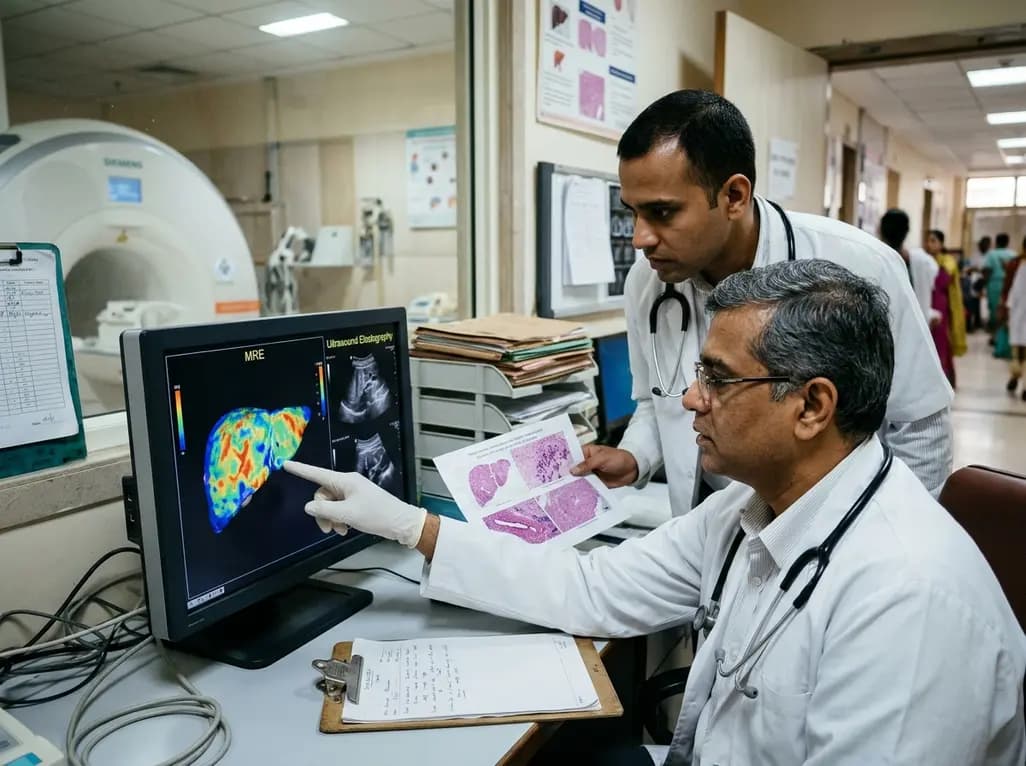
A comparative study reveals magnetic resonance elastography outperforms ultrasound elastography in assessing liver fibrosis in Fontan-associated liver disease, demonstrating stronger histological agreement and superior discrimination.
Today

A systematic review and meta-analysis highlights the substantial impact of plyometric jump training on jump performance, reactive strength, and landing kinematics in female team-sport athletes, providing evidence-based programming guidelines for sports medicine and orthopedics.
Today

A comprehensive review of the role of growth hormone in diabetic kidney disease and podocytopathy. Learn how elevated GH activates ZEB2, Notch, and TGF-beta1, driving podocyte loss and glomerulosclerosis, and explore novel targeted therapeutic approaches.
Today
