.webp&w=384&q=75)

Loading, please wait...
Loading, please wait...

Major depressive disorder represents a significant global health burden that extends far beyond subjective mood disturbances. Emerging neuroimaging research demonstrates that chronic affective illness can alter the biological trajectories of cerebral aging. Consequently, investigators increasingly utilize brain age prediction models to quantify deviations from normative neuroanatomical senescence. These computational frameworks evaluate high-resolution structural magnetic resonance imaging scans to compute a biological age for the brain. By subtracting chronological age from this estimated value, researchers derive the brain-predicted age difference, commonly termed brain-PAD. A positive brain-PAD indicates accelerated structural senescence, whereas a negative value reflects neural resilience.
Historically, psychiatrists lacked objective biological markers to assess cumulative neural wear across the lifespan. However, machine learning algorithms now transform conventional volumetric data into individualized indices of neuropathological progression. Recent clinical investigations have sought to determine whether recurrent depressive episodes actively accelerate biological decay. Furthermore, researchers want to establish whether shared physiological cascades govern both emotional pathology and tissue atrophy. Stressful life experiences, neuroendocrine dysregulation, and neuroinflammation represent plausible overlapping mechanisms. Therefore, applying brain age prediction to clinical cohorts provides unprecedented insights into the pathophysiological intersection of psychiatric illness and progressive structural decline.
Machine learning methodologies require rigorous validation before deployment in clinical research paradigms. To ensure maximum analytical precision, investigators evaluated three established pretrained models using structural neuroimaging data from the REDEEM cohort. Specifically, the study benchmarked brainageR, DeepBrainNet, and pyment within a normative control group of healthy individuals. Among these three computational candidates, DeepBrainNet demonstrated superior predictive accuracy in estimating chronological age among healthy controls. As a result, researchers selected DeepBrainNet to examine neuroanatomical divergences across the entire cohort.
DeepBrainNet leverages advanced deep convolutional neural network architectures trained on extensive structural datasets. Consequently, this model accurately captures subtle, non-linear cortical thinning and subcortical volume reductions across diverse brain regions. In contrast, simpler regression-based approaches often miss localized architectural shifts. Establishing high baseline accuracy in healthy controls remains essential because any baseline error directly skews subsequent brain-PAD calculations. By confirming minimal prediction variance in healthy subjects, the authors ensured that observed age gaps in psychiatric cohorts reflected genuine neurobiological deviations. Moreover, DeepBrainNet processes raw T1-weighted structural scans with exceptional computational efficiency. This methodological reliability provides clinicians and researchers with a standardized biomarker framework to investigate systemic affective brain pathology.
The primary findings from the DeepBrainNet analysis revealed critical insights regarding biological brain aging in major depression. Linear regression models identified a statistically significant Age by Group interaction effect on brain-PAD values. Specifically, older adults with major depressive disorder demonstrated significantly larger positive deviations from normative predictions compared to age-matched healthy controls. In contrast, younger depressed adults did not show pronounced structural aging discrepancies. Therefore, the data demonstrate that depressive illness does not exert uniform biological effects across the entire adult lifespan.
This age-dependent divergence indicates that cumulative disease burden substantially accelerates structural deterioration in later life. Decades of chronic, untreated, or recurrent depressive episodes may progressively exhaust neural compensatory mechanisms. In addition, older individuals frequently carry higher vascular and systemic inflammatory burdens that exacerbate underlying mood-related neurotoxicity. Interestingly, the regression models also revealed notable sex differences. Female participants consistently exhibited lower brain-PAD values than male participants, reflecting younger-appearing neuroanatomy relative to their chronological age. This protective physiological margin persisted even after adjusting for psychiatric diagnoses and environmental confounders. Thus, structural brain decline in affective disorders follows a complex, non-linear trajectory shaped by advancing age and biological sex.
Beyond chronological age, early environmental adversity strongly influences psychiatric vulnerability and neurobiological architecture. Participants diagnosed with major depressive disorder reported significantly higher rates of childhood maltreatment than healthy controls. Clinicians recognize that early trauma disrupts sensitive developmental windows, permanently sensitizing stress response networks. Furthermore, severe maltreatment promotes persistent microglial activation and systemic low-grade inflammation. Over time, these allostatic burdens compromise dendritic arborization, particularly within vulnerable frontolimbic networks.
Simultaneously, investigators examined the cortisol awakening response to evaluate hypothalamic-pituitary-adrenal axis functionality. Surprisingly, the depressed cohort demonstrated cortisol awakening response profiles comparable to those observed in healthy control participants. However, regression analyses identified an intriguing negative association between the cortisol awakening response and brain-PAD values across subjects. A robust cortisol rise upon waking traditionally reflects intact endocrine adaptability and healthy neuroendocrine dynamism. Conversely, a blunted morning cortisol peak indicates adrenal fatigue and chronic glucocorticoid receptor down-regulation. Consequently, diminished neuroendocrine adaptability correlates with heightened structural aging markers. These collective findings suggest that developmental trauma creates latent vulnerability, whereas progressive neuroendocrine exhaustion accelerates structural brain wear throughout adulthood.
The observation that brain aging accelerates preferentially in older depressed adults carries direct therapeutic implications. Clinicians must recognize that major depressive disorder in geriatric patients involves substantial structural vulnerability alongside emotional suffering. Therefore, treatment paradigms must move beyond symptomatic mood control to emphasize comprehensive neuroprotection. Interventions that reduce neuroinflammation and promote synaptic plasticity, such as regular physical exercise, may preserve cognitive resilience. In addition, early therapeutic interventions in younger cohorts could prevent the progressive, non-linear neural divergence seen in later decades.
Furthermore, brain age prediction provides a non-invasive biomarker to track biological therapeutic efficacy. Traditional clinical trials rely on subjective patient questionnaires that fail to capture underlying anatomical shifts. By monitoring brain-PAD dynamically over time, clinicians could objectively evaluate whether antidepressants, ketamine, or psychotherapy successfully decelerate structural senescence. Moreover, identifying accelerated brain age early allows physicians to implement aggressive risk factor modifications. Clinicians can actively screen for concurrent metabolic, cardiovascular, and sleep disorders that exacerbate cortical atrophy. Ultimately, integrating structural neuroimaging into routine psychiatric workflows moves clinical practice closer to individualized, closed-loop precision medicine.
While cross-sectional datasets like REDEEM illuminate vital correlations, prospective longitudinal studies remain essential to confirm causality. Future investigations must track depressed individuals across multiple decades to determine when structural divergence accelerates. In addition, researchers should incorporate multi-modal neuroimaging protocols that combine structural MRI with functional connectivity and diffusion tensor imaging. Combining these modalities will uncover how white matter disruption and functional dysconnectivity align with elevated brain-PAD metrics.
Equally important is the exploration of genetic and epigenetic modulators that drive individualized brain aging trajectories. For example, polygenic risk scores for neurodegenerative conditions may interact synergistically with recurrent depressive episodes. Furthermore, expanding cohorts across diverse global populations will validate whether predictive algorithms maintain accuracy across varied demographic backgrounds. Machine learning developers must also refine deep neural networks to produce explainable heatmaps of localized tissue loss. Such technological advances will help clinicians distinguish generalized atrophy from disease-specific neuropathology. Through sustained interdisciplinary collaboration between psychiatry, neurology, and artificial intelligence, structural brain biomarkers will soon transform psychiatric diagnosis and prognosis worldwide.
Brain-predicted age difference, or brain-PAD, measures the gap between an individual's biological brain age and their chronological age. Sophisticated deep learning algorithms analyze structural MRI scans to estimate biological age. Subtracting chronological age from this prediction yields brain-PAD, where positive values denote accelerated brain aging and tissue reduction.
DeepBrainNet demonstrated superior accuracy because its deep convolutional architecture captures intricate, non-linear structural patterns across cortical and subcortical regions. Pretrained on extensive datasets, the model minimized prediction error when assessing healthy controls. This robust normative accuracy ensured that subsequent brain-PAD calculations accurately reflected genuine psychiatric and neuropathological variations.
Childhood trauma causes chronic neuroendocrine stress and neuroinflammation, priming neural circuits for heightened vulnerability later in life. Concurrently, a preserved cortisol awakening response reflects adaptive endocrine flexibility, correlating with lower brain-PAD. Blunted morning cortisol responses indicate hypothalamic-pituitary-adrenal axis exhaustion, which correlates with accelerated structural brain decline and diminished neuroresilience.
Disclaimer: This content is for informational and educational purposes only. It is not intended to provide any medical advice or be a substitute for professional medical diagnosis, treatment, or advice. Always seek the advice of your physician or other qualified health providers with any questions you may have regarding a medical condition. Refer to the latest local and national guidelines for clinical practice.
References

Read summarized clinical updates, watch expert medical content, and earn CME certifications right from your smartphone.
Open your smartphone camera to scan and install.





A groundbreaking study published in Psychological Medicine examines brain age prediction models in major depressive disorder. Using DeepBrainNet, researchers revealed that older adults with depression exhibit pronounced structural brain aging, mediated by chronic stress pathways and early adverse life events.
Today

A North Texas pilot study reveals that combining virtual physician consultations with in-person house calls safely manages adult pneumonia. By utilizing CRB-65 severity scores, clinicians effectively triaged patients, providing home-based recovery while directing higher-risk individuals to emergency care.
Today

A quasi-experimental study demonstrates that culturally tailored educational interventions significantly boost HPV knowledge and vaccination intentions. These findings provide actionable strategies for healthcare providers in India to overcome vaccine hesitancy and advance cervical cancer prevention.
Today

A comprehensive meta-analysis evaluates the association between Body Mass Index and outcomes following abdominal aortic aneurysm repair. Discover how overweight and obesity correlate with lower mortality while underweight status confers heightened risk, challenging conventional preoperative risk stratification.
Today

The SOLARIO trial shows that a short course (≤7 days) of systemic antibiotic therapy is noninferior to long courses (≥4 weeks) in orthopedic infections treated with local antibiotic carriers, with significantly fewer adverse events.
Today
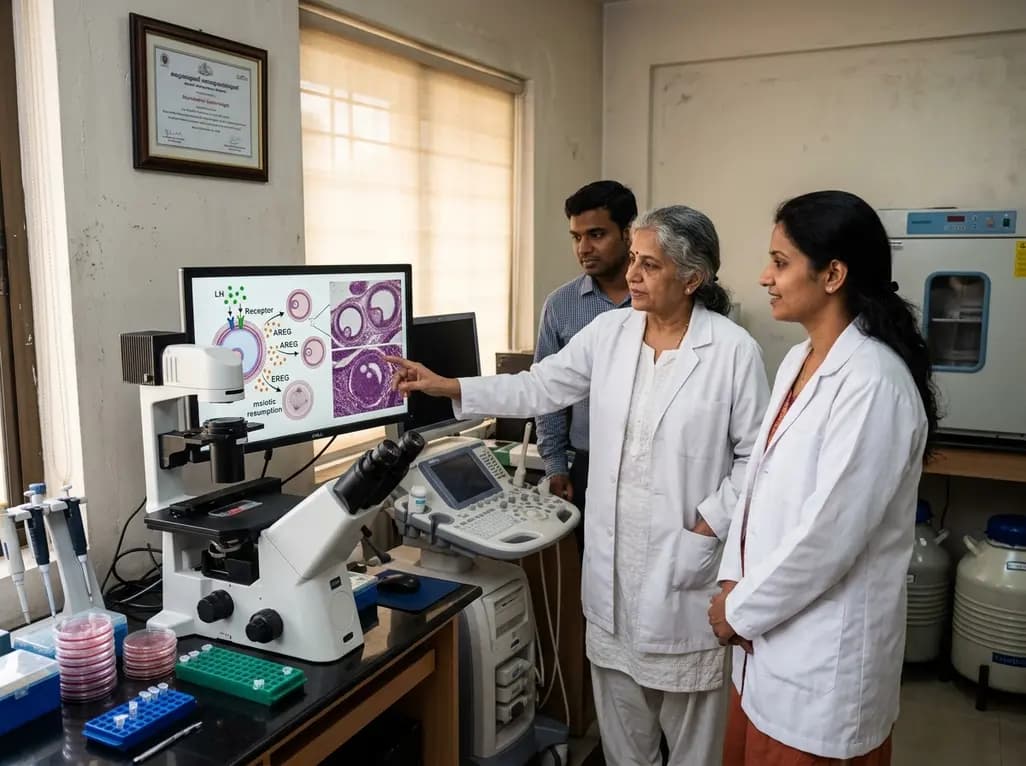
New research reveals that preovulatory follicles communicate via LH-induced paracrine signaling. Diffusible EGF ligands epiregulin and amphiregulin coordinate oocyte meiotic resumption across neighboring follicles, challenging traditional concepts of follicular autonomy.
Today
