.webp&w=384&q=75)

Loading, please wait...
Loading, please wait...

Epidemiological research increasingly reveals complex interconnections between psychiatric illness and metabolic gastrointestinal conditions. In particular, clinicians are investigating how mental health disorders influence hepatobiliary health. Recent investigations into depression and cholelithiasis highlight a compelling biological and clinical relationship. Major depressive disorder contributes to diverse systemic manifestations that extend well beyond neurocognitive dysfunction. Therefore, understanding whether mood disturbances alter gallstone pathophysiology is critical for holistic patient management. A landmark investigation evaluates this relationship through rigorous observational and genetic methodologies.
Gallstone disease, or cholelithiasis, represents one of the most common digestive disorders worldwide. Concurrently, depressive disorders afflict hundreds of millions of individuals across all age brackets. Historically, clinicians viewed these two widespread conditions as completely distinct entities. However, emerging physiological insights suggest shared underlying inflammatory and endocrine pathways. Chronic psychological stress persistently activates the hypothalamic-pituitary-adrenal axis. Consequently, elevated cortisol levels alter hepatic lipid metabolism and impair bile acid secretion. Furthermore, psychological distress frequently causes gallbladder dysmotility through autonomic nervous system dysregulation. Sympathetic overactivity and altered vagal tone delay gallbladder emptying, fostering biliary stasis. In addition, patients experiencing mood disorders frequently adopt sedentary habits and altered dietary patterns. These behavioral modifications accelerate cholesterol supersaturation within the biliary tree. Therefore, biological vulnerability and lifestyle factors create a fertile environment for gallstone formation. Clinicians must acknowledge these overlapping pathways when evaluating at-risk individuals.
To establish whether mood disturbances causally drive gallstone formation, researchers implemented a two-sample Mendelian randomization study. Observational analyses often struggle with residual confounding and reverse causality. In contrast, Mendelian randomization leverages genetic variants as instrumental variables to deduce true causal relationships. The investigators utilized a comprehensive genome-wide association dataset for major depressive disorder comprising 135,458 cases and 344,901 controls. For the cholelithiasis dataset, they extracted genetic data from FinnGen, including 19,023 cases and 195,144 controls. The analytical team applied inverse variance weighting as the primary statistical methodology. Notably, the genetic analysis demonstrated that major depressive disorder significantly increases cholelithiasis risk, showing an odds ratio of 1.25. Sensitivity analyses confirmed the robustness of these findings without directional pleiotropy. Thus, genetic liability to depression directly elevates gallstone susceptibility. These results provide rigorous genetic support for a directional relationship extending from psychiatric illness to hepatobiliary pathology.
In addition to genetic analyses, the investigators explored observational data from the National Health and Nutrition Examination Survey spanning 2017 to March 2020. This cohort included 7,071 adult participants who provided complete clinical and psychosocial profiles. The researchers categorized depression severity using the Patient Health Questionnaire-9 into no, mild, moderate, and severe depression. Furthermore, they employed weighted multivariable-adjusted logistic regression to control for potential confounders such as age, sex, and body mass index. Interestingly, the results revealed a distinct severity-dependent gradient. Moderate depression raised the odds of cholelithiasis by 6 percent, showing an odds ratio of 1.06. Similarly, severe depression increased gallstone odds by 7 percent, yielding an odds ratio of 1.07. However, mild depression did not exhibit a statistically significant association with gallstone formation. Consequently, the findings suggest that gallstone risk escalates noticeably once depressive symptoms cross a moderate threshold of clinical severity.
Several biological mechanisms explain why depression severity directly influences biliary lithogenesis. First, systemic inflammation serves as a central driver in severe mood disorders. Elevated circulating cytokines, including interleukin-6 and tumor necrosis factor-alpha, impair hepatic canalicular transport proteins. As a result, bile composition shifts toward excess cholesterol relative to bile salts. Second, chronic neuroendocrine disruption alters biliary motility. Prolonged autonomic stress blunts cholecystokinin responsiveness in gallbladder smooth muscle cells. Consequently, bile sits stagnant in the gallbladder lumen, accelerating crystal nucleation. Moreover, patients with severe mood disorders experience profound disturbances in the gut microbiome. Dysbiosis alters bile acid deconjugation in the ileum, reducing the circulating bile acid pool. Additionally, severe depression disrupts sleep patterns and physical activity, worsening insulin resistance. Insulin resistance promotes hepatic cholesterol oversecretion, completing the multifactorial cascade toward cholelithiasis.
These research findings provide actionable guidance for medical practitioners across inpatient and outpatient care settings. In India and similar clinical settings, clinicians manage a heavy burden of both metabolic disorders and psychiatric illness. Because patients with moderate or severe depressive symptoms face elevated gallstone risk, physicians should maintain higher clinical suspicion for biliary colic. Gastroenterologists evaluating recurrent abdominal pain must routinely assess underlying mental health status. Conversely, psychiatrists and primary care physicians should recognize early symptoms of hepatobiliary disease in patients with major depression. Furthermore, therapeutic management should prioritize metabolic health alongside psychiatric stabilization. Encouraging regular physical activity and dietary modifications can reduce biliary lithogenicity while enhancing psychological resilience. Multidisciplinary collaboration between psychiatry, gastroenterology, and internal medicine ensures timely diagnostic evaluation. Ultimately, integrated physical and mental healthcare protocols will significantly reduce morbidity and healthcare costs.
Although these findings offer robust evidence, investigators emphasize the necessity of further prospective cohort research. Cross-sectional observational data capture clear associations, but longitudinal follow-up tracking disease onset over time remains vital. Future studies should examine whether targeted antidepressant therapies or psychotherapy can mitigate gallstone formation. Moreover, researchers need to evaluate whether specific classes of psychotropic medications influence biliary motility or cholesterol excretion. Longitudinal monitoring in diverse populations will determine if genetic susceptibility varies across diverse ethnic backgrounds. In addition, future clinical trials should investigate biomarker panels that capture early biliary sludging in depressed patients. Addressing these questions will refine preventive strategies and guide individualized screening pathways. As mechanistic research advances, clinicians will gain more precise tools to intervene before symptomatic gallstone complications develop.
Depression promotes gallstone development through chronic neuroendocrine activation and altered bile metabolism. Elevated cortisol and autonomic dysfunction impair gallbladder smooth muscle motility, causing bile stasis. Furthermore, systemic inflammation and insulin resistance increase biliary cholesterol saturation, which facilitates gallstone crystallization in patients experiencing moderate to severe psychological distress.
Mild depression may not generate sufficient neuroendocrine disruption or systemic inflammation to alter biliary physiology significantly. Patients with mild symptoms often maintain higher levels of physical activity and more regular dietary habits than those with severe illness, preventing the pronounced biliary stasis and cholesterol supersaturation that drive lithogenesis.
Routine abdominal ultrasound screening is not currently recommended for all depressed patients without symptoms. However, clinicians should maintain high clinical suspicion for biliary disease when depressed individuals report dyspepsia, nausea, or right upper quadrant discomfort, prompting timely diagnostic ultrasound evaluation and tailored metabolic interventions to prevent acute complications.
Disclaimer: This content is for informational and educational purposes only. It is not intended to be a substitute for professional medical advice, diagnosis, or treatment. Always seek the advice of your physician or other qualified health provider with any questions you may have regarding a medical condition. Never disregard professional medical advice or delay in seeking it because of something you have read here. Refer to the latest local and national guidelines for clinical practice.
References

Read summarized clinical updates, watch expert medical content, and earn CME certifications right from your smartphone.
Open your smartphone camera to scan and install.





A study combining Mendelian randomization and NHANES data reveals that moderate and severe depression significantly increase the risk of cholelithiasis, while mild depression does not show a significant association.
Today

A North Texas pilot study reveals that combining virtual physician consultations with in-person house calls safely manages adult pneumonia. By utilizing CRB-65 severity scores, clinicians effectively triaged patients, providing home-based recovery while directing higher-risk individuals to emergency care.
Today

A quasi-experimental study demonstrates that culturally tailored educational interventions significantly boost HPV knowledge and vaccination intentions. These findings provide actionable strategies for healthcare providers in India to overcome vaccine hesitancy and advance cervical cancer prevention.
Today

A comprehensive meta-analysis evaluates the association between Body Mass Index and outcomes following abdominal aortic aneurysm repair. Discover how overweight and obesity correlate with lower mortality while underweight status confers heightened risk, challenging conventional preoperative risk stratification.
Today

The SOLARIO trial shows that a short course (≤7 days) of systemic antibiotic therapy is noninferior to long courses (≥4 weeks) in orthopedic infections treated with local antibiotic carriers, with significantly fewer adverse events.
Today
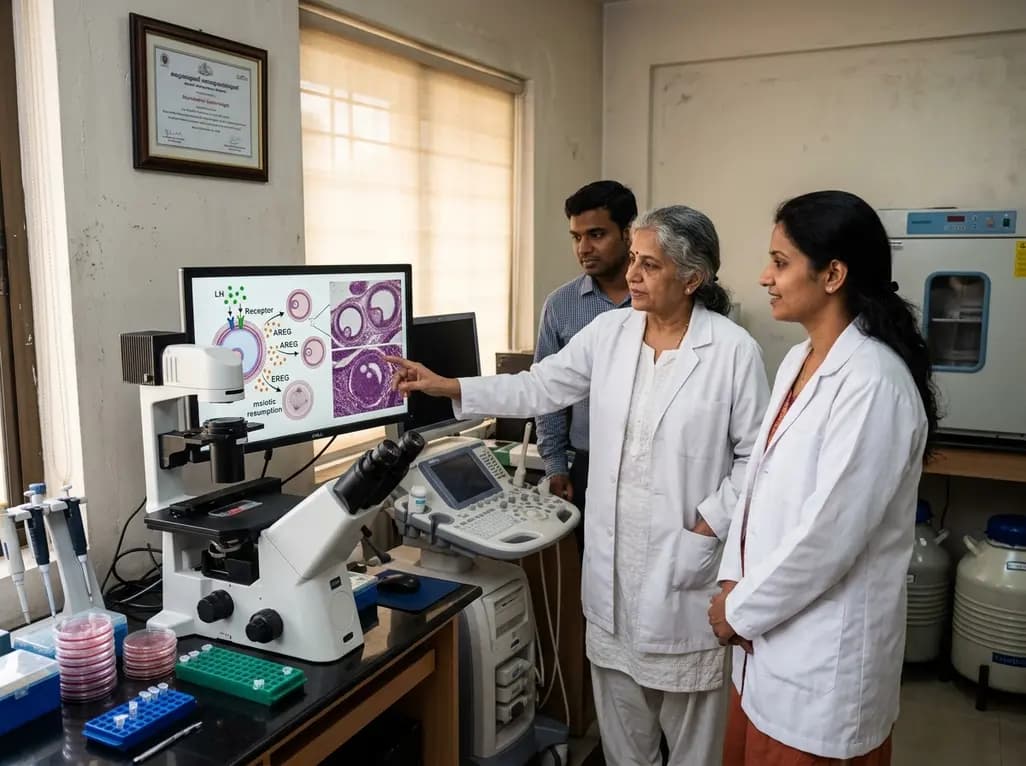
New research reveals that preovulatory follicles communicate via LH-induced paracrine signaling. Diffusible EGF ligands epiregulin and amphiregulin coordinate oocyte meiotic resumption across neighboring follicles, challenging traditional concepts of follicular autonomy.
Today
