.webp&w=384&q=75)

Loading, please wait...
Loading, please wait...
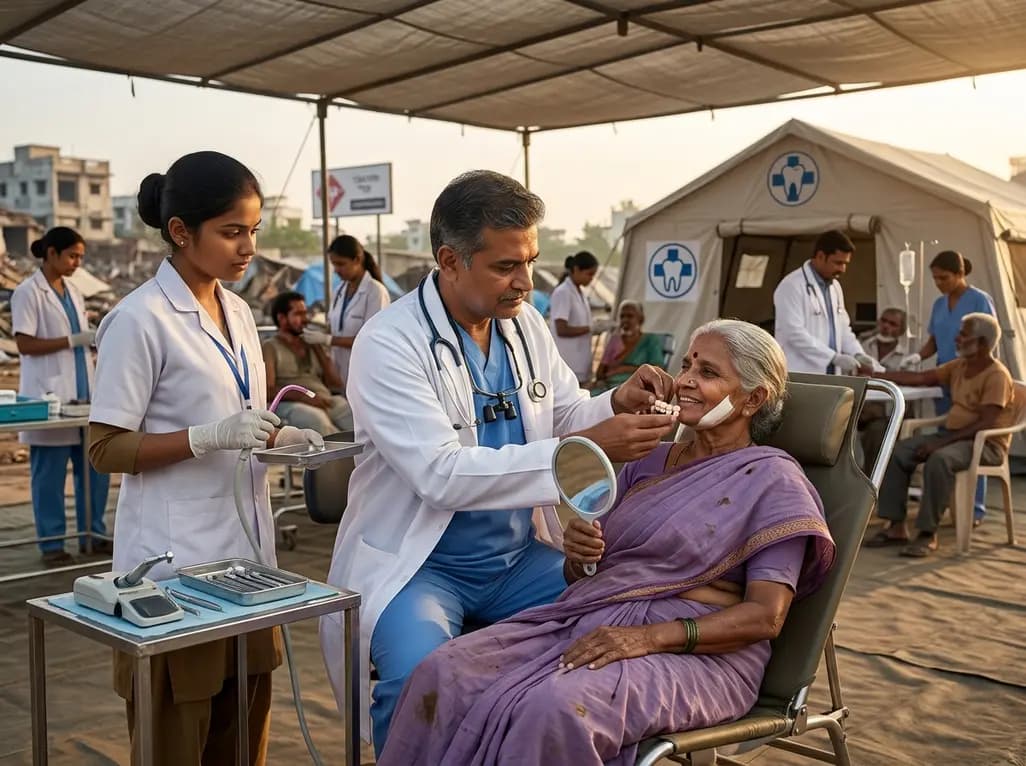
Disaster management frameworks often view dental professionals as secondary actors, primarily tasked with forensic identification or logistics. However, the role of dentists in disaster response is far more critical to clinical survival and long-term recovery than previously recognized. Recent research indicates that dental interventions directly address life-threatening issues such as airway stabilization and severe maxillofacial infections. Furthermore, these professionals play a central role in restoring basic physiological functions like chewing and speech. Consequently, their integration into emergency medical teams is becoming a public health priority.
Survival in the aftermath of a disaster depends heavily on nutritional rehabilitation. Many survivors suffer from oral trauma or the loss of dental prostheses, which severely limits their ability to consume solid food. Dentists in disaster response provide essential prosthodontic and surgical interventions that restore chewing efficiency. In addition, these clinicians manage acute pain and prevent systemic complications from oral infections. By focusing on functional recovery, dentists help patients maintain adequate nutrition during the high-stress recovery phase. Moreover, restoring a patient's smile and speech significantly supports their psychosocial well-being and restores a sense of dignity.
Despite these clear benefits, health systems rarely integrate dental professionals into official Emergency Medical Teams (EMTs). Policy experts argue that establishing standardized deployment pathways is necessary to improve disaster health outcomes. Specifically, incorporating mobile dental assets and predeployment training into national disaster medical systems can bridge existing gaps. Research suggests that quantified data on dental interventions will eventually drive policy changes. As a result, the healthcare community must recognize dentistry as an essential component of the survival and recovery continuum.
While dentists are known for victim identification, their clinical role includes stabilizing airways, managing maxillofacial trauma, and controlling acute infections to support overall survival.
By restoring the ability to chew and speak through surgical or prosthodontic care, dentists enable survivors to maintain proper nutrition, which is vital for healing and recovery.
Currently, dental professionals are underrepresented in EMTs. However, experts advocate for their integration into frameworks like the National Disaster Medical System to improve functional recovery.
Disclaimer: This content is for informational and educational purposes only. It does not constitute professional medical or dental advice, diagnosis, or treatment. Always seek the advice of a qualified healthcare provider with any questions regarding a medical condition. Refer to the latest local and national guidelines for clinical practice.
References
1. Rizek J et al. The Integral Role of Dentists During Disasters: Restoring Function, Nutrition, and Dignity. Public Health Rep. 2026 Jun 06. doi: 10.1177/00333549261455321. PMID: 42251490.
2. Patel R, Agrawal A, Chaudhary M. Role of Dentist in Disaster Management: A Review. J Integr Health Res. 2025;2(1):9-11. doi:10.5005/jihr-11055-0012.
3. Rai A, Das M, Pradhan S, Muchhal M. The Role of Dentist in Disaster Management: Indian Perspective. Int J Adv Res. 2023;11(08):557-565. doi:10.21474/IJAR01/17422.
"
Read summarized clinical updates, watch expert medical content, and earn CME certifications right from your smartphone.
Open your smartphone camera to scan and install.





A conceptual analysis reframes the role of dentists in disasters as essential for survival, clinical recovery, and restoring dignity to survivors....
4 months ago
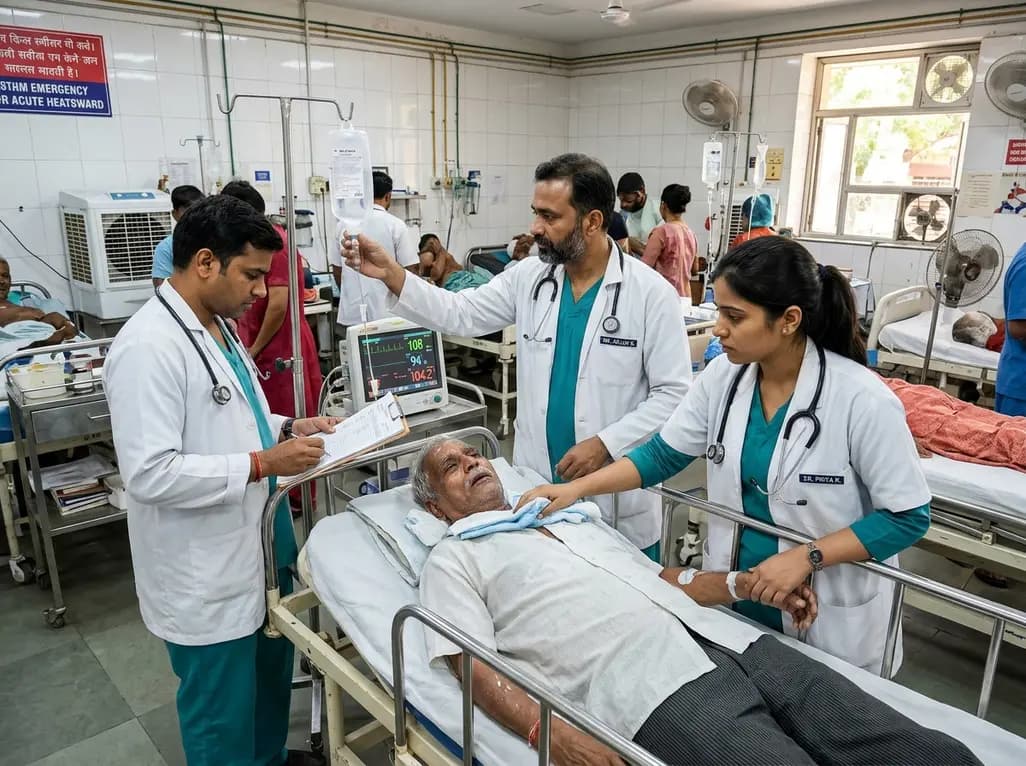
Recent epidemiological data reveals a dramatic surge in summer heat mortality driven by human-induced climate warming. This analysis explores the pathophysiological impacts on cardiac and renal systems, diagnostic dilemmas in death certification, and essential emergency cooling protocols for acute clinical care.
Today

Odisha has established India's first state-level clinical protocol specifically tailored for pregnant women with sickle cell disease. Developed with NHM and UNICEF, the framework provides structured antenatal screening, crisis mitigation, standardized referral pathways, and specialized interdisciplinary care.
Today

India is advancing preventive healthcare by integrating genomics, artificial intelligence, and quantum technologies. With the SANGAM programme sequencing one million Indian genomes, clinicians can unlock personalized therapies, detect cardiometabolic risks early, and curb the burden of diabetes and heart disease.
Today

A randomized controlled trial demonstrates that an eight-week dual-task training intervention significantly improves static and dynamic postural control over standard balance exercises in individuals with chronic ankle instability, addressing critical neurocognitive deficits during athletic and daily activities.
Today

A retrospective cohort study of 7,716 ICU patients from the MIMIC-IV database demonstrates that Gradient Boosting Decision Trees significantly outperform traditional SOFA scores in predicting in-hospital mortality among patients with sepsis and diabetes, with SHAP analysis providing clinical interpretability.
Today
