.webp&w=384&q=75)

Loading, please wait...
Loading, please wait...

Dentin hypersensitivity represents a frequent clinical complaint that challenges dental practitioners across routine restorative and preventive care. Typically, patients describe this discomfort as a sharp, transient pain elicited by thermal, evaporative, or chemical stimuli. According to Brännström's hydrodynamic theory, fluid movement within open tubules directly stimulates intradental mechanoreceptors. Therefore, successful management depends heavily on reducing dentin permeability through effective tubule occlusion. Specifically, recent laboratory research provides compelling comparative data on newer topical agents that restrict tubular fluid filtration.
Exposed dentin surfaces permit rapid fluid displacement whenever external stimuli contact the tooth structure. In a healthy oral environment, enamel and cementum seal the underlying tubular network. However, non-carious cervical lesions, aggressive toothbrushing, gingival recession, and dietary acid erosion frequently strip these protective barriers away. Consequently, patent tubules allow oral fluids to shift inward or outward under capillary and osmotic pressure gradients. This rapid fluid displacement deforms the nerve endings of the subodontoblastic plexus, which triggers acute pain.
Clinical management strategies traditionally focus on two distinct biological approaches. First, nerve-desensitizing agents such as potassium salts depolarize nerve fibers, although they fail to address the underlying structural defect. Second, obliterating agents mechanically seal or mineralize the exposed tubule orifices. By reducing dentinal fluid movement, occlusion directly lowers hydrodynamic sensitivity. Furthermore, measuring hydraulic conductance provides researchers with a validated, objective benchmark to quantify fluid flow across prepared dentin disks. Through this quantitative testing, investigators can accurately measure how effectively surface barriers reduce permeability under standardized hydrodynamic pressures. Accordingly, understanding these hydrodynamic dynamics enables dental surgeons to select durable materials that deliver predictable desensitization.
A notable in vitro investigation rigorously assessed several modern formulations against open dentin tubules. The researchers selected horizontal one-millimeter coronal dentin disks from extracted human molars to evaluate fluid filtration. Initially, they conditioned all specimens with two percent citric acid to eliminate the smear layer and ensure tubule patency. Next, they randomized the disks into five distinct intervention groups to compare individual performance under uniform laboratory conditions.
The experimental arms included Clinpro Fluoride Treatment, PRG Barrier-Coat, PRG Pro-Care Gel, and an experimental glycerol-stabilized calcium phosphate cluster gel. Additionally, the investigators utilized a distilled-water group as a negative control. Clinpro represents a recognized sodium-fluoride varnish formulated with functionalized tricalcium phosphate. In contrast, PRG Barrier-Coat and PRG Pro-Care Gel utilize surface pre-reacted glass-ionomer filler technology. The experimental cluster gel introduces an innovative remineralizing vehicle designed to stabilize calcium and phosphate ions. By testing these formulations side by side, the authors evaluated how different chemistries alter hydraulic resistance over repeated applications. Ultimately, each product exhibited measurable differences in sealing capability and fluid restriction. Therefore, this controlled experimental design allows clinicians to contrast physical resinous coatings directly against self-assembling chemical mineral precipitates.
To accurately measure fluid movement, the investigators utilized a custom hydraulic conductance apparatus operating at three pounds per square inch. This hydrostatic pressure reliably mimics physiological intrapulpal pressure gradients observed in vital human teeth. Specifically, the apparatus recorded the precise time required for fifty microliters of deionized water to pass through each prepared dentin specimen. By establishing baseline filtration rates before intervention, the team secured reliable within-sample comparisons for every specimen.
Following the first application, Clinpro Fluoride Treatment and PRG Barrier-Coat induced an immediate, statistically significant reduction in fluid flow. However, the experimental calcium phosphate gel produced a more moderate initial decline in hydraulic conductance. After the second application, Clinpro and both surface pre-reacted glass-ionomer formulations achieved near-zero permeability values. In contrast, distilled water produced no reduction, confirming that fluid restriction stemmed purely from the applied materials. Moreover, scanning electron microscopy corroborated these functional results by revealing substantial, progressive occlusion across the tubular orifices. These complementary microscopic images confirmed that mechanical obliteration accounts directly for the dramatic loss of dentinal fluid transit. Consequently, hydraulic conductance remains an indispensable in vitro standard for predicting the immediate desensitizing potential of newly developed dental biomaterials.
The remarkable performance of sodium-fluoride varnish and surface pre-reacted glass-ionomer systems stems from distinct biochemical properties. Clinpro Fluoride Treatment combines concentrated sodium fluoride with functionalized tricalcium phosphate. When applied to moist tooth structures, this varnish releases bioavailable ions that rapidly form insoluble calcium fluoride precipitates. These insoluble deposits pack tightly within the tubular apertures, creating an instantaneous mechanical plug against external fluid movement.
Meanwhile, materials incorporating surface pre-reacted glass-ionomer technology deliver multi-ion release. Specifically, PRG Barrier-Coat forms a durable, light-cured resinous matrix that seals the outer dentinal surface. Simultaneously, its bioactive fillers continuously elute six therapeutic ions: fluoride, sodium, strontium, aluminum, silicate, and borate. These elements promote local mineral deposition while exerting antimicrobial and acid-buffering effects. Furthermore, PRG Pro-Care Gel provides high-density tubule coverage across repeated applications without requiring a light-cured adhesive layer. In comparison, the experimental glycerol-stabilized calcium phosphate cluster gel relies on sustained mineral precipitation, achieving meaningful but gradual fluid inhibition. Thus, combining mechanical coverage with bioavailable mineral precursors yields the fastest, most profound barrier against tubular fluid dynamics. Consequently, clinicians can harness these diverse biochemical mechanisms to deliver individualized treatment protocols for varied patterns of dentinal wear.
Dentin hypersensitivity occurs with substantial frequency in dental clinics throughout India. Factors such as hard-bristled toothbrushing, abrasive tooth powders, betel quid usage, and acidic diets accelerate cervical tooth loss. As cervical enamel wears away, patients frequently present with excruciating sensitivity that disrupts everyday eating and oral hygiene maintenance. Therefore, adopting in-office desensitizers that demonstrate rapid, verifiable reduction in fluid conductance provides immediate patient comfort and builds clinical trust.
When managing non-carious cervical lesions, selecting between a barrier coat and a fluoride varnish depends on compliance and lesion severity. Resinous materials like PRG Barrier-Coat offer long-lasting physical retention that withstands dietary acid challenges and toothbrush abrasion. Conversely, fluoride varnishes like Clinpro provide rapid, cost-effective in-office relief that practitioners can apply swiftly during routine prophylaxis visits. Furthermore, incorporating bioactive home-care gels, such as PRG Pro-Care Gel, supports ongoing tubule occlusion between visits. Indian dental surgeons can therefore tailor multi-step desensitizing protocols based on lifestyle habits, dietary erosion risk, and defect depth. Ultimately, combining robust in-office tubule obliteration with targeted home maintenance ensures durable sensitivity relief for diverse patient populations. Accordingly, integrating proven occluding biomaterials elevates standard conservative restorative care and enhances overall oral health outcomes across Indian clinical practices.
Hydraulic conductance directly measures the rate of fluid filtration across exposed dentin discs under controlled hydrostatic pressure. Because Brännström's hydrodynamic theory links dentin hypersensitivity to rapid intratubular fluid displacement, lowering hydraulic conductance serves as a proven surrogate for clinical desensitization. When applied materials block tubular lumina and eliminate fluid movement in vitro, patients typically experience immediate reduction in sensitivity to thermal, evaporative, and mechanical chairside stimuli during subsequent clinical evaluations.
Surface pre-reacted glass-ionomer agents achieve near-zero permeability through dual mechanical and chemical actions. Formulations like PRG Barrier-Coat polymerize into a robust resin film that physically seals tubular orifices against fluid movement. Simultaneously, the embedded bioactive fillers release multiple therapeutic ions, including strontium, fluoride, and silicate. These ions react with surrounding dentinal moisture to induce secondary mineral precipitation inside open tubules, creating a deep, durable physiological seal that withstands repeated hydrodynamic pressure challenges.
Dental surgeons should initiate management by identifying and mitigating causative factors such as improper brushing techniques, acidic diets, or bruxism. Clinicians can then apply a fast-acting in-office occluding agent, such as a bioactive barrier coat or tricalcium phosphate fluoride varnish, to achieve immediate tubular closure. For persistent discomfort, combining in-office sealants with prescribed home-care remineralizing gels ensures sustained symptom control while preventing further loss of cervical tooth structure over extended treatment periods.
Disclaimer: This content is for informational and educational purposes only... Refer to the latest local and national guidelines for clinical practice.
References

Read summarized clinical updates, watch expert medical content, and earn CME certifications right from your smartphone.
Open your smartphone camera to scan and install.





A recent in vitro study evaluated modern desensitizing agents using hydraulic conductance. Sodium fluoride varnish and S-PRG materials achieved near-zero dentin permeability, highlighting effective tubule occlusion strategies for managing dentin hypersensitivity in daily clinical dental practice.
4 weeks back

Small airway dysfunction affects over 64% of asthma patients across GINA steps. Utilizing impulse oscillometry provides crucial diagnostic insight, revealing persistent peripheral resistance linked to frequent exacerbations, suboptimal asthma control, and impaired patient quality of life.
Today

A large UK cohort study of 1.4 million women shows that pregnancy complications, including gestational diabetes, hypertension, and preterm birth, substantially raise long-term risks for hypertension, chronic kidney disease, type 2 diabetes, and cardiovascular events, highlighting early postpartum intervention needs.
Today
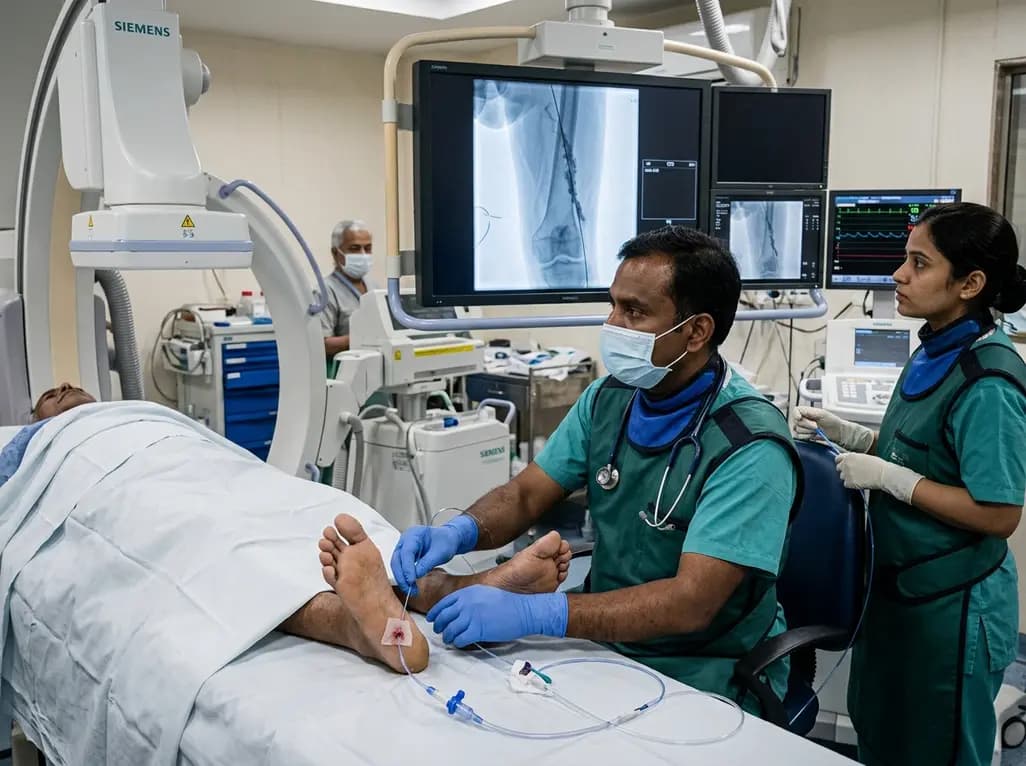
A clinical study demonstrates that retrograde pedal access achieves a 90.9% technical success rate for intraluminal crossing in complex infrainguinal chronic total occlusions, securing outstanding limb salvage, complete wound healing, and durable patency in patients with chronic limb-threatening ischemia.
Today

This clinical overview examines recent advancements in lumbar disc herniation surgery, comparing microscopic and full-endoscopic discectomy while highlighting biportal techniques and emerging motion-preserving innovations for spine specialists.
Today

The World Health Organization has issued its first global guidelines for managing child and adolescent obesity. The recommendations strongly endorse family-based dietary interventions, regular physical activity, and behavioral support as frontline therapy, reserving GLP-1 therapies and surgery for select cases.
Today
