.webp&w=384&q=75)

Loading, please wait...
Loading, please wait...

Asthma management has historically centered on large conducting airways. However, contemporary evidence demonstrates that small airway dysfunction represents a pivotal driver of disease instability. The peripheral bronchial tree, comprising airways with an internal diameter below two millimeters, constitutes the quiet zone of the respiratory system. Recent investigations highlight that physiological impairment in these distal segments profoundly influences daily symptom burden and treatment failure. Therefore, clinicians must re-examine conventional spirometric assessments to capture subtle peripheral airway pathology.
For decades, clinicians assumed that peripheral airway abnormalities emerged exclusively in advanced or steroid-refractory asthma. Recent prospective data strongly refute this assumption. In a recent clinical investigation, researchers identified small airway dysfunction in 64.3% of adult asthma patients. Remarkably, this high prevalence was evident across all treatment tiers established by the Global Initiative for Asthma. Patients categorized under mild steps exhibited demonstrable distal flow impairment alongside those with severe refractory disease. Consequently, physicians cannot rely solely on disease stage to gauge peripheral involvement. Furthermore, traditional spirometry often produces normal forced expiratory volume in one second values even when significant distal damage exists. Because the cumulative cross-sectional area of small airways is enormous, substantial resistance must accumulate before spirometric parameters decline. As a result, routine office spirometry frequently overlooks early peripheral airway narrowing. Thus, clinicians need sensitive, dedicated modalities that evaluate peripheral mechanics independently of large airway calibers. Recognizing this high prevalence encourages prompt diagnostic stratification in symptomatic individuals across primary and secondary care clinics.
To overcome the limitations of forced expiratory maneuvers, modern pulmonary laboratories increasingly utilize respiratory oscillometry. Impulse oscillometry provides an effort-independent, non-invasive method to assess respiratory impedance during quiet tidal breathing. Specifically, the technique delivers small sound waves across multiple frequencies into the patient's respiratory tract. High frequencies, such as twenty Hertz, reflect proximal and central airway resistance. In contrast, low frequencies, specifically five Hertz, penetrate deep into the peripheral lung parenchyma. Therefore, subtracting resistance at twenty Hertz from resistance at five Hertz isolates frequency-dependent peripheral airway resistance. The study identified small airway dysfunction using a validated threshold where R5 minus R20 equaled or exceeded 0.07 kPa·s·L⁻¹. Moreover, oscillometry evaluates lung reactance, which gauges tissue elastance and dynamic compliance through metrics like the area of reactance and resonant frequency. Because the maneuver requires minimal patient effort, it eliminates patient fatigue and forced exhalation artifacts. Consequently, impulse oscillometry provides reliable, highly reproducible data in diverse patient cohorts, including elderly and fragile asthmatic individuals.
Suboptimal symptom control remains a pervasive challenge in real-world clinical care. The prospective study revealed that elevated peripheral resistance directly associates with poor disease stability. Patients who exhibited marked small airway dysfunction reported significantly lower scores on the validated Asthma Control Test. In addition, these patients frequently suffered from nocturnal awakenings, persistent cough, and severe post-exertional dyspnea. Because small airways lack cartilaginous support, inflammatory wall thickening and intraluminal mucus plugs trigger dynamic airway collapse during expiration. Consequently, air trapping and ventilation heterogeneity develop rapidly during standard physical exertion. Furthermore, standard inhaled therapies often fail to deposit adequately into distal bronchioles, leaving ongoing mucosal inflammation untreated. As a direct consequence, patients continue to experience debilitating respiratory limitations despite high adherence to conventional inhalers. When physicians identify peripheral dysfunction early, they can actively adjust maintenance regimens before irreversible remodeling ensues. Therefore, measuring peripheral resistance bridges the gap between patient-reported symptom burden and objective physiological impairment.
Beyond daily symptom scores, small airway impairment profoundly deteriorates patient well-being and health-related quality of life. The Asthma Quality of Life Questionnaire demonstrated markedly reduced domain scores among patients with confirmed distal airway disease. In particular, physical activity domains and environmental exposure tolerance showed severe impairment. Furthermore, the prospective twelve-month follow-up confirmed a significant escalation in severe exacerbation events among individuals with peripheral involvement. Patients with small airway dysfunction experienced higher rates of unscheduled emergency visits, hospitalizations, and systemic corticosteroid bursts. Because peripheral mucus hypersecretion and chronic cellular inflammation compromise distal airway patency, minor viral infections easily precipitate catastrophic airflow closure. Moreover, repeated exacerbation cycles cause structural bronchial remodeling and accelerate lung function decline over time. Consequently, identifying peripheral pathology serves as a crucial prognostic biomarker for future risk stratification. Incorporating oscillometric assessments enables respiratory specialists to identify high-risk individuals before severe clinical exacerbations compromise long-term pulmonary health and overall well-being.
In India, physicians face unique clinical challenges due to pervasive air pollution, biomass fuel exposure, and post-tubercular structural sequelae. These environmental insults exacerbate distal airway inflammation and amplify asthma morbidity nationwide. Traditional coarse-particle pressurized metered-dose inhalers often deposit predominantly in the oropharynx and large airways, failing to penetrate deep alveolar ducts. Consequently, recognizing small airway dysfunction prompts an essential shift toward extra-fine particle inhaler formulations and fine dry powder inhalers. Extra-fine formulations offer mass median aerodynamic diameters below two micrometers, facilitating uniform distribution throughout peripheral bronchioles. In addition, comprehensive therapy must integrate environmental mitigation, rigorous inhaler technique training, and systematic monitoring using oscillometry where available. When patients present with poorly controlled symptoms despite normal spirometry, clinicians should suspect occult small airway pathology. Therefore, updating clinical diagnostic protocols across Indian respiratory clinics will improve symptom control, decrease emergency admissions, and substantially enhance the quality of life for millions of individuals living with chronic asthma.
Impulse oscillometry transmits gentle acoustic pulses into the respiratory tree during quiet, regular breathing. High-frequency sound waves evaluate proximal central airways, whereas low-frequency sound waves travel into peripheral bronchioles. Clinicians calculate peripheral airway resistance by subtracting central resistance at twenty Hertz from total resistance at five Hertz. When this differential equals or exceeds 0.07 kPa·s·L⁻¹, it reliably confirms peripheral dysfunction without requiring strenuous expiratory maneuvers.
Standard spirometry primarily measures airflow dynamics within large, central conduits through forced expiratory volume in one second. However, peripheral airways contribute less than twenty percent of total pulmonary resistance despite possessing a vast cumulative cross-sectional area. Consequently, extensive distal narrowing and chronic mucosal inflammation can develop silently while spirometry values remain completely within normal reference ranges. This diagnostic blind spot frequently leads clinicians to underestimate disease severity.
Targeting peripheral airways with extra-fine particle inhalers ensures effective drug deposition directly into distal bronchioles. This targeted therapeutic delivery suppresses localized mucosal inflammation, relieves persistent ventilation heterogeneity, and prevents dynamic expiratory airway collapse. As a direct result, patients achieve significantly better scores on the Asthma Control Test, experience fewer debilitating night awakenings, reduce annual systemic corticosteroid requirements, and enjoy an improved overall quality of life.
Disclaimer: This content is for informational and educational purposes only and should not be considered medical advice. Always consult a qualified healthcare professional regarding any medical condition or treatment. Refer to the latest local and national guidelines for clinical practice.
References

Read summarized clinical updates, watch expert medical content, and earn CME certifications right from your smartphone.
Open your smartphone camera to scan and install.





Small airway dysfunction affects over 64% of asthma patients across GINA steps. Utilizing impulse oscillometry provides crucial diagnostic insight, revealing persistent peripheral resistance linked to frequent exacerbations, suboptimal asthma control, and impaired patient quality of life.
Today

A large UK cohort study of 1.4 million women shows that pregnancy complications, including gestational diabetes, hypertension, and preterm birth, substantially raise long-term risks for hypertension, chronic kidney disease, type 2 diabetes, and cardiovascular events, highlighting early postpartum intervention needs.
Today
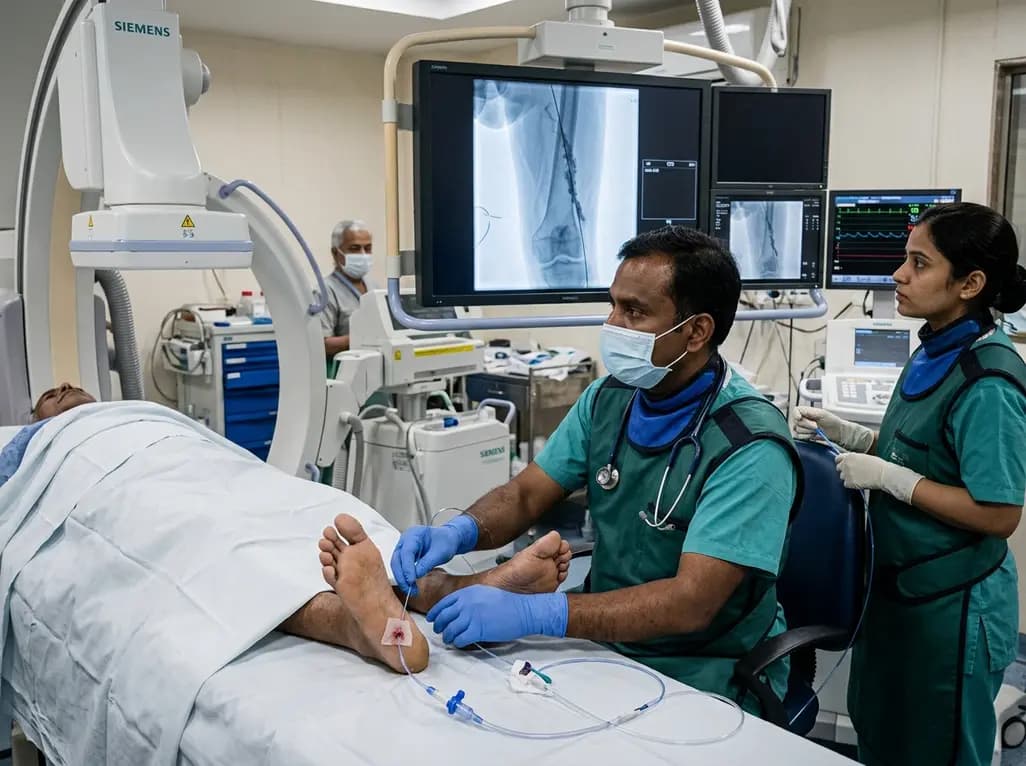
A clinical study demonstrates that retrograde pedal access achieves a 90.9% technical success rate for intraluminal crossing in complex infrainguinal chronic total occlusions, securing outstanding limb salvage, complete wound healing, and durable patency in patients with chronic limb-threatening ischemia.
Today
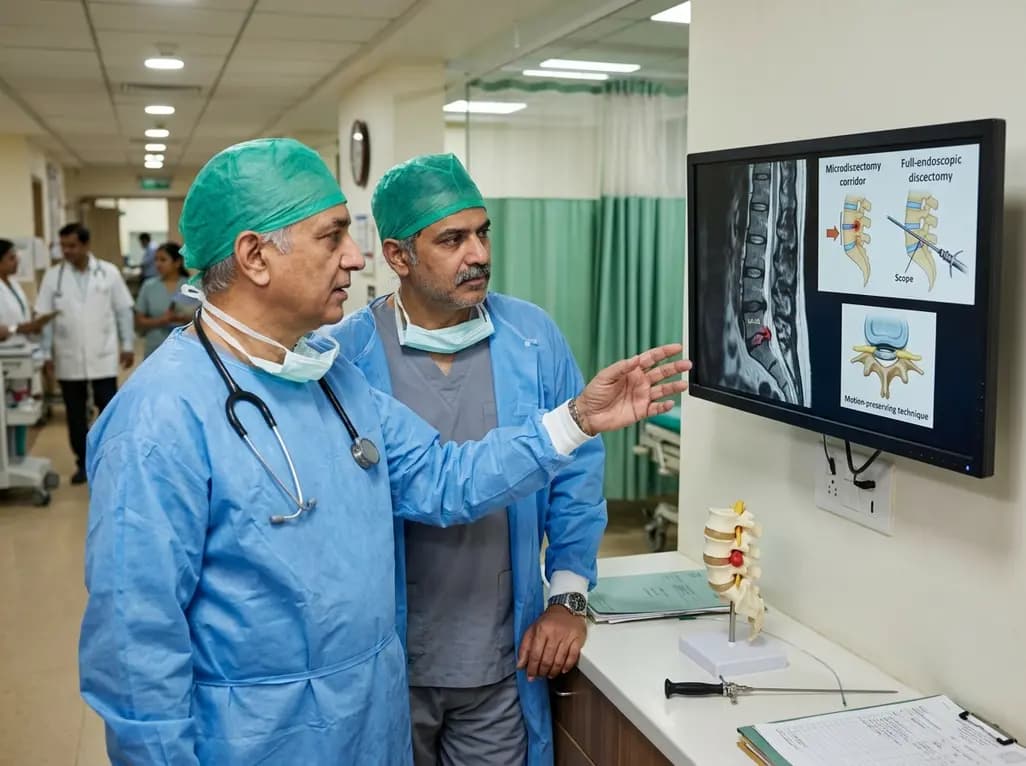
This clinical overview examines recent advancements in lumbar disc herniation surgery, comparing microscopic and full-endoscopic discectomy while highlighting biportal techniques and emerging motion-preserving innovations for spine specialists.
Today

The World Health Organization has issued its first global guidelines for managing child and adolescent obesity. The recommendations strongly endorse family-based dietary interventions, regular physical activity, and behavioral support as frontline therapy, reserving GLP-1 therapies and surgery for select cases.
Today
