.webp&w=384&q=75)

Loading, please wait...
Loading, please wait...
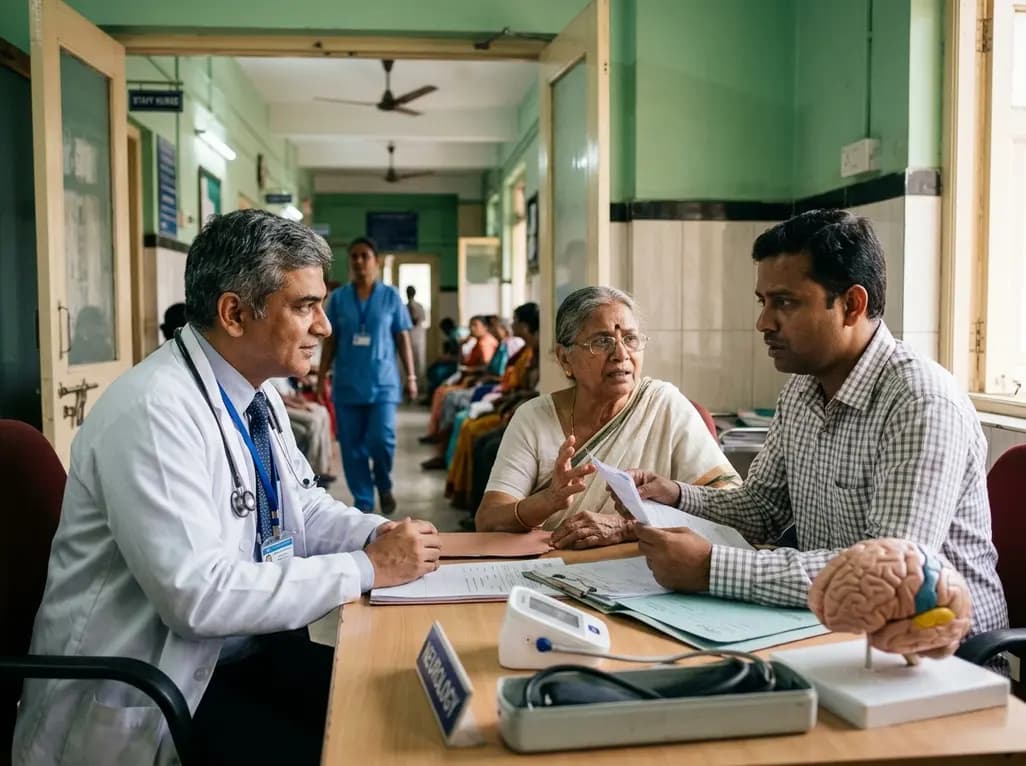
Addressing dementia public stigma has become an urgent clinical and public health priority worldwide. Although neurodegenerative decline impairs functional autonomy, negative societal beliefs often amplify patient suffering. Furthermore, healthcare providers frequently witness how social prejudices impede timely clinical consultations. When communities misunderstand cognitive impairment, patients endure debilitating isolation. Consequently, families delay necessary medical evaluations. A recent nationwide study provides crucial empirical insights into community perceptions, ageism, and emotional drivers. Understanding these dynamics enables clinicians to dismantle diagnostic barriers and improve clinical outcomes.
Public perceptions of neurodegenerative illnesses remain remarkably diverse and complex. Researchers recently conducted a representative population survey in the Netherlands involving 524 adult participants. Interestingly, respondents noted that describing a typical person with dementia is impossible because clinical manifestations vary widely across individuals. Many respondents recognized individuals with dementia as regular fellow citizens who deserve respect and social inclusion. Nevertheless, stereotypic characterizations regarding total helplessness and severe cognitive dependency persisted across several demographic cohorts. The researchers measured public attitudes using the validated Dementia Public Stigma Scale, which ranges from one to seven. The cohort exhibited a mean overall stigma score of 3.41, demonstrating an intermediate baseline level of negative community bias. Therefore, educational initiatives must convey the broad heterogeneity of neurodegenerative diseases rather than presenting monolithic caricatures.
Statistical analyses revealed decisive relationships between social exposure, personal attitudes, and dementia stigma. Specifically, multiple regression analysis demonstrated that personal familiarity with dementia significantly reduced stigmatizing attitudes. Individuals who maintained regular contact with affected persons in their private lives exhibited substantially lower stigma scores. Similarly, familiarity acquired through professional occupational settings predicted reduced prejudice. In contrast, ageist beliefs strongly correlated with heightened stigma scores. When individuals endorsed discriminatory attitudes toward older adults, their dementia-related prejudice increased proportionally. The researchers carefully controlled for gender, chronological age, educational attainment, and social desirability bias during their multivariable modeling. Consequently, these robust findings prove that negative aging stereotypes directly fuel public discrimination against cognitively impaired individuals. Clinicians must therefore recognize that ageism and dementia stigma share profound sociocultural intersections.
Public stigma manifests not merely through cognitive beliefs but predominantly through visceral emotional reactions. The study highlighted that emotional responses mediate the precise relationship between familiarity and discriminatory behaviors. For example, individuals who lack exposure to dementia often report feelings of discomfort, apprehension, and fear. These unpleasant emotional states directly foster social avoidance and patronizing behaviors. Conversely, meaningful interpersonal familiarity cultivates genuine empathy, reducing relational anxiety during everyday social interactions. When fear subsides, people interact with affected individuals naturally and respectfully. Therefore, interventions that solely impart biomedical facts cannot completely eliminate discriminatory tendencies. Healthcare advocates must deliberately target emotional responses to dismantle persistent social barriers. By normalizing social engagement and fostering comfortable environments, community programs can effectively reduce avoidance and exclusionary habits.
Public stigma generates profound downstream repercussions for clinical neurology and geriatric medicine. Most critically, pervasive stigma discourages symptomatic individuals from seeking timely diagnostic evaluations. Patients often fear social rejection, loss of legal autonomy, and workplace marginalization. Consequently, families conceal early executive dysfunction and progressive memory decline during initial clinic appointments. Primary care physicians frequently misinterpret early cognitive symptoms as benign aging changes because patients actively downplay their deficits. This pervasive hesitation causes profound diagnostic delays worldwide. As a result, patients present only after substantial neuronal loss has occurred. Such delays eliminate critical opportunities for early lifestyle interventions, cognitive rehabilitation, and emerging disease-modifying therapies. Moreover, internalized stigma worsens neuropsychiatric symptoms, increasing depression and accelerating functional decline in vulnerable seniors.
The lessons from this population study carry immense relevance for Indian clinical practice. India currently houses over eight million individuals living with dementia, a number escalating rapidly due to population aging. Nevertheless, an alarming ninety percent treatment gap persists across diverse Indian states. Cultural misconceptions frequently misattribute neurocognitive decline to inevitable senility, known locally as satheya jana, or spiritual punishment. Furthermore, Indian families often experience profound courtesy stigma, fearing that public disclosure will jeopardize familial marriage prospects. Consequently, family members shoulder overwhelming caregiver burdens in total isolation without formal medical support. Primary care physicians and family medicine specialists represent the primary frontline defense against this care crisis. Therefore, Indian clinicians must actively demystify cognitive decline during routine consultations, reframing dementia as an identifiable, treatable neurodegenerative medical disorder.
Physicians hold substantial clinical leverage to counteract public and internalized dementia stigma. First, clinicians should implement routine objective cognitive screening for all older adults presenting with non-specific complaints. Validated tools such as the Mini-Cog or Hindi Mental State Examination provide objective baseline data without provoking undue anxiety. Second, doctors should adopt empathetic, person-first terminology that emphasizes individual dignity rather than functional deficits. Third, healthcare teams must provide comprehensive caregiver education immediately following a formal diagnosis. Clinicians can actively reduce caregiver distress by connecting families with local support groups and community memory clinics. In addition, medical professionals must challenge pervasive ageist assumptions within clinical facilities. By modeling respectful, person-centered communication, physicians can transform public perceptions, eliminate diagnostic hesitation, and foster compassionate geriatric care environments.
Personal familiarity directly alters perceptions by replacing abstract stereotypes with nuanced human realities. When individuals regularly interact with people living with cognitive decline, they experience less social anxiety and fear. Consequently, these positive personal exposures diminish feelings of discomfort and social distance. Furthermore, greater familiarity fosters deep empathy and emotional understanding. These combined psychological shifts motivate people to support inclusive social environments rather than perpetuating unhelpful stereotypes or discriminatory social behaviors.
Public stigma creates severe social shame and pervasive fear of abandonment. As a result, individuals experiencing early cognitive symptoms frequently conceal their functional difficulties from relatives and medical practitioners. Families often normalize memory lapses as ordinary aging to avoid social labels. Consequently, patients avoid timely clinical screening until significant neurocognitive impairment emerges. This persistent avoidance deprives individuals of timely disease-modifying therapies, structured neurocognitive rehabilitation, and essential legal and financial advance care planning.
Physicians can systematically demystify neurocognitive disorders by framing dementia as a biological medical pathology rather than mental instability or spiritual fate. Furthermore, clinicians should routinely incorporate brief validated cognitive screening tools into geriatric visits. In addition, providing structured counseling to family caregivers significantly alleviates emotional distress and social isolation. Finally, establishing community awareness initiatives and patient support groups empowers families to seek prompt medical interventions without enduring debilitating cultural shame.
Disclaimer: This content is for informational and educational purposes only and does not constitute medical advice or establish a doctor-patient relationship. Qualified healthcare professionals should exercise their independent clinical judgment. Refer to the latest local and national guidelines for clinical practice.
References

Read summarized clinical updates, watch expert medical content, and earn CME certifications right from your smartphone.
Open your smartphone camera to scan and install.





A nationwide Dutch study evaluates dementia public stigma, showing familiarity reduces bias while ageism increases it. Learn how emotional reactions shape discrimination and how Indian clinicians can overcome diagnostic barriers to improve patient outcomes.
Today

Cardiovascular disease remains a primary health threat in India, where heart attacks strike a decade earlier than in Western nations. Through multidisciplinary heart teams, expanded diagnostic access, and breakthrough interventions like pulse field ablation, modern cardiology offers renewed survival and clinical recovery.
Today

The FEBE study investigates the prevalence of post-traumatic stress disorder symptoms in women receiving high-dose-rate brachytherapy for cervical cancer, highlighting the critical role of procedural sedation and trauma-informed clinical care.
Today

Aortic root aneurysms often develop silently, yet timely intervention provides a critical window to salvage the native aortic valve. Preserving the patient's own anatomy avoids lifelong anticoagulation, provided clinicians identify root dilatation before secondary leaflet distortion and ventricular failure occur.
Today

A Level I trauma center study shows a brief bedside mental health intervention boosts 30-day follow-up screening adherence by 84% in nonviolent injury patients. However, outcomes for violence survivors reveal critical care gaps, underscoring the urgent need for specialized community violence intervention programs.
Today
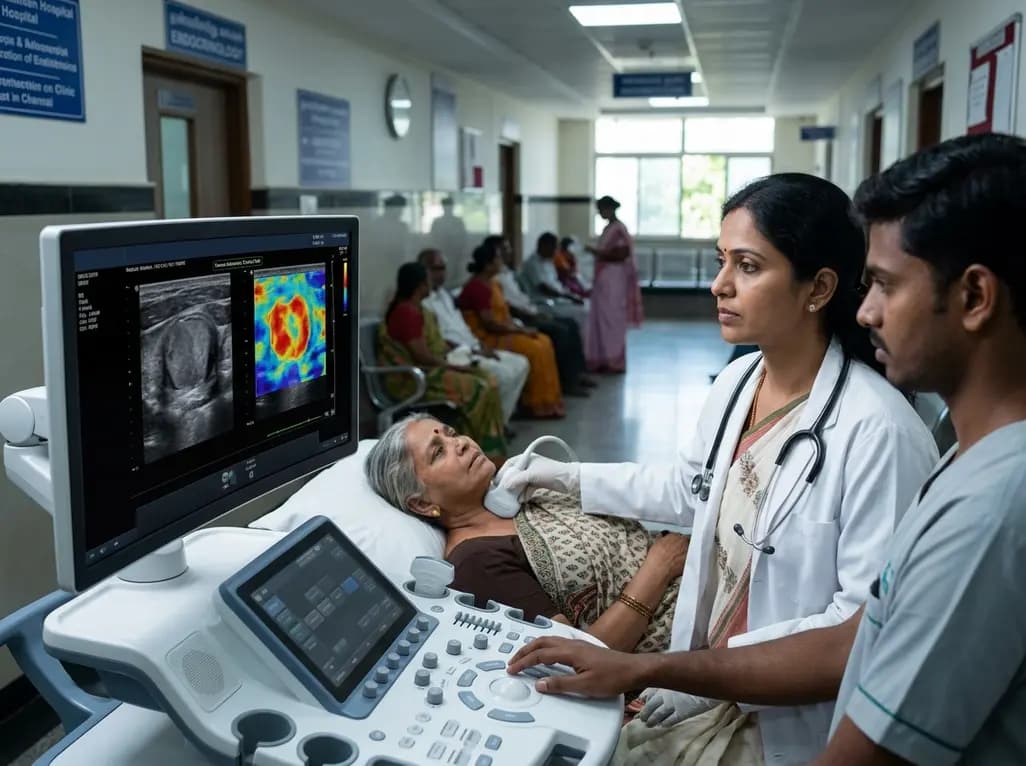
A study introduces a dual-discriminator generative adversarial network (DD-GAN) capable of generating virtual elastography ultrasound from standard B-mode images. The tool matches real elastography performance and improves thyroid nodule risk stratification when combined with TI-RADS.
Today
