.webp&w=384&q=75)

Loading, please wait...
Loading, please wait...
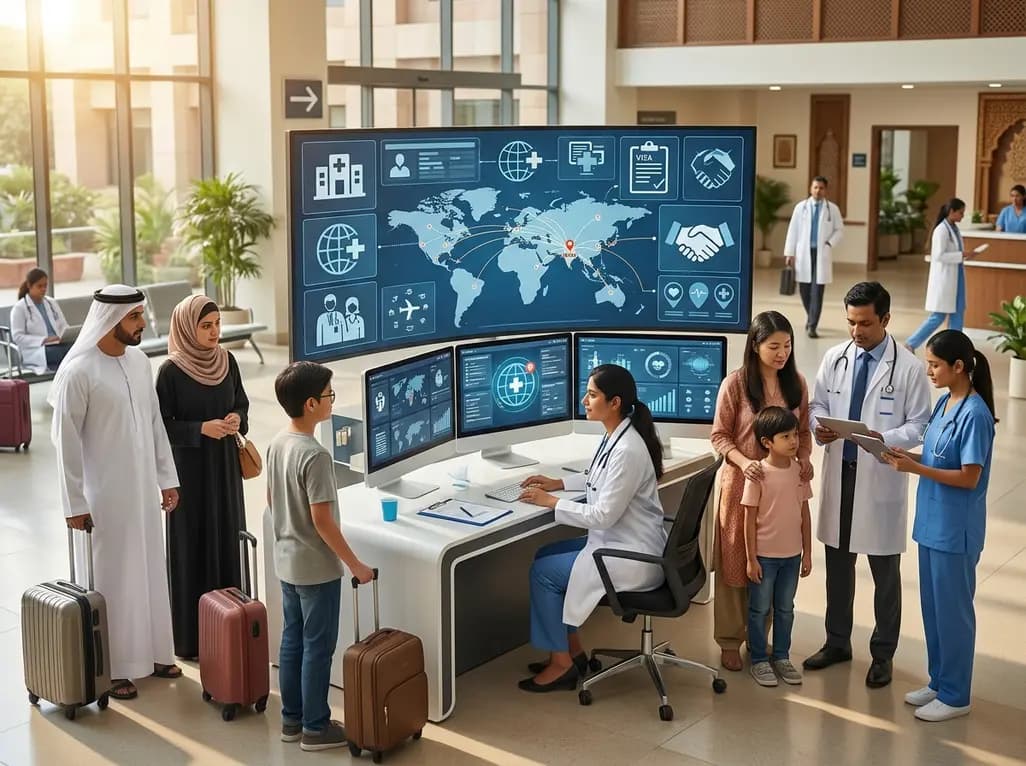
Currently, medical tourism in Delhi is undergoing a massive transformation with the introduction of a new digital platform. The Delhi government plans to launch a single digital interface to unite the capital’s entire healthcare and wellness ecosystem. Consequently, patients from other Indian states and foreign countries can access all services seamlessly on a single interface. These services include selecting hospitals, booking treatments, coordinating translation assistance, and securing post-treatment support. Historically, navigating healthcare options in a new city presented major challenges for overseas patients. However, this initiative aims to eliminate administrative barriers. By providing comprehensive end-to-end support, the state hopes to attract more international seekers of wellness and medical care. The Delhi Tourism and Transportation Development Corporation (DTTDC) will act as the nodal agency for this project. To operationalise the project, the corporation has already floated a request for proposal to select a competent strategic partner. This partner will design, develop, operate, and manage the Delhi Medical and Wellness Tourism platform. Ultimately, this digital infrastructure will position the national capital as a global leader in clinical care and holistic rehabilitation.
To build a seamless medical tourism in Delhi journey, the selected strategic partner must create an expansive digital ecosystem. Specifically, this comprehensive framework will require no initial capital expenditure from the Delhi government itself. Instead, the partner agency will develop the entire technological architecture at its own cost. This infrastructure will feature a patient-centric web portal, dedicated mobile applications, and a robust administrative dashboard. Furthermore, the administrative dashboard will allow government officials and empanelled stakeholders to track ongoing activities in real time. For patients, the mobile application will facilitate quick registration and digital payments. Additionally, the system will manage highly secure passport and medical visa verification procedures. Meanwhile, patients can access real-time tracking, multilingual assistance, and an active grievance redressal system. In addition, the platform will offer comprehensive post-treatment follow-up services to ensure continuity of clinical care. This comprehensive system will replace fragmented, unregulated intermediaries who often exploit vulnerable travellers. Consequently, patients can expect absolute transparency regarding treatment pricing, scheduling, and provider credentials. Ultimately, this transparent framework will establish a highly secure and trustworthy relationship between clinical providers and international patients.
To guarantee swift execution, the request for proposal outlines a strictly phased implementation schedule. First, the chosen partner must establish a functional project office in Delhi within 30 days of contract activation. Following this initial step, the agency has 60 days to submit a highly detailed project report and comprehensive implementation plan. Consequently, the initial version of the single-window digital platform will launch within just four months. This rapid deployment ensures that basic services become operational without unnecessary bureaucratic delays. Furthermore, the government has set ambitious empanelment goals for the subsequent phases of development. Within six months, the nodal agency will fully finalize the first phase of stakeholder empanelment. This milestone will integrate multiple accredited healthcare facilities, diagnostic laboratories, and primary clinicians onto the network. In addition, the portal will bring aboard at least 30 ground-service providers. These essential partners will include local transport operators, hotels, and specialized concierge services. Therefore, patients will secure verified local lodging and transport at the time of clinical booking. This integrated timeline ensures a highly coordinated entry and exit plan for every visiting medical traveller.
To maintain high clinical standards, the platform enforces strict quality benchmarks for all participating healthcare providers. Specifically, the first phase of empanelment mandates the onboarding of at least five JCI-accredited hospitals. In addition, the platform must include at least 25 NABH-accredited or equivalent healthcare institutions. These stringent accreditation requirements ensure that international travellers receive world-class, standardized clinical care. Furthermore, the platform acknowledges the massive global demand for traditional Indian medical practices. Consequently, the portal will empanel at least 15 registered AYUSH centres in the initial phase. These specialized facilities offer alternative therapies including Ayurveda, Yoga, Unani, Siddha, and Homeopathy. By integrating traditional therapies with modern clinical interventions, the capital offers a truly holistic approach to wellness. Moreover, the platform will display highly standardized treatment packages with fully transparent pricing models. This feature allows patients to compare different healthcare options before making any financial commitments. Ultimately, the integration of accredited super-speciality hospitals and ancient AYUSH systems will enhance the appeal of medical tourism in Delhi. Clinicians can also confidently refer international patients, knowing the ecosystem operates under strict oversight.
Clearly, the introduction of an integrated digital platform will revolutionize how foreign patients perceive healthcare in India. Currently, Delhi’s super-speciality hospitals and highly skilled doctors attract thousands of domestic and overseas patients annually. However, the lack of central coordination has previously led to fragmented patient journeys and administrative delays. Therefore, this unified portal will bridge the gap between distinct healthcare entities, transport providers, and translation agencies. In addition, healthcare providers will benefit from an administrative dashboard that simplifies patient tracking and care coordination. Consequently, medical teams can monitor pre-treatment preparation and plan post-treatment follow-ups with greater precision. For clinicians, having structured, verified records of incoming international patients will streamline the initial clinical assessment process. Furthermore, transparent pricing and standardized packages will build long-term trust, enhancing Delhi’s global reputation as a preferred healthcare hub. This trust is critical because international travellers heavily rely on online reputation and transparent fee schedules. As a result, the national capital will strengthen its position against other global medical destinations. Ultimately, this initiative marks a decisive step toward creating a modern, safe, and highly efficient medical tourism infrastructure for everyone.
Q1: What is the primary purpose of the Delhi Medical and Wellness Tourism platform?
The primary purpose of the Delhi Medical and Wellness Tourism platform is to create a unified digital gateway for patients seeking treatment in the capital. Specifically, this platform integrates hospital selection, treatment bookings, passport verification, medical visa processing, and post-treatment follow-ups into a single interface. Consequently, it eliminates reliance on unregulated middlemen, ensuring a transparent, highly secure, and well-coordinated care journey for interstate and international medical travellers.
Q2: Which healthcare facilities are eligible for empanelment on the new digital platform?
To ensure high standards of care, the platform enforces strict quality criteria for healthcare providers. Specifically, the first phase of empanelment targets at least five Joint Commission International (JCI)-accredited hospitals and 25 National Accreditation Board for Hospitals (NABH)-accredited or equivalent hospitals. In addition, at least 15 registered AYUSH wellness centres will be empanelled to offer traditional treatments, providing a holistic healthcare network.
Q3: How does the platform assist international patients with non-clinical logistics?
The digital platform offers comprehensive non-clinical support to simplify travel and lodging. Specifically, it will integrate at least 30 ground-service providers, including local hotels, transport operators, and translation agencies. Furthermore, patients can access real-time journey tracking, secure digital payment portals, multilingual assistance, and grievance redressal services. Ultimately, these integrated services guarantee that international patients and their attendants experience a seamless transition from their home countries to Delhi.
Disclaimer: This content is for informational and educational purposes only. It does not constitute medical advice or replace professional judgment. Refer to the latest local and national guidelines for clinical practice.
References

Read summarized clinical updates, watch expert medical content, and earn CME certifications right from your smartphone.
Open your smartphone camera to scan and install.





The Delhi government is launching a unified digital platform to integrate its medical and wellness tourism ecosystem. The portal will offer single-window access to global and domestic patients, streamline hospital selection, verify medical visas, and coordinate post-treatment care across Delhi's top facilities.
3 months ago
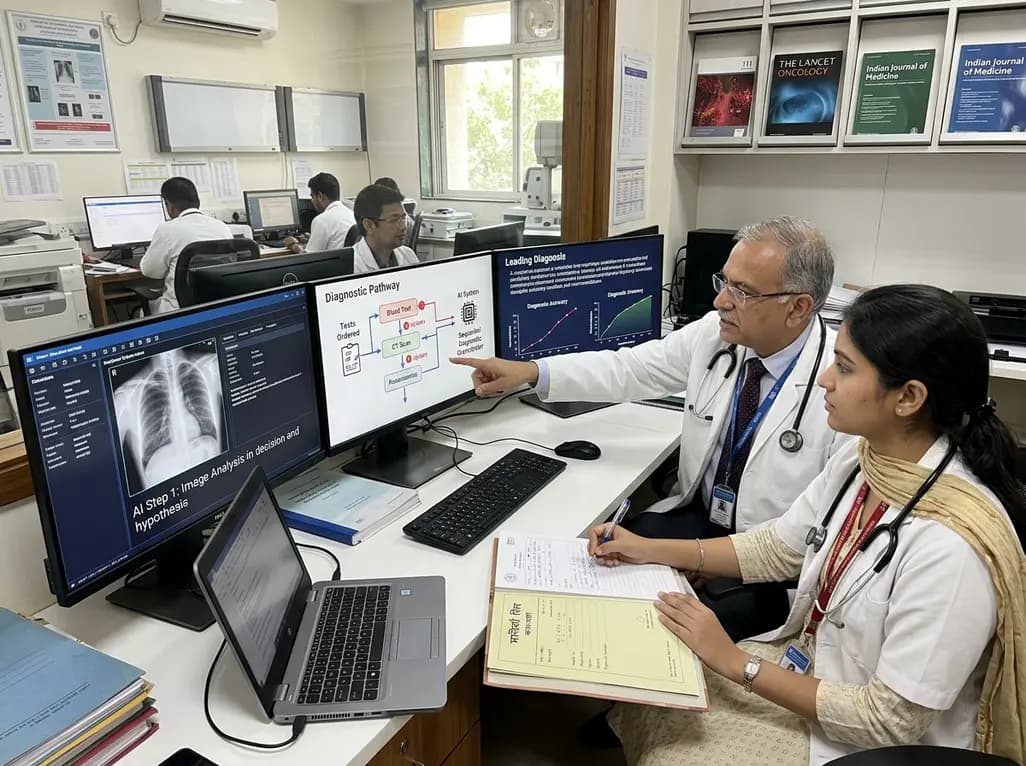
A breakthrough peer-reviewed study demonstrates that a sequential AI diagnosis system can mirror real-world clinical reasoning. By ordering stepwise tests and updating hypotheses dynamically, this multi-agent orchestrator achieved superior diagnostic accuracy while reducing investigative costs.
Today

A prenatal case highlights severe glutaric acidemia type II presenting as bilateral hyperechoic cystic kidneys at 18 weeks. Whole-exome sequencing revealed a novel homozygous ETFDH frameshift variant, demonstrating the power of rapid genetic testing in fetal renal anomalies.
Today

Review how tailored exercise programs benefit frail older patients with heart failure. Explore pathophysiological mechanisms, individualized training prescriptions, and strategies to overcome adherence barriers in clinical practice.
Yesterday

This comparative study evaluates posterior labral tears with and without glenohumeral instability, highlighting distinct demographic patterns, MRI underestimation in stable shoulders, and successful arthroscopic repair outcomes.
Yesterday

A clinical study demonstrates that early intervention with tocilizumab, either as monotherapy or bridged with corticosteroids, achieves significant proptosis reduction and resolves active inflammation in treatment-naive thyroid eye disease.
Yesterday
