.webp&w=384&q=75)

Loading, please wait...
Loading, please wait...
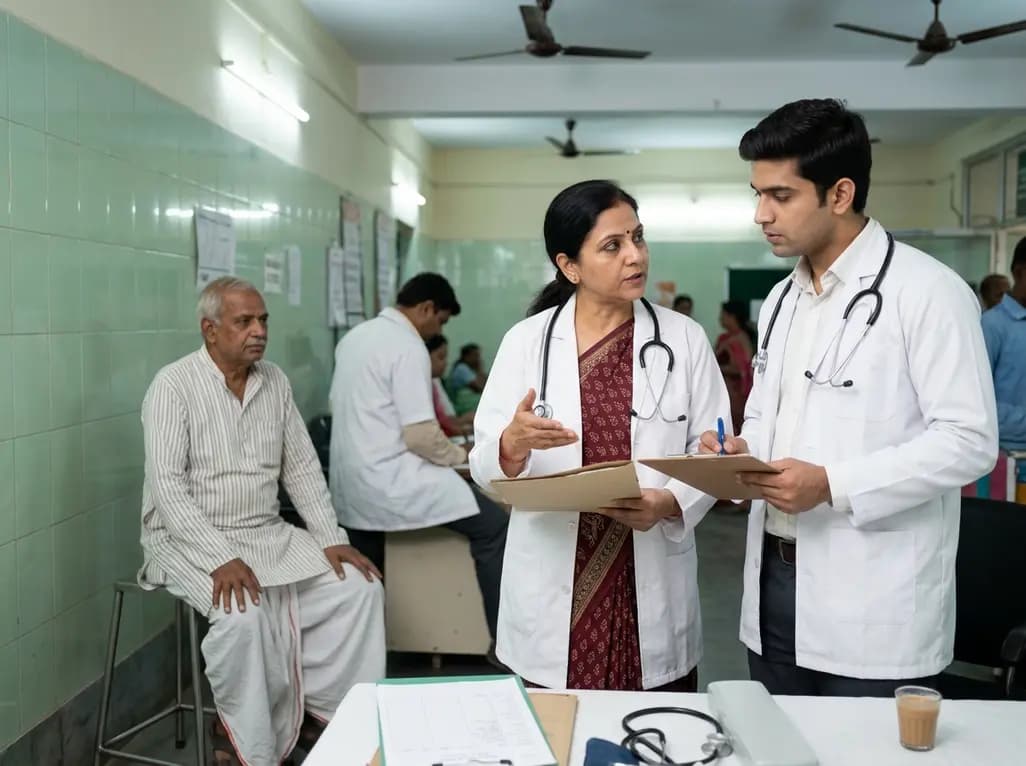
The arrival of the monsoon season in India marks a critical period for public health, especially concerning the rise of vector-borne illnesses. Consequently, the Delhi government has significantly accelerated its public health efforts to combat these seasonal threats. In a recent high-level review meeting, Health Minister Pankaj Kumar Singh assessed the city's current epidemiological situation and directed immediate action across municipal departments. Crucially, the government aims to establish robust healthcare defenses and promote community-led preventive initiatives. Since vector-borne diseases can escalate rapidly, early intervention is absolutely vital to safeguarding public health. Therefore, the administration is focusing heavily on bolstering dengue preparedness ahead of the heavy rains. By aligning municipal agencies, the state intends to build a cohesive framework to minimize transmission. Ultimately, these proactive measures represent a critical step toward ensuring a safer, healthier capital during high-risk months.
To effectively manage the spread of mosquito-borne pathogens, the Delhi government has activated a robust surveillance framework. Specifically, a network of 35 sentinel surveillance hospitals has been fully mobilized across the city to monitor patient admissions. Furthermore, the administration has directed all government and private hospitals to report diagnostic results in real time. Consequently, this data is integrated directly into the Integrated Health Information Platform to ensure immediate clinical visibility. In addition, a centralized control room has been established at the Directorate General of Health Services headquarters to coordinate these massive response efforts. Because of this real-time reporting system, epidemiologists can quickly pinpoint emerging disease hot spots. Thus, medical teams can deploy targeted interventions to prevent localized outbreaks from turning into widespread epidemics. Moreover, this digital infrastructure allows for a more efficient allocation of diagnostic kits and medical resources. Healthcare providers must remain highly vigilant during this period, as early case identification is key to lowering the overall disease burden. Ultimately, this seamless coordination between clinical laboratories and state health officials forms the backbone of Delhi’s current preventive strategy.
Besides active surveillance, the health ministry is prioritizing the clinical readiness of healthcare workers across the capital. Therefore, specialized training programs are currently being conducted for doctors, clinicians, and nurses to improve diagnostic accuracy. These educational workshops focus on the latest protocols for clinical management and patient triage. Additionally, hospitals have been instructed to maintain strictly mosquito-free campuses to prevent nosocomial transmission. Because patients with compromised immune systems are highly vulnerable, medical facilities must implement rigorous vector control within their wards. Meanwhile, hospital administrations are ensuring the adequate availability of diagnostic reagents, essential drugs, and supportive therapies. Furthermore, blood banks have been directed to maintain sufficient stocks of platelets and other vital blood components to manage severe clinical manifestations like hemorrhagic fever. If a severe case arises, immediate access to these resources can save lives. Thus, the state is leaving no stone unturned in preparing its medical infrastructure for the upcoming transmission season. Ultimately, continuous professional education coupled with robust logistical readiness will ensure that healthcare providers can deliver high-quality, timely care to all patients.
In tandem with hospital preparedness, municipal bodies have launched extensive ground operations to curb vector populations. For instance, the Municipal Corporation of Delhi, along with other civic agencies, has significantly intensified local vector-control activities. According to official data, field workers have already conducted more than 1.81 crore household and premises inspections this season. Consequently, teams have identified and eliminated numerous active breeding sites in residential and commercial areas. Moreover, over 1.97 lakh houses have been treated with specialized anti-mosquito chemical sprays. To enforce compliance, local authorities have issued nearly 38,500 legal notices for mosquito-breeding violations. Additionally, more than 4,200 strict enforcement actions have been taken against persistent offenders. Indeed, these aggressive measures are essential to ensuring that property owners maintain hygienic surroundings. Furthermore, civic bodies are deploying truck-mounted fogging machines in high-risk zones to reduce adult mosquito populations. These efforts are particularly crucial in densely populated areas where water stagnation is common. Through these combined physical and chemical interventions, the administration hopes to drastically lower vector density before the monsoon peak.
While administrative measures are vital, government efforts alone cannot completely eradicate vector-borne threats. Therefore, public participation remains the absolute cornerstone of a successful disease prevention campaign. To foster this collaboration, the Delhi government is conducting widespread awareness drives through schools and resident welfare associations. Specifically, citizens are being urged to observe a weekly dry day to clean all household water storage containers. Furthermore, residents must actively prevent water stagnation in common breeding spots like coolers, flower pots, and old tyres. Because the Aedes mosquito breeds primarily in clean, stagnant water, even small accumulations can pose a severe risk. Consequently, community-wide vigilance is necessary to protect vulnerable populations, such as young children and the elderly. In addition, individuals should wear protective clothing and utilize mosquito repellents during high-activity hours. If anyone experiences symptoms like high fever or severe joint pain, they should seek immediate medical attention rather than self-medicating. By turning public health guidelines into daily habits, citizens can play an active role in safeguarding their neighborhoods.
To contextualize these preventive efforts, it is important to analyze the current epidemiological data. As of June 20, Delhi has reported 347 cases of dengue, 87 cases of malaria, and 19 cases of chikungunya. Fortunately, no deaths have been associated with these infections so far this year. However, the upcoming monsoon season historically triggers a sharp exponential rise in vector-borne transmissions. Therefore, these pre-monsoon surveillance figures serve as a critical baseline for medical planning. Healthcare authorities are closely monitoring these trends to dynamically deploy resources where they are most needed. Additionally, understanding the geographical distribution of cases helps epidemiologists identify highly vulnerable clusters. For example, some municipal zones have historically reported higher transmission rates due to localized waterlogging. Consequently, preventive actions are being heavily concentrated in these high-risk areas. By analyzing these scientific trends and adapting clinical strategies accordingly, the health department aims to keep the infection rates manageable. Ultimately, a data-driven approach is essential for mitigating the public health impact of these seasonal outbreaks.
Q1: What are the key vector-control measures currently being implemented in Delhi?
To curb mosquito breeding, civic bodies in Delhi have launched extensive ground operations. For instance, teams have conducted over 1.81 crore household inspections and sprayed chemical larvicides in more than 1.97 lakh homes. Additionally, authorities have issued legal notices and taken enforcement actions against property owners violating anti-breeding guidelines. These aggressive field operations aim to eliminate breeding grounds and control the adult vector population before the monsoon peaks.
Q2: How can residents actively support the city's dengue preparedness efforts?
Public participation is vital in preventing mosquito breeding in residential areas. Specifically, residents should observe a weekly dry day to clean, scrub, and dry all water storage containers, coolers, and flower pots. Furthermore, keeping water tanks covered and eliminating stagnant water in old tyres or buckets prevents the Aedes mosquito from breeding. Finally, seeking early medical attention for fever helps in prompt case identification and reporting.
Q3: How are hospitals and laboratories reporting vector-borne disease cases in real time?
Healthcare facilities across Delhi are utilizing a robust digital surveillance network to manage outbreaks. Specifically, both private and government hospitals report diagnostic results directly through the Integrated Health Information Platform. This real-time reporting system is supported by a network of 35 sentinel surveillance hospitals. Consequently, this allows the Directorate General of Health Services to coordinate swift response efforts and deploy resources dynamically to high-transmission areas.
Disclaimer: This content is for informational and educational purposes only. It does not constitute medical advice or replace professional judgment. Refer to the latest local and national guidelines for clinical practice.
References

Read summarized clinical updates, watch expert medical content, and earn CME certifications right from your smartphone.
Open your smartphone camera to scan and install.





In response to rising cases of dengue, malaria, and chikungunya, the Delhi government has intensified pre-monsoon preventive measures. Through surveillance networks, medical training, and active community participation, health authorities are working to eliminate mosquito breeding across the capital.
3 months ago
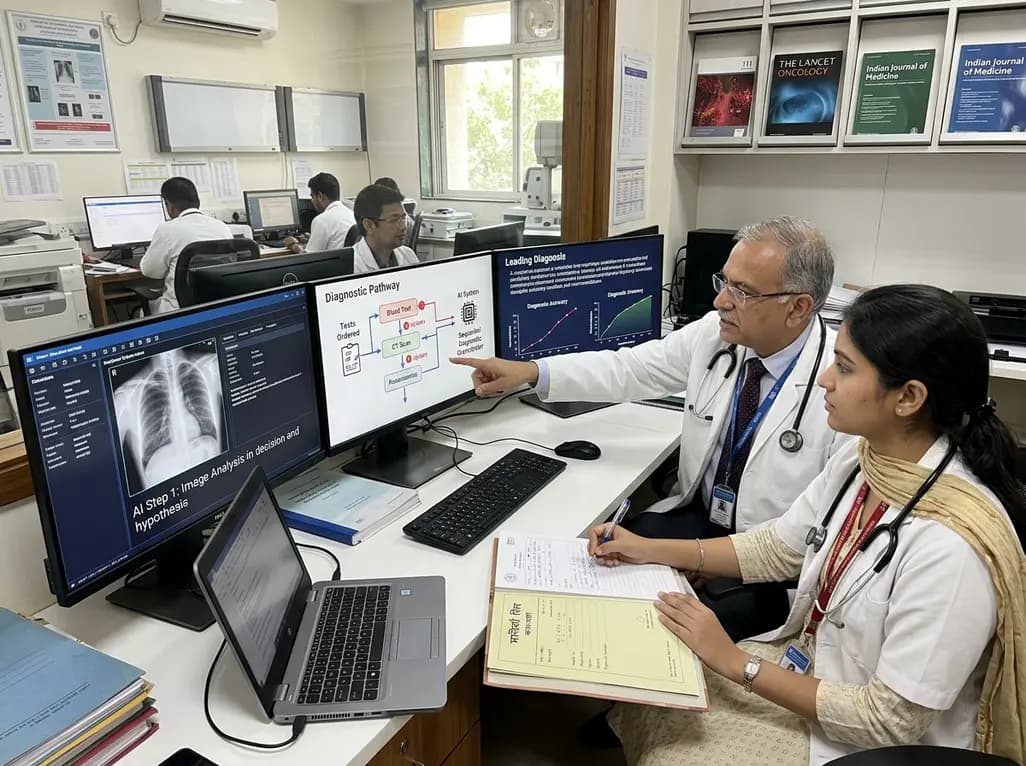
A breakthrough peer-reviewed study demonstrates that a sequential AI diagnosis system can mirror real-world clinical reasoning. By ordering stepwise tests and updating hypotheses dynamically, this multi-agent orchestrator achieved superior diagnostic accuracy while reducing investigative costs.
Today

A prenatal case highlights severe glutaric acidemia type II presenting as bilateral hyperechoic cystic kidneys at 18 weeks. Whole-exome sequencing revealed a novel homozygous ETFDH frameshift variant, demonstrating the power of rapid genetic testing in fetal renal anomalies.
Today

Review how tailored exercise programs benefit frail older patients with heart failure. Explore pathophysiological mechanisms, individualized training prescriptions, and strategies to overcome adherence barriers in clinical practice.
Yesterday

This comparative study evaluates posterior labral tears with and without glenohumeral instability, highlighting distinct demographic patterns, MRI underestimation in stable shoulders, and successful arthroscopic repair outcomes.
Yesterday

A clinical study demonstrates that early intervention with tocilizumab, either as monotherapy or bridged with corticosteroids, achieves significant proptosis reduction and resolves active inflammation in treatment-naive thyroid eye disease.
Yesterday
