.webp&w=384&q=75)

Loading, please wait...
Loading, please wait...

The Delhi government is significantly scaling up AYUSH integration within the capital's public healthcare system. Specifically, Health Minister Pankaj Kumar Singh announced new initiatives to strengthen homeopathy during a scientific seminar on World Homoeopathy Day 2026. This move highlights the government's commitment to bridging traditional systems with mainstream medicine for holistic patient care.
Currently, Delhi operates over 120 homeopathic dispensaries that serve nearly 19 lakh patients annually. These facilities provide free consultations and medicines to a growing number of citizens. Consequently, the government plans to open new polyclinics to address increasing demand and staff shortages. Furthermore, the minister emphasized the importance of the co-location model. This strategy allows patients to access multiple treatment systems under one roof. Consequently, it streamlines the patient experience across both allopathic and AYUSH departments.
A key highlight of the recent seminar was the 'Manas Swasthya' vision. This program targets psychosomatic disorders through a combined approach of Ayurveda, Yoga, and Homeopathy. Moreover, the minister noted that homeopathy offers immense potential for stress management and chronic conditions. Leading experts from organizations like the Central Council for Research in Homoeopathy (CCRH) attended the event. They emphasized the need for evidence-based research to further validate these integrative models. Ultimately, the government aims to expand services to underserved areas to ensure equitable healthcare access for all residents.
Q1: How many homeopathic dispensaries are currently operational in Delhi?
Delhi currently manages over 120 homeopathic dispensaries that offer free consultations and medicines to nearly 19 lakh patients every year.
Q2: What is the 'Manas Swasthya' vision?
The 'Manas Swasthya' vision is an integrated public health program designed to address psychosomatic disorders and stress through a combined approach of Ayurveda, Yoga, and Homeopathy.
Q3: Who were the notable practitioners recognized at the World Homoeopathy Day event?
The event felicitated several practitioners, including Padma Shri awardees V K Gupta, Anil Kumari Malhotra, and Kalyan Banerjee for their contributions to the field.
Disclaimer: This content is for informational and educational purposes only. It does not constitute medical advice or replace professional judgment. Refer to the latest local and national guidelines for clinical practice.
References

Read summarized clinical updates, watch expert medical content, and earn CME certifications right from your smartphone.
Open your smartphone camera to scan and install.





Delhi Health Minister announces plans to strengthen homeopathy and AYUSH integration through new polyclinics and the Manas Swasthya stress management progra...
5 months ago
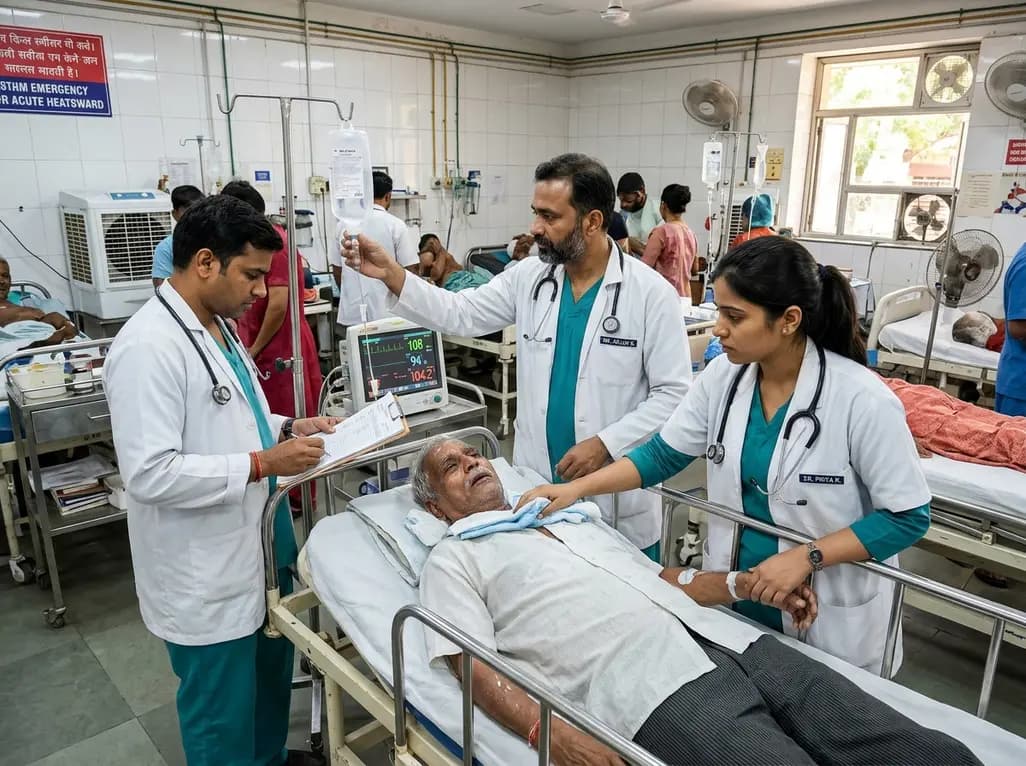
Recent epidemiological data reveals a dramatic surge in summer heat mortality driven by human-induced climate warming. This analysis explores the pathophysiological impacts on cardiac and renal systems, diagnostic dilemmas in death certification, and essential emergency cooling protocols for acute clinical care.
Today

Odisha has established India's first state-level clinical protocol specifically tailored for pregnant women with sickle cell disease. Developed with NHM and UNICEF, the framework provides structured antenatal screening, crisis mitigation, standardized referral pathways, and specialized interdisciplinary care.
Today

India is advancing preventive healthcare by integrating genomics, artificial intelligence, and quantum technologies. With the SANGAM programme sequencing one million Indian genomes, clinicians can unlock personalized therapies, detect cardiometabolic risks early, and curb the burden of diabetes and heart disease.
Today

A randomized controlled trial demonstrates that an eight-week dual-task training intervention significantly improves static and dynamic postural control over standard balance exercises in individuals with chronic ankle instability, addressing critical neurocognitive deficits during athletic and daily activities.
Today

A retrospective cohort study of 7,716 ICU patients from the MIMIC-IV database demonstrates that Gradient Boosting Decision Trees significantly outperform traditional SOFA scores in predicting in-hospital mortality among patients with sepsis and diabetes, with SHAP analysis providing clinical interpretability.
Today
