.webp&w=384&q=75)

Loading, please wait...
Loading, please wait...
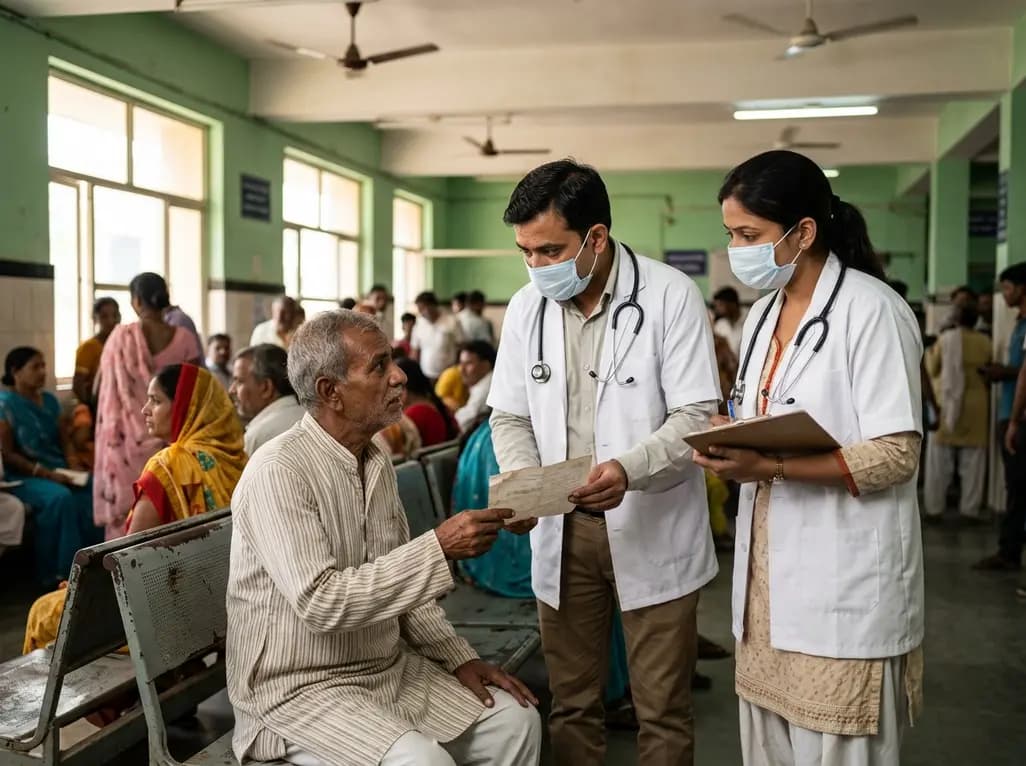
The 2024 SRS Statistical Report reveals a worrying rise in deaths without medical care across India. Consequently, nearly half of all recorded deaths in 2024 occurred without attention from a trained professional. This sharp escalation since 2020 signals critical gaps in healthcare access.
Several factors contribute to this sharp increase, which doubled from 18% in 2020 to 45.5% in 2024. For instance, rural populations face severe challenges due to limited local clinics and high treatment costs. Additionally, the office of the Registrar General may have updated its reporting and classification criteria during this period. Therefore, public health experts must carefully analyze these administrative and physical barriers to medical access.
The rural-urban divide strongly supports the argument that physical access plays a dominant role in these numbers. Specifically, rural areas recorded 48.9% of such deaths in 2024, whereas urban areas recorded only 36.1%. Moreover, state-level data reveals massive healthcare disparities across the country. For example, Kerala achieved the lowest proportion at 26.8%, while Bihar registered the highest at 67.8%. Meanwhile, Jharkhand and Chhattisgarh also reported extremely high rates of untreated deaths.
Q1: Why did deaths without medical care increase so sharply after 2020?
Poor healthcare access and high treatment costs play a major role. Additionally, reporting changes might also explain this sudden statistical spike.
Q2: Which Indian states recorded the highest rates of these deaths in 2024?
Consequently, Bihar reported the highest rate at 67.8%, followed by Jharkhand and Chhattisgarh.
Disclaimer: This content is for informational and educational purposes only. It does not constitute medical advice or replace professional judgment. Refer to the latest local and national guidelines for clinical practice.
References

Read summarized clinical updates, watch expert medical content, and earn CME certifications right from your smartphone.
Open your smartphone camera to scan and install.





The 2024 SRS report shows that nearly half of all deaths in India occurred without trained medical attention, highlighting critical healthcare access gaps....
4 months ago

Novel diimide and hydrazone scaffolds, particularly compound #C4, synergistically reactivate latent HIV-1 when combined with JQ1 or PKC activators. Demonstrating donor-matched proviral transcription ex vivo and non-canonical signaling, these findings advance shock and kill strategies toward reservoir eradication.
Today

A cross-sectional study reveals that maternal RSV vaccination coverage reached only 43.7% in Argentina, with maternal vaccine knowledge being the sole independent predictor of uptake. Clinicians play a crucial role in eliminating informational and structural barriers to optimize infant health.
Today

Review how tailored exercise programs benefit frail older patients with heart failure. Explore pathophysiological mechanisms, individualized training prescriptions, and strategies to overcome adherence barriers in clinical practice.
Yesterday

This comparative study evaluates posterior labral tears with and without glenohumeral instability, highlighting distinct demographic patterns, MRI underestimation in stable shoulders, and successful arthroscopic repair outcomes.
Yesterday

A clinical study demonstrates that early intervention with tocilizumab, either as monotherapy or bridged with corticosteroids, achieves significant proptosis reduction and resolves active inflammation in treatment-naive thyroid eye disease.
Yesterday
