.webp&w=384&q=75)

Loading, please wait...
Loading, please wait...
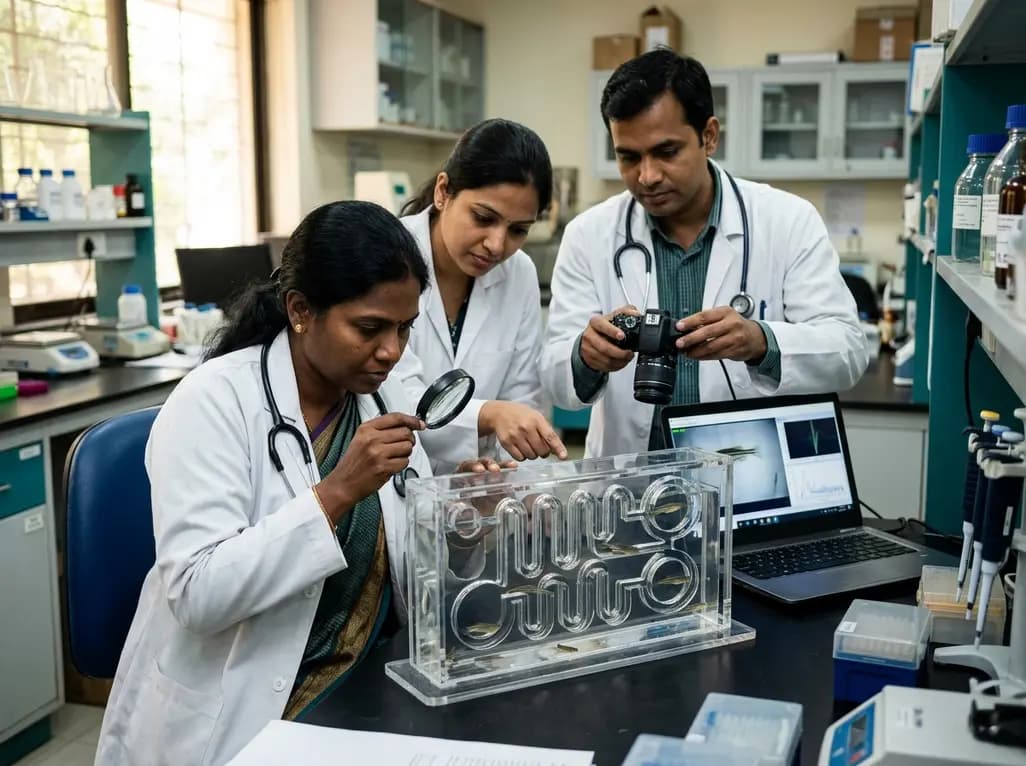
In the contemporary landscape of neurobiology and toxicology, researchers increasingly rely on small aquatic model organisms to unlock the mysteries of the central nervous system. Specifically, larval zebrafish have emerged as a cornerstone of experimental science due to their transparent bodies and genetic similarity to humans. However, conducting accurate behavioral biotests requires precise environments that do not interfere with digital video recording or animal tracking software. Consequently, the development of custom zebrafish behavioral chambers has become a priority for laboratories seeking to eliminate technical artifacts. Traditionally, scientists utilized standard polystyrene plates, but these often introduced optical distortions. Therefore, this new fabrication technique represents a significant leap forward. By providing a method to create tailored environments, the scientific community can now investigate complex locomotor and behavioral endpoints with unprecedented clarity. Moreover, this advancement allows for the integration of sophisticated tracking algorithms that require high-contrast imaging. As a result, the data generated from these assays becomes more reliable and reproducible across different research settings. Furthermore, Indian researchers in premier institutes can leverage these low-cost methods to bolster their drug discovery pipelines. This transition toward customized hardware signifies a broader shift in experimental biology toward precision and accessibility.
While commercially available polystyrene multi-well test plates offer a degree of convenience, they present several inherent limitations that can compromise data integrity. For instance, the fixed geometry of these wells often restricts the types of behavioral mazes researchers can implement. Additionally, the physical properties of polystyrene frequently lead to meniscus-induced shadow artifacts at the edges of the wells. These shadows confuse automated tracking software, which subsequently results in inaccurate data regarding animal position and velocity. Furthermore, standard plates often lack the necessary optical transmittance for specialized lighting techniques. Specifically, researchers using orthogonal sidelight illumination with infrared light find that traditional plastics obstruct the clarity of the image. Consequently, the need for a more versatile material became evident. In response to these challenges, the use of poly(methyl methacrylate) or PMMA has gained traction. This thermoplastic offers superior optical clarity and is highly biocompatible. Therefore, by moving away from off-the-shelf solutions, laboratories can eliminate the optical noise that has plagued aquatic behavioral studies for decades. Similarly, the ability to customize well depth and shape ensures that the physical environment specifically suits the developmental stage of the organism being studied, whether it is a larval zebrafish or a small invertebrate.
The core of this breakthrough lies in a rapid and low-cost technique that employs infrared laser cutting and thermal bonding. Initially, researchers design the desired chamber geometry using standard computer-aided design software, which allows for infinite flexibility. Subsequently, an infrared laser cuts the custom zebrafish behavioral chambers from sheets of biocompatible PMMA. This process is remarkably efficient, as it enables the production of complex miniaturized maze configurations in a matter of minutes. Following the cutting phase, the components undergo thermal bonding under controlled compression. By utilizing a standard laboratory oven, the layers of PMMA fuse together without the need for toxic adhesives. This is particularly important because maintaining a chemical-free environment is essential for behavioral assays where organisms are sensitive to leachable substances. Moreover, the speed of this fabrication method allows for rapid prototyping. If a specific maze design does not yield the expected behavioral response, a scientist can modify the design and produce a new plate within the same day. Therefore, the barrier to entry for high-quality behavioral research is significantly lowered. Additionally, the cost-effectiveness of using PMMA and a laser cutter makes this technology accessible to a wide range of academic and commercial laboratories.
A fascinating aspect of this research involves how the physical structure of a chamber modulates the behavior of the organism. For example, the study demonstrates that chamber geometry significantly influences both baseline locomotor activity and stimulated sensory-motor responses in larval zebrafish. Because zebrafish possess a highly tractable and well-characterized nervous system, they are ideal for studying how spatial features are perceived. However, relatively little was previously understood regarding how specific wall angles or chamber depths altered common behavioral patterns. Now, with the ability to create varied geometries, researchers have found that certain shapes can either induce stress or promote exploratory behavior. Consequently, this understanding allows for more nuanced experimental designs. For instance, a researcher studying anxiety might use a complex maze to observe thigmotaxis, whereas a researcher studying motor function might prefer an open circular chamber. Therefore, the fabrication technique does more than just improve image quality; it provides a tool for probing the cognitive and sensory capabilities of aquatic models. Furthermore, as we gain more insight into how geometry modulates behavior, we can better standardize protocols across the global scientific community. This ensures that behavioral changes observed in a study are due to the experimental variable rather than an artifact of the container's shape.
The applications for these customizable test plates extend far beyond basic behavioral observation, reaching into the critical fields of ecotoxicology and experimental neurobiology. In ecotoxicology, for example, researchers assess the impact of environmental pollutants on aquatic life. By using customized chambers, they can simulate more naturalistic environments, which leads to more relevant data on how toxins affect survival and movement. Similarly, in neurobiology, these chambers facilitate the study of neurodegenerative diseases and the effects of potential therapeutic compounds. Because the chambers are so easy to produce, large-scale screening of hundreds of chemicals becomes feasible. Furthermore, the high optical transmittance of PMMA allows for high-speed filming of rapid startle responses, which are vital indicators of neurological health. Consequently, this technology serves as a bridge between engineering and biology. Additionally, the open-source nature of such fabrication methods encourages collaboration among scientists. By sharing design files for specific mazes, labs in India and elsewhere can replicate experiments with high fidelity. Therefore, the democratization of high-quality research tools accelerates the pace of scientific discovery. As a result, we can expect a surge in novel behavioral biotests that offer deeper insights into the complex interactions between genetics, environment, and behavior.
In the current economic climate, the cost of laboratory equipment is a significant concern for many research institutions. Fortunately, this new fabrication method is remarkably inexpensive compared to purchasing proprietary multi-well plates. Because PMMA is a widely available and affordable material, the cost per plate is a fraction of the commercial alternative. Additionally, the use of a standard laboratory oven for thermal bonding eliminates the need for expensive clean-room facilities or specialized bonding machinery. Consequently, even smaller labs with limited budgets can produce high-quality, customized test environments. Moreover, the durability of PMMA ensures that these plates can be cleaned and reused, further reducing long-term expenses. However, the true value lies in the time saved. Instead of waiting weeks for specialized equipment to be shipped, researchers can fabricate what they need on-site. Therefore, the flexibility offered by this technique significantly enhances the productivity of a research team. Furthermore, as 3D printing and laser cutting become more ubiquitous in academic settings, the integration of such fabrication techniques will likely become standard practice. This shift not only saves money but also fosters a culture of innovation and self-reliance within the scientific community, allowing researchers to tailor their tools to their specific scientific questions.
PMMA provides superior optical transmittance, which is vital for high-resolution video tracking. Standard polystyrene plates often create a meniscus at the water's edge, causing shadows that interfere with software detection. By using laser-cut PMMA and thermal bonding, researchers can create chambers with vertical walls and minimal optical distortion. Consequently, the tracking software can more accurately identify the organism's center of mass, leading to more precise locomotor data.
Thermal bonding is preferred because it avoids the use of chemical solvents or glues that could leach into the aquatic environment. Small organisms like larval zebrafish are highly sensitive to chemical traces, which can significantly alter their behavior and skew experimental results. By using controlled heat and pressure in a laboratory oven, the PMMA layers fuse naturally. Therefore, the resulting chambers remain biocompatible and safe for long-term behavioral observations without toxic interference.
The physical layout of a chamber directly affects how an organism perceives its environment. For example, circular wells might promote continuous swimming, while complex mazes with corners can trigger hiding behaviors or exploratory stress. By customizing these shapes, researchers can specifically target certain neural circuits, such as those involved in spatial memory or anxiety. Consequently, the ability to control geometry allows for more specific and sensitive behavioral assays in experimental neurobiology.
Disclaimer: This content is for informational and educational purposes only. It is not intended as a substitute for professional medical advice, diagnosis, or treatment. Always seek the advice of your physician or other qualified health provider with any questions you may have regarding a medical condition. Refer to the latest local and national guidelines for clinical practice.
References
Do H et al. Rapid Fabrication of Highly Customizable Test Chambers for Behavioral Experiments with Small Aquatic Model Organisms. Zebrafish. 2026 Jul 10. doi: 10.1177/15458547261468987. PMID: 42429084.
Kalueff AV et al. Zebrafish neurobehavioral phenotyping for environmental health studies. Environmental Health Perspectives. 2014;122(4):343-353.
Stewart AM et al. The developing zebrafish model for evaluating neurobehavioral toxicity. Neurotoxicology and Teratology. 2015;52(Pt B):178-188.
"
Read summarized clinical updates, watch expert medical content, and earn CME certifications right from your smartphone.
Open your smartphone camera to scan and install.





Researchers have developed a rapid, low-cost technique for fabricating highly customizable test chambers for zebrafish behavioral experiments. Using laser-cut PMMA and thermal bonding, this method overcomes the limitations of standard multi-well plates, allowing for complex geometries in neurobiology studies.
3 months ago

A multicenter study from Southeastern Türkiye identified rare alpha-1 antitrypsin deficiency variants, including the homozygous Malton genotype, among COPD patients. Half were never-smokers, highlighting the critical need for comprehensive genetic screening beyond common S and Z alleles.
Today

A comprehensive scoping review synthesises evidence linking prenatal maternal mental health to long-term offspring neurodevelopment, evaluating neuroendocrine, inflammatory, and epigenetic pathways while highlighting clinical screening and future research priorities.
Today

The Directorate General of Health Services directs Indian states to halt the hazardous reuse and reprocessing of single-use medical devices. Discover regulatory implications under the Drugs and Cosmetics Act, critical infection risks, legal liabilities, and operational changes required across clinical specialties.
Today
A 25-year multi-institutional cohort reveals high recurrence rates in pediatric giant cell tumor of bone, particularly in patients with open physes and bone marrow edema on preoperative MRI. Early surveillance and careful balance between growth plate preservation and tumor clearance are essential.
Today

India is advancing preventive healthcare by integrating genomics, artificial intelligence, and quantum technologies. With the SANGAM programme sequencing one million Indian genomes, clinicians can unlock personalized therapies, detect cardiometabolic risks early, and curb the burden of diabetes and heart disease.
Today
