.webp&w=384&q=75)

Loading, please wait...
Loading, please wait...

Curiosity in medical education is more than just a desire to know; it is a vital clinical asset. A recent thematic analysis involving students and faculty suggests that this trait is essential for both effective learning and high-quality patient care. By understanding its role, medical schools can better prepare future doctors for the complexities of modern medicine.
The research defines curiosity as a dynamic process. It begins with the initial acquisition of knowledge and eventually evolves into a more holistic, student-centered practice. Participants noted that this journey requires consistent support from the educational environment.
Teachers serve as the primary agents in nurturing an inquisitive mind. Positive role modeling and an enthusiastic teaching style significantly influence student engagement. Furthermore, clinical teachers who demonstrate effective styles can transform a routine placement into a profound learning experience. Additionally, curiosity helps students bridge the gap between theoretical knowledge and practical application. Consequently, fostering this trait is indispensable for medical training.
Unfortunately, certain structural elements often stifle a student's natural urge to explore. For instance, the pressure of examinations was frequently cited as a major hindrance to developing curiosity in medical education. However, structured learning activities and daily clinical placements offer \"ad-hoc\" opportunities to reintegrate this trait. As a result, medical schools should consider reviewing their curricula to identify new paths for curiosity development. Regular workshops for teachers can raise awareness about these strategies and help refine their instructional skills.
Clinical teachers foster curiosity by modeling inquisitive behavior, showing enthusiasm for teaching, and adopting effective teaching styles that encourage questions during clinical rounds.
According to the thematic analysis, rigid examination schedules are a major barrier. Consequently, students often focus on passing tests rather than exploring complex clinical topics.
It is dynamic because it evolves from the initial phase of acquiring basic knowledge into a more holistic and integrated way of practicing medicine over time.
Disclaimer: This content is for informational and educational purposes only. It does not constitute medical advice or a professional endorsement. Refer to the latest local and national guidelines for clinical practice.
References
Wee KC et al. Exploring curiosity in undergraduate medical education: a thematic analysis. BMC Med Educ. 2026 Feb 11. doi: 10.1186/s12909-026-08783-x. PMID: 41668190.
Sternszus R, Saroyan A, Steinert Y. Describing medical student curiosity across a four year curriculum: An exploratory study. Med Teach. 2017;39(4):377-382.
Dyche L, Epstein RM. Curiosity and medical education. Med Educ. 2011;45(7):663-668.

Read summarized clinical updates, watch expert medical content, and earn CME certifications right from your smartphone.
Open your smartphone camera to scan and install.





Curiosity is vital for clinical learning. This thematic analysis explores how faculty nurture it and how exams act as a barrier to student curiosity....
8 months ago
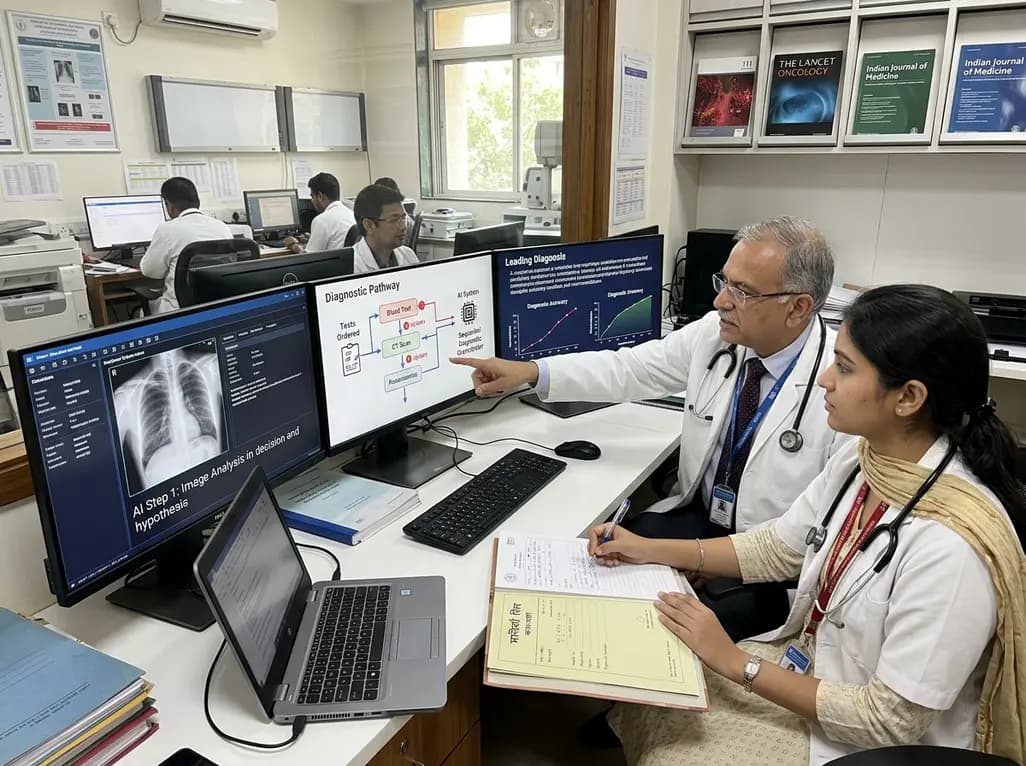
A breakthrough peer-reviewed study demonstrates that a sequential AI diagnosis system can mirror real-world clinical reasoning. By ordering stepwise tests and updating hypotheses dynamically, this multi-agent orchestrator achieved superior diagnostic accuracy while reducing investigative costs.
Today

A prenatal case highlights severe glutaric acidemia type II presenting as bilateral hyperechoic cystic kidneys at 18 weeks. Whole-exome sequencing revealed a novel homozygous ETFDH frameshift variant, demonstrating the power of rapid genetic testing in fetal renal anomalies.
Today

Review how tailored exercise programs benefit frail older patients with heart failure. Explore pathophysiological mechanisms, individualized training prescriptions, and strategies to overcome adherence barriers in clinical practice.
Yesterday

This comparative study evaluates posterior labral tears with and without glenohumeral instability, highlighting distinct demographic patterns, MRI underestimation in stable shoulders, and successful arthroscopic repair outcomes.
Yesterday

A clinical study demonstrates that early intervention with tocilizumab, either as monotherapy or bridged with corticosteroids, achieves significant proptosis reduction and resolves active inflammation in treatment-naive thyroid eye disease.
Yesterday
