.webp&w=384&q=75)

Loading, please wait...
Loading, please wait...

Ensuring cultural safety in psychiatry is critical for improving the quality of inpatient mental healthcare. In various settings, including the UK and India, carers from diverse backgrounds often face unique systemic barriers. These challenges frequently lead to exclusion from the care process. A recent qualitative study by Rose et al. explores these experiences in depth. The findings provide vital insights for clinicians striving to deliver equitable and holistic care.
The study highlights how ethnic minority carers often struggle with navigating the complexities of hospital admission. Furthermore, participants reported significant barriers to accessing timely support for their family members. Many carers felt disempowered during the initial stages of care. They often perceived the mental health system as rigid and culturally insensitive. Consequently, this lack of support increased the emotional burden on families during crises.
A central theme of the research focuses on cultural and carer exclusion. Specifically, the data reveals that many inpatient services fail to address the nuanced cultural needs of minority groups. Carers frequently feel marginalized when clinicians overlook cultural practices or dietary requirements. Moreover, the study emphasizes that a \"cultural misfit\" in services can deteriorate trust. Therefore, fostering cultural safety in psychiatry requires active engagement with the carer’s cultural context. This includes respecting religious beliefs and linguistic differences to enhance the therapeutic alliance.
The participants offered several recommendations to improve the carer experience. First, services should adopt a more holistic approach that integrates the family unit. Additionally, providing culturally responsive guidance can help bridge the communication gap. Staff training in cultural humility is also essential for reducing systemic bias. By implementing these changes, hospitals can ensure more equitable outcomes for all patient groups.
Cultural safety in psychiatry refers to a practice environment that is spiritually, socially, and emotionally safe for people. It ensures that clinicians acknowledge and respect the cultural identity of patients and their carers.
Exclusion often stems from systemic barriers, such as a lack of cultural awareness and rigid communication protocols. In addition, some services may overlook the crucial role of families in the recovery process.
Hospitals can improve support by providing clear, culturally adapted guidance. They should also involve carers in decision-making and offer staff training on cultural diversity and humility.
Disclaimer: This content is for informational and educational purposes only. It does not constitute professional medical advice or a substitute for consultation with a healthcare provider. Refer to the latest local and national guidelines for clinical practice.
References

Read summarized clinical updates, watch expert medical content, and earn CME certifications right from your smartphone.
Open your smartphone camera to scan and install.





A qualitative study explores the exclusion and systemic barriers faced by ethnic minority carers in psychiatric inpatient care, calling for cultural safety....
4 months ago

A landmark cluster randomized trial demonstrates that community-based mass dog vaccination achieves superior coverage and sustains protective herd immunity against rabies far better than conventional campaign models, offering vital lessons for global and Indian elimination targets.
Today
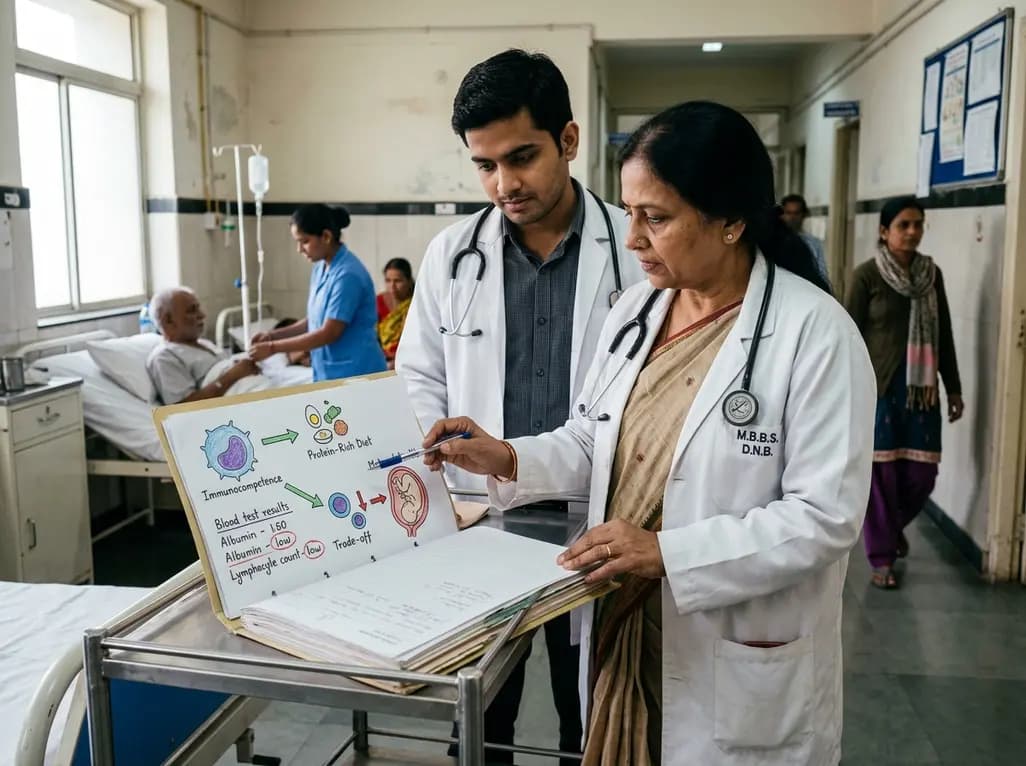
Explore the crucial link between dietary protein and immunocompetence. This review examines how low-protein nutrition shifts metabolic resources away from pathogen defense toward early reproduction, compromising host survival and immunity against severe bacterial infections.
Today

Differential oxygenation during peripheral TA-NRP can cause undetected coronary hypoxemia due to arch vessel clamping. A novel circuit with continuous aortic root monitoring detects desaturation early, facilitating left ventricular unloading and preventing allograft dysfunction and unnecessary heart discard.
Today

A longitudinal study reveals that patients undergoing staged bilateral hip arthroscopy experience progressive contralateral labral deterioration during surgical intervals. However, structural degradation does not compromise 2-year postoperative clinical outcomes or patient-reported satisfaction scores.
Today

A post hoc analysis of the PARM-T2D study shows pemafibrate exerts baseline-dependent effects on LDL-C and particle size in type 2 diabetes and hypertriglyceridemia. It lowers triglycerides and remnants while favorably remodeling atherogenic LDL particles based on initial lipid control status.
Today
