.webp&w=384&q=75)

Loading, please wait...
Loading, please wait...

Glioblastoma remains a formidable challenge in oncology, particularly when it complicates into leptomeningeal metastases (LM). Clinicians frequently search for reliable biomarkers to guide treatment and manage expectations. A recent study highlights the significant role of CSF IL-6 prognosis in determining the survival of these patients. By analyzing specific cytokines, researchers aim to provide a clearer clinical picture of disease progression.
Researchers retrospectively evaluated 35 patients diagnosed with glioblastoma LM between 2022 and 2024. They compared cytokine levels in both cerebrospinal fluid (CSF) and peripheral blood. Additionally, the team assessed clinical factors like the Karnofsky Physical Status (KPS). Multivariate analysis identified CSF IL-6 as a robust independent predictor of overall survival (OS).
The median overall survival for patients in this cohort was 11.8 months. However, those with higher CSF IL-6 levels faced a significantly worse prognosis. Similarly, patients with a lower KPS score exhibited reduced survival times. Consequently, these two factors emerged as the most meaningful indicators for stratifying patient risk.
Furthermore, the researchers combined these markers into a specialized nomogram. This tool demonstrated excellent predictive performance for individual survival. Because the inflammatory microenvironment in the CSF directly impacts tumor behavior, monitoring IL-6 provides insights that blood tests might miss. Therefore, integrating these biomarkers into routine practice could improve the management of glioblastoma LM.
Interleukin-6 (IL-6) in the cerebrospinal fluid acts as a crucial inflammatory marker. High levels are significantly associated with shorter overall survival in patients with leptomeningeal metastases from glioblastoma.
The Karnofsky Physical Status (KPS) score measures a patient's functional ability. A higher KPS indicates better physical function, which correlates with improved survival outcomes in patients facing glioblastoma LM.
Disclaimer: This content is for informational and educational purposes only and does not constitute professional medical advice, diagnosis, or treatment. Always seek the advice of your physician or other qualified health provider with any questions you may have regarding a medical condition. Never disregard professional medical advice or delay in seeking it because of something you have read here. Refer to the latest local and national guidelines for clinical practice.
References
1. Zhang M et al. Role of CSF interleukin-6 in the prognosis of patients with Leptomeningeal metastases of glioblastoma. Discov Oncol. 2026 Jun 07. doi: 10.1007/s12672-026-05241-4. PMID: 42251613.
2. Sasagasako T et al. Postoperative Karnofsky performance status prediction in patients with IDH wild-type glioblastoma. PLOS ONE. 2024 Nov 11. doi: 10.1371/journal.pone.0303002.
3. Sasaki et al. The Karnofsky Performance Status at Discharge Is a Prognostic Indicator of Life Expectancy in Patients With Glioblastoma. Cureus. 2024 Aug 05. doi: 10.7759/cureus.66173.

Read summarized clinical updates, watch expert medical content, and earn CME certifications right from your smartphone.
Open your smartphone camera to scan and install.





Study reveals how CSF Interleukin-6 and Karnofsky Physical Status serve as vital prognostic indicators for glioblastoma patients with leptomeningeal spread....
4 months ago

Explore vital recurrent stroke predictors in lacunar stroke patients managed with intensive blood pressure lowering. This analysis examines trial findings from SPS3 to uncover residual vascular risks, metabolic factors, and targeted secondary prevention strategies for high-risk neurological patients.
Today
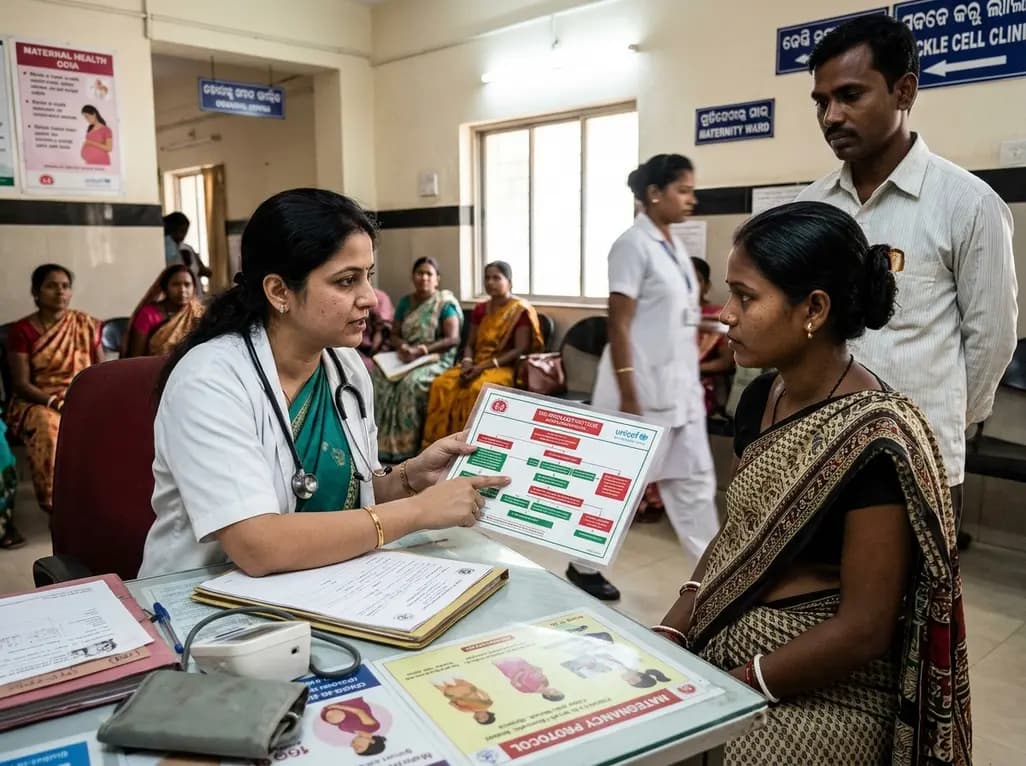
Odisha has established India's first state-level clinical protocol specifically tailored for pregnant women with sickle cell disease. Developed with NHM and UNICEF, the framework provides structured antenatal screening, crisis mitigation, standardized referral pathways, and specialized interdisciplinary care.
Today

The Directorate General of Health Services directs Indian states to halt the hazardous reuse and reprocessing of single-use medical devices. Discover regulatory implications under the Drugs and Cosmetics Act, critical infection risks, legal liabilities, and operational changes required across clinical specialties.
Today

Mitochondria-targeted nanoparticles self-assembled from EGCG and L-glutamic acid effectively restore mitochondrial homeostasis, suppress synovial inflammation, and attenuate chondrocyte senescence in osteoarthritis, offering a promising disease-modifying nanotherapy.
Today

India is advancing preventive healthcare by integrating genomics, artificial intelligence, and quantum technologies. With the SANGAM programme sequencing one million Indian genomes, clinicians can unlock personalized therapies, detect cardiometabolic risks early, and curb the burden of diabetes and heart disease.
Today
