.webp&w=384&q=75)

Loading, please wait...
Loading, please wait...

The field of periodontal diagnostics is currently undergoing a significant paradigm shift, moving from traditional clinical parameters toward molecular-level assessments. Researchers are increasingly utilizing crevicular fluid proteomics to identify specific protein signatures that differentiate healthy periodontal tissues from those affected by disease. Gingival crevicular fluid (GCF) and peri-implant crevicular fluid (PICF) act as unique windows into the local inflammatory environment. These biofluids contain a complex mixture of serum-derived proteins, tissue breakdown products, and microbial-derived molecules. By employing mass spectrometry (MS), clinicians can analyze thousands of proteins simultaneously, providing a comprehensive overview of the host-microbe interaction. This systemic review highlights how MS-based approaches have identified between 42 and 3,070 human proteins within these micro-environments, offering unprecedented insights into disease pathogenesis. Furthermore, the ability to detect these changes before clinical signs like attachment loss appear could revolutionize early intervention strategies. However, the transition from laboratory research to chairside clinical practice requires overcoming several methodological hurdles that currently limit the reproducibility of proteomic data across different research centers globally.
Mass spectrometry has emerged as the gold standard for high-throughput protein identification and quantification in dental research. Unlike traditional enzyme-linked immunosorbent assays (ELISA) that target single proteins, MS allows for an unbiased exploration of the entire proteome. Specifically, techniques such as Liquid Chromatography-Tandem Mass Spectrometry (LC-MS/MS) and SWATH-MS provide the sensitivity needed to detect low-abundance biomarkers in the minute volumes typical of crevicular fluid samples. These advanced workflows enable scientists to map out the intricate pathways involved in inflammation and bone resorption. For instance, the identification of host-derived inflammatory mediators alongside microbial proteins provides a dual perspective on the infection. Consequently, this technology helps in characterizing the transition from gingival health to chronic periodontitis or peri-implantitis. Moreover, the high specificity of MS reduces the risk of cross-reactivity that often plagues antibody-based methods. Despite these advantages, the complexity of MS equipment and the requirement for specialized bioinformatics support remain significant barriers to its widespread adoption in routine dental clinics. Nevertheless, the diagnostic potential of this approach continues to drive innovation in the development of precision medicine tools for dental practitioners.
The systematic review of current literature reveals a wide array of potential biomarkers identified through MS-based analysis. In healthy sites, researchers frequently observe high levels of host-defense proteins, such as cystatins and defensins, which maintain tissue homeostasis. Conversely, diseased sites exhibit a marked increase in proteins related to acute inflammation and immune response. For example, hemoglobin subunits, S100-family proteins (A8, A9, and A12), and various matrix metalloproteinases are consistently upregulated in periodontitis. Similar patterns are observed in peri-implant conditions, where PICF analysis helps distinguish between stable implants and those suffering from peri-implant mucositis or peri-implantitis. Notably, the review indicates that while some proteins are common to both tooth and implant environments, subtle spectral differences suggest unique lipidic and glycosidic profiles around implants. Identifying these distinctive proteins is crucial for developing targeted diagnostic kits. Furthermore, longitudinal studies have begun to track how these protein levels fluctuate during treatment, suggesting they could serve as reliable indicators of therapeutic success. Identifying a robust cluster of biomarkers, rather than a single protein, appears to be the most promising strategy for accurate disease staging and grading in the future.
One of the most critical findings of this systematic review is the lack of uniformity in how crevicular fluid is collected and processed. Different studies utilize various tools, such as paper strips or capillary tubes, which can significantly influence the final protein yield and composition. Additionally, the methods used for protein elution from these collection devices vary, with differences in centrifugal speeds and buffer solutions. Such variations make it extremely difficult to compare results across different clinical trials or to establish universal baseline values for health and disease. The review also pointed out that protein identification algorithms and databases differ between research groups, leading to discrepancies in the reported proteomes. For instance, seven out of the thirteen analyzed studies were classified as low quality due to these methodological inconsistencies and potential risks of bias. Therefore, there is an urgent need for a standardized protocol that covers every step from sample collection to data analysis. Implementing harmonized workflows will ensure that findings from a study in India can be validated and applied in other geographic locations, ultimately facilitating the clinical translation of crevicular fluid proteomics into everyday dental care.
Transitioning from complex laboratory MS workflows to practical clinical applications is the next major frontier in dental proteomics. The current research emphasizes that while we have successfully identified thousands of proteins, only a few studies have attempted to validate these as clinical biomarkers. To bridge this gap, future research must focus on targeted mass spectrometry approaches, such as Multiple Reaction Monitoring (MRM), which can accurately quantify specific candidate biomarkers in large patient cohorts. Furthermore, multicenter longitudinal studies are essential to confirm that these protein changes are predictive of future bone loss or implant failure. In the Indian context, where the prevalence of periodontal disease is high, such precision tools could significantly improve public health outcomes by enabling risk-based treatment planning. Additionally, the integration of proteomic data with other omics technologies, such as genomics and microbiomics, will provide a holistic view of the patient’s oral health. As the cost of MS technology continues to decrease and automated sample preparation becomes more accessible, we can expect to see the development of point-of-care devices. These tools will allow dentists to assess the biological activity of a site within minutes, leading to more personalized and effective therapeutic interventions.
Traditional dental examinations rely on physical signs such as probing depths, bleeding on probing, and radiographic bone loss. These parameters often reflect past disease activity rather than current biological status. In contrast, crevicular fluid proteomics analyzes the protein composition within the gingival or peri-implant sulcus. This molecular approach can detect active inflammation and tissue degradation at the biochemical level, potentially identifying disease activity before clinical symptoms become apparent to the clinician.
Research using mass spectrometry has identified several key biomarkers in gingival crevicular fluid. In healthy individuals, protective proteins like cystatins and defensins are prevalent. However, in patients with periodontitis, there is a significant increase in inflammatory markers such as S100A8/A9 proteins, hemoglobin subunits, and various matrix metalloproteinases (MMPs). These proteins are directly involved in the host immune response and the breakdown of connective tissue, making them excellent candidates for monitoring disease progression and treatment response.
Standardization is vital because subtle differences in sample collection, storage, and processing can significantly alter proteomic results. Without harmonized protocols, it is impossible to establish consistent diagnostic thresholds for different periodontal conditions. Standardizing the use of collection materials like paper strips and maintaining consistent elution and storage temperatures (such as -80°C) ensures that data is reproducible. This consistency is essential for the eventual regulatory approval and clinical implementation of proteomic-based diagnostic tools in dental practice.
Disclaimer: This content is for informational and educational purposes only and does not constitute professional medical advice, diagnosis, or treatment. Always seek the advice of a qualified healthcare provider with any questions you may have regarding a medical condition. The use of mass spectrometry and proteomic biomarkers in clinical dentistry is an evolving field. Refer to the latest local and national guidelines for clinical practice.
References
Souza LPSS et al. MS-Based Crevicular Fluid Proteomics for the Study of Periodontal and Peri-Implant Conditions: A Systematic Review. J Proteome Res. 2026 Jun 24. doi: 10.1021/acs.jproteome.5c01217. PMID: 42339612.
Bostanci N et al. Application of label-free absolute quantitative proteomics in human gingival crevicular fluid by LC/MSE (Gingival Exudatome). J Proteome Res. 2010;9(12):6610-6627. doi: 10.1021/pr1006526.
Rakhewar PS et al. Role of Proteomic Biomarkers in Periodontal Diseases - A Review. Sch J Dent Sci. 2023;10(9):196-201. doi: 10.36347/sjds.2023.v10i09.004.

Read summarized clinical updates, watch expert medical content, and earn CME certifications right from your smartphone.
Open your smartphone camera to scan and install.





This systematic review explores the use of mass spectrometry-based proteomics to analyze gingival and peri-implant crevicular fluids. It identifies critical biomarkers for periodontal health and disease while highlighting the urgent need for methodological harmonization to ensure clinical translation.
3 months ago

Review how tailored exercise programs benefit frail older patients with heart failure. Explore pathophysiological mechanisms, individualized training prescriptions, and strategies to overcome adherence barriers in clinical practice.
Today
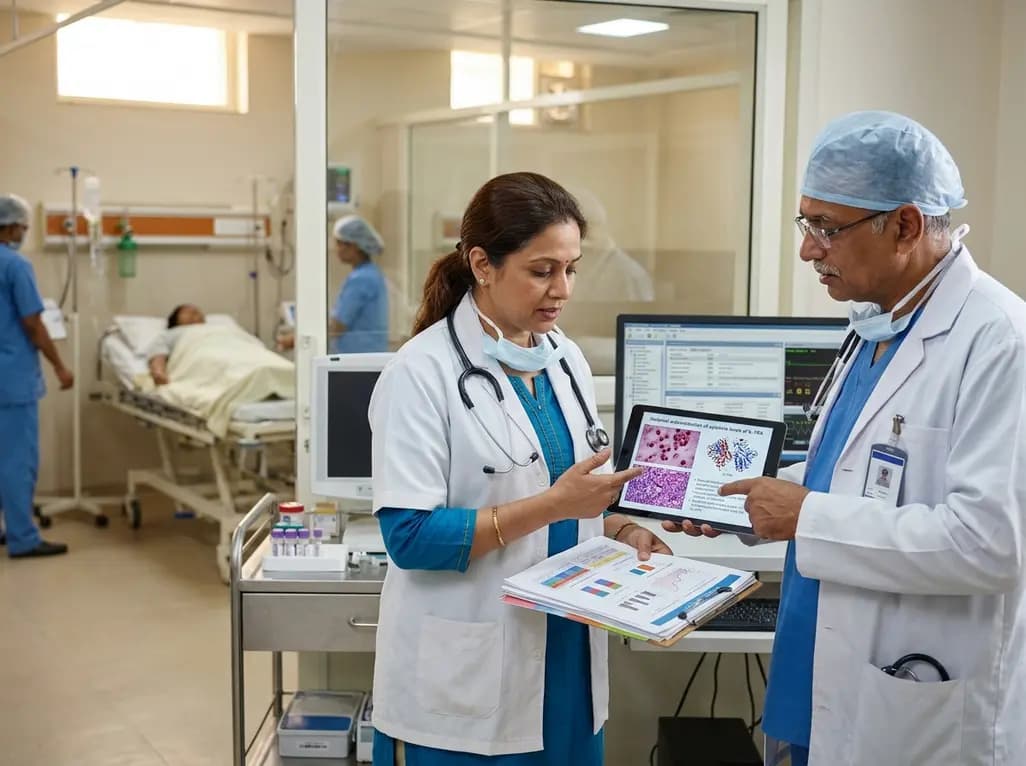
Recent clinical studies reveal maternal autoantibodies targeting IL-1RA as potential triggers for preterm labor, opening avenues for targeted cytokine therapies. Concurrently, new perioperative findings show inhaled cannabis increases propofol requirements during upper endoscopy compared to oral edible consumption.
Today

In high-risk pulmonary embolism complicated by severe anemia and active uterine bleeding, systemic thrombolysis is contraindicated. Large-bore aspiration thrombectomy provides rapid hemodynamic rescue without fibrinolysis, supported by inferior vena cava filter placement and multidisciplinary critical care.
Today

This comparative study evaluates posterior labral tears with and without glenohumeral instability, highlighting distinct demographic patterns, MRI underestimation in stable shoulders, and successful arthroscopic repair outcomes.
Today

A clinical study demonstrates that early intervention with tocilizumab, either as monotherapy or bridged with corticosteroids, achieves significant proptosis reduction and resolves active inflammation in treatment-naive thyroid eye disease.
Today
