.webp&w=384&q=75)

Loading, please wait...
Loading, please wait...

Maintaining a balanced vaginal microbiome is a fundamental requirement for successful human reproduction. Clinical research increasingly suggests that bacterial vaginosis (BV) significantly reduces fecundability in women. This condition is characterized by a depletion of healthy Lactobacillus species and an overgrowth of anaerobic pathogens. Such a shift creates an inflammatory environment that can be hostile to sperm survival and embryo implantation. Therefore, implementing effective BV screening for conception has become a priority in preconception care. When women plan for natural conception, identifying and treating asymptomatic BV can potentially restore the vaginal ecosystem. This intervention may improve the chances of a successful pregnancy within a shorter timeframe. However, the accessibility of diagnostic tools varies widely across different global healthcare settings. In many regions, the lack of rapid and sensitive tests prevents many women from receiving timely care. Addressing this gap requires a thorough evaluation of both clinical efficacy and economic feasibility. By focusing on these factors, healthcare providers can better support patients on their fertility journey. Ultimately, early detection serves as a proactive measure to mitigate the adverse effects of dysbiosis on female reproductive health.
Healthcare professionals have traditionally relied on two primary methods for diagnosing bacterial vaginosis: the Amsel criteria and the Nugent score. The Amsel criteria involve a clinical assessment based on four specific signs, including vaginal pH and the presence of clue cells. While this method is relatively quick, it often lacks the sensitivity required for accurate preconception screening. On the other hand, the Nugent score is widely recognized as the laboratory gold standard. It utilizes Gram staining to quantify different bacterial morphotypes under a microscope. Although highly accurate, the Nugent method is labor-intensive and requires significant expertise from trained pathologists. This complexity often limits its use in primary care or rural settings where resources are scarce. Consequently, many women attempting natural conception do not receive a definitive diagnosis. The need for more accessible alternatives has led to the development of enzyme-based tests and molecular assays. These newer tools aim to bridge the gap between diagnostic accuracy and ease of use. Evaluating these pathways is essential for determining the most practical strategy for large-scale national screening programs. Selecting the right diagnostic tool can significantly influence the overall success of preconception interventions.
The BV Blue test represents a modern approach to vaginal health monitoring through the detection of sialidase activity. Sialidase is an enzyme produced by several BV-associated bacteria, such as Gardnerella vaginalis and Prevotella species. This rapid, self-administered test offers a promising alternative to traditional laboratory-based methods. In a recent cost-effectiveness analysis, researchers utilized a decision tree model to compare BV Blue testing against other strategies. The study focused on a simulated cohort of 100,000 women attempting natural conception. Results indicated that BV Blue testing yielded 842 additional pregnancies compared with no screening at all. Furthermore, the incremental cost-effectiveness ratio (ICER) for this strategy was calculated at CNY 2,827 per pregnancy. This figure is remarkably low when compared to the willingness-to-pay threshold of CNY 99,665, which is based on per capita GDP. The analysis suggests that BV Blue is not only effective but also highly affordable from a societal perspective. Such economic viability is crucial for the integration of this tool into public health systems. By reducing the reliance on specialized equipment, the BV Blue test democratizes access to essential reproductive health screening for a broader population of women.
The primary goal of any preconception screening strategy is to enhance reproductive outcomes and increase the number of successful pregnancies. The study results demonstrated that all active screening strategies outperformed the 'no screening' approach. For instance, the Nugent strategy yielded an additional 171 pregnancies compared to the BV Blue testing alone. However, the ICER for the Nugent strategy was significantly higher, reaching CNY 198,051 per pregnancy. While this remains within the acceptable range for some healthcare systems, sensitivity analyses revealed its lack of robustness. The cost-effectiveness of the Nugent score was highly sensitive to the sensitivity of other tests and overall pregnancy rates. In contrast, the BV Blue test demonstrated a consistent probability of being the most optimal strategy on the cost-effectiveness acceptability curve. This stability suggests that rapid testing is a reliable choice for diverse clinical scenarios. Moreover, the Amsel criteria and sequential testing strategies were found to be absolutely dominated by the other methods. This means they were both more expensive and less effective than simpler alternatives. These findings emphasize that focusing on high-sensitivity, accessible tools like the BV Blue test can lead to the best outcomes for the greatest number of women.
The integration of BV screening for conception into national healthcare frameworks could revolutionize maternal and child health. In countries like India and China, where the burden of reproductive morbidity is significant, cost-effective diagnostic pathways are essential. These research findings suggest that a shift toward point-of-care testing could improve the reach of preconception services. Clinicians can use these results to advocate for the adoption of rapid sialidase tests in routine check-ups. Such a move would allow for immediate treatment, thereby optimizing the vaginal environment before conception occurs. Furthermore, the self-administered nature of the BV Blue test reduces the workload on laboratory staff and clinicians. This efficiency is particularly valuable in high-volume clinics where diagnostic delays are common. In addition to improving pregnancy rates, early management of BV may also reduce the risk of later complications, such as preterm birth. Healthcare policymakers should consider these economic evaluations when designing future screening guidelines. By prioritizing cost-effective and accessible diagnostic tools, they can ensure that more women have the opportunity to conceive naturally and maintain a healthy pregnancy.
The landscape of vaginal health management is rapidly evolving with the advent of molecular diagnostics and personalized care. Future strategies may involve combining rapid enzyme-based tests with more detailed microbiome analysis for high-risk patients. However, for general population screening, simplicity and cost remain the most critical factors. The study highlights that accessible tools like BV Blue can significantly impact public health without requiring excessive financial investment. Ongoing research should continue to explore the long-term benefits of preconception BV management, including its effects on neonatal outcomes and maternal wellbeing. Additionally, increasing patient awareness about the impact of the vaginal microbiome on fertility is vital. Educational initiatives can encourage women to seek screening early in their conception planning. As we move toward more patient-centered care, the availability of self-testing options will likely play a major role in reproductive health. Ultimately, the goal is to provide every woman with the tools she needs to ensure an optimal environment for natural conception. Through continued innovation and economic research, the medical community can refine these strategies to better serve patients worldwide.
The BV Blue test is a rapid, enzyme-based diagnostic tool that detects sialidase activity produced by specific bacteria associated with bacterial vaginosis. Unlike the Amsel criteria, which require a clinician to evaluate four separate physiological signs including vaginal pH and the presence of clue cells under a microscope, the BV Blue test provides a quick colorimetric result. This makes it much easier to administer in diverse clinical settings without specialized equipment.
The Nugent score is recognized as the gold standard because it provides a highly detailed and objective quantification of vaginal bacteria through Gram staining. By counting specific bacterial morphotypes, it offers superior diagnostic sensitivity and specificity compared to clinical criteria. However, its high cost and the requirement for expert pathologists make it less practical for large-scale screening. It remains the reference point against which newer, more cost-effective tests like BV Blue are measured.
Bacterial vaginosis involves an overgrowth of anaerobic bacteria that produce inflammatory cytokines and enzymes like sialidase. These substances can damage sperm membranes, hinder sperm motility, and create an endometrium that is less receptive to embryo implantation. By screening for and treating BV during the preconception period, clinicians can help restore a healthy, Lactobacillus-dominant environment. This reduction in inflammation and restoration of natural vaginal chemistry significantly improves the biological conditions necessary for successful natural conception.
Disclaimer: This content is for informational and educational purposes only... Refer to the latest local and national guidelines for clinical practice.
References
Qi D et al. Cost-effectiveness analysis of bacterial vaginosis screening strategies in women attempting for natural conception. Cost Eff Resour Alloc. 2026 Jul 15. doi: 10.1186/s12962-026-00798-x. PMID: 42458496.
Coudray MS, Madhivanan P. Bacterial vaginosis and risk for infertility: a systematic review and meta-analysis. Reprod Health. 2020;17(1):18.
Muzny CA, et al. State-of-the-art management of bacterial vaginosis. Clin Infect Dis. 2023.

Read summarized clinical updates, watch expert medical content, and earn CME certifications right from your smartphone.
Open your smartphone camera to scan and install.





A new study evaluates the cost-effectiveness of bacterial vaginosis (BV) screening for women attempting natural conception. Comparing methods like BV Blue, Nugent scoring, and Amsel criteria, the research highlights how accessible screening tools can significantly increase pregnancy rates while remaining affordable.
3 months ago

A breakthrough ultrathin multimodal sensor decouples physical hemodynamic monitoring from disposable electrochemical calibration, achieving long-term wearable glucose prediction with 81.36% accuracy and a 9.12% MARD. This offers a robust, drift-free solution for outpatient metabolic surveillance.
Today

A clinical review of menopause and neurology highlights the neurobiological impacts of midlife hormonal shifts on cognition, epilepsy, migraine, multiple sclerosis, and stroke, emphasizing safe hormone therapy prescribing.
Today
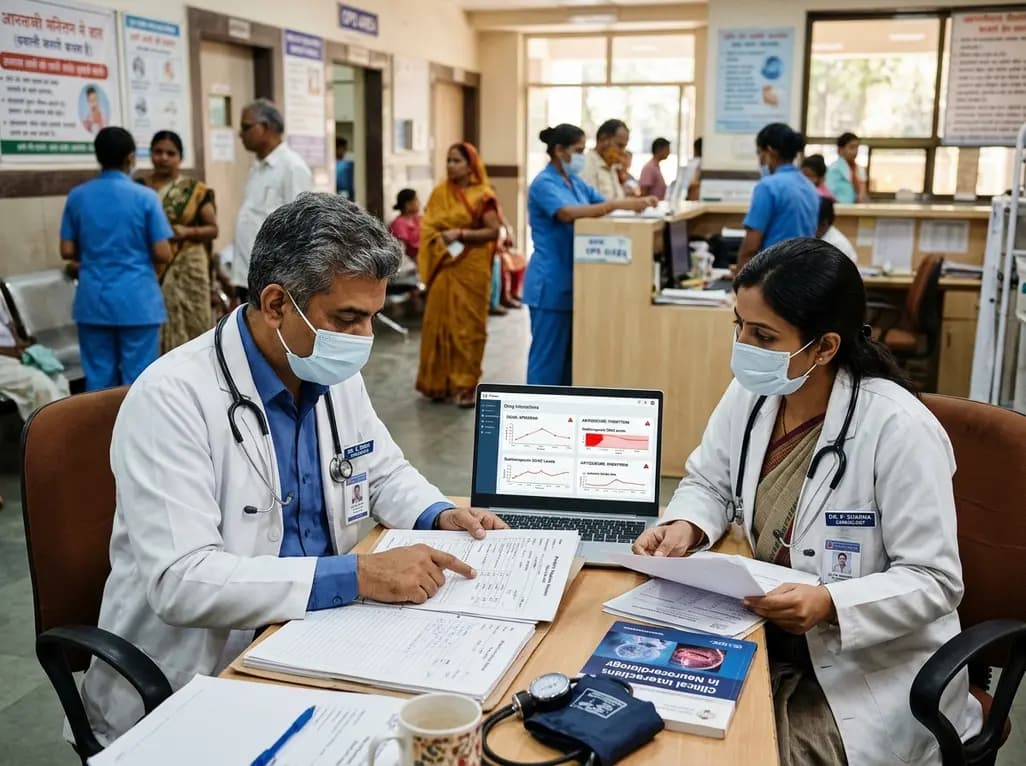
Co-administering antiseizure medications and DOACs frequently causes pharmacokinetic interactions, subtherapeutic drug levels, and thromboembolic failures. This review highlights enzyme induction risks, unpredictable outcomes with levetiracetam, and the vital role of therapeutic drug monitoring.
Today

A comparative review of tension band wiring and intramedullary screw fixation in thumb metacarpophalangeal arthrodesis, evaluating union rates, hardware complications, and clinical outcomes.
Today

Following regulatory scrutiny from FSSAI regarding promotional representations and lean muscle preservation claims, Dr. Reddy's Laboratories and Nestlé Health Science are currently reviewing the branding and marketing strategy for their joint nutritional supplement Celevida GLP+.
Today
