.webp&w=384&q=75)

Loading, please wait...
Loading, please wait...

The global burden of corneal blindness is immense. Currently, nearly 12.7 million individuals await transplantation worldwide. However, the severe shortage of donor grafts persists. In India, for instance, surgeons meet only one-fourth of the annual demand for corneas. Therefore, developing high-efficiency non-surgical therapies is a priority for the medical community. Scientists identified FOXO1 as an under-explored therapeutic target. They found that FOXO1 overexpression preserves the integrity of mitochondria-associated endoplasmic reticulum membranes. This process effectively maintains mitochondrial calcium homeostasis and restores the pump activity of the endothelial cells.
Conventional adeno-associated virus (AAV) delivery systems often face limitations due to low transfection efficiency. Furthermore, the rapid clearance of viral vectors from the anterior chamber reduces their clinical effectiveness. To address these issues, the team engineered a carrier using a viscous choline chloride-fructose-based deep eutectic solvent (DES). This DES-AAV-Foxo1 system exhibits excellent biocompatibility. Additionally, the viscous nature of the solvent significantly prolongs the retention of the therapy in the eye. Consequently, the system achieves much higher transfection rates in corneal endothelial cells than standard methods. Animal experiments in Fuchs endothelial corneal dystrophy and type 1 diabetes models confirmed these findings. The system successfully improved corneal pump activity and mitigated endothelial dysfunction.
FOXO1 serves as a critical therapeutic target that preserves the integrity of the mitochondria-associated endoplasmic reticulum membrane. By maintaining mitochondrial calcium homeostasis, FOXO1 overexpression restores the pump activity of endothelial cells, which is essential for corneal transparency.
The DES carrier provides a viscous medium that increases the retention time of the AAV-Foxo1 system within the anterior chamber of the eye. This prolonged exposure leads to significantly higher transfection efficiency compared to conventional aqueous delivery methods.
Disclaimer: This content is for informational and educational purposes only and does not constitute medical advice or a professional relationship. Always seek the advice of a physician or other qualified health provider with any questions regarding a medical condition. Refer to the latest local and national guidelines for clinical practice.
References
Zhao H et al. A Viscous DES-AAV-Foxo1 Delivery System With High Transfection Efficiency for the Treatment of Corneal Endothelial Dysfunction by Restoring Mitochondria-ER Contacts. Adv Sci (Weinh). 2026 May 03. doi: 10.1002/advs.75464. PMID: 42070230.
Sahu A et al. India\'s corneal blindness crisis: Rural areas face shortages in eye care. India Today. October 30, 2024.
Jurakic A et al. Genetic Therapy of Fuchs Endothelial Corneal Dystrophy: Where Are We? A Review. PMC. 2024.

Read summarized clinical updates, watch expert medical content, and earn CME certifications right from your smartphone.
Open your smartphone camera to scan and install.





Researchers have developed a viscous DES-AAV-Foxo1 system that improves corneal endothelial function by restoring mitochondria-ER contacts in mouse models....
5 months ago
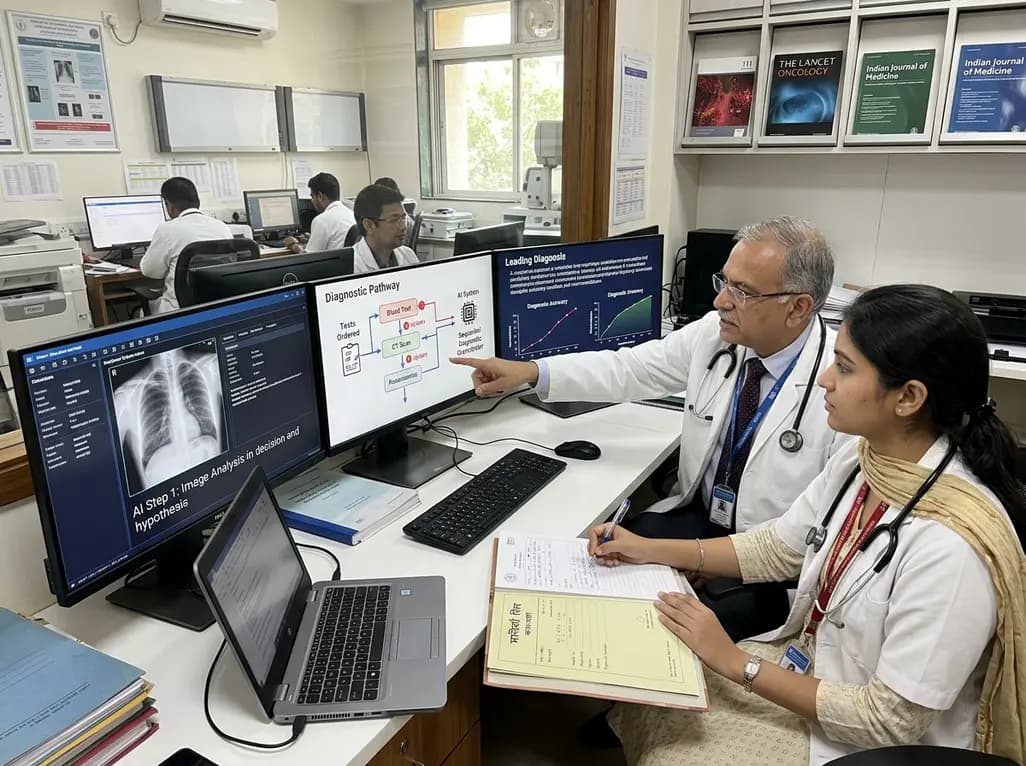
A breakthrough peer-reviewed study demonstrates that a sequential AI diagnosis system can mirror real-world clinical reasoning. By ordering stepwise tests and updating hypotheses dynamically, this multi-agent orchestrator achieved superior diagnostic accuracy while reducing investigative costs.
Today

A prenatal case highlights severe glutaric acidemia type II presenting as bilateral hyperechoic cystic kidneys at 18 weeks. Whole-exome sequencing revealed a novel homozygous ETFDH frameshift variant, demonstrating the power of rapid genetic testing in fetal renal anomalies.
Today

Review how tailored exercise programs benefit frail older patients with heart failure. Explore pathophysiological mechanisms, individualized training prescriptions, and strategies to overcome adherence barriers in clinical practice.
Yesterday

This comparative study evaluates posterior labral tears with and without glenohumeral instability, highlighting distinct demographic patterns, MRI underestimation in stable shoulders, and successful arthroscopic repair outcomes.
Yesterday

A clinical study demonstrates that early intervention with tocilizumab, either as monotherapy or bridged with corticosteroids, achieves significant proptosis reduction and resolves active inflammation in treatment-naive thyroid eye disease.
Yesterday
