

Loading, please wait...
Loading, please wait...

Malignant cells operate under chronically elevated oxidative stress. Consequently, neoplastic tissues rely heavily on robust antioxidant networks to avoid cell death. In modern oncology, cancer phototherapy harnesses light-activated agents to generate lethal reactive oxygen species within tumors. However, conventional photodynamic modalities often encounter therapeutic resistance because cancer cells rapidly deploy protective compensatory mechanisms. Specifically, two interdependent biochemical engines—the glutathione system and the thioredoxin system—shield malignant tissue from fatal oxidative damage. When therapeutic regimens inhibit only one pathway, tumors upregulate the alternate axis to maintain survival. This biological redundancy allows tumor cells to neutralize cytotoxic radicals with remarkable efficiency. Therefore, simultaneously neutralizing both antioxidant systems represents an urgent clinical priority. Nevertheless, standard pharmacological approaches struggle to suppress both defense pathways without causing severe systemic adverse events. Practicing oncologists must recognize how tumors utilize these redox buffers to resist oxidative therapies. By understanding these adaptive mechanisms, researchers can design innovative interventions that dismantle tumor defenses. Ultimately, targeting synchronized antioxidant networks promises to overcome therapeutic resistance and dramatically improve oncologic outcomes across diverse solid malignancies.
To counter tumor resilience, pharmacologists previously evaluated dual-inhibitor regimens targeting both glutathione and thioredoxin pathways. For example, combining buthionine sulfoximine with thioredoxin reductase inhibitors showed promising synergy in preclinical cellular assays. However, translating this dual-drug strategy into clinical medicine revealed profound pharmacokinetic obstacles. The primary challenge involves pharmacokinetic asynchrony between two disparate therapeutic compounds. Because each drug possesses distinct absorption rates, tissue distribution kinetics, and elimination half-lives, they rarely achieve peak concentrations simultaneously within neoplastic tissue. Consequently, when one inhibitor clears prematurely, the remaining active pathway rescues the tumor cell from lethal oxidative stress. Furthermore, escalating drug dosages to ensure sustained biological overlap frequently causes unacceptable systemic toxicities in healthy host organs. Therefore, multi-agent pharmacological combinations often fail to deliver effective synergistic cytotoxicity in clinical trials. To resolve this therapeutic failure, oncologic scientists recognized the urgent necessity for a single-agent modality. By unifying multi-axis disruption into a singular chemical framework, clinicians can eliminate asynchronous biodistribution, ensuring synchronized pathway ablation without worsening systemic drug exposure.
In response to pharmacokinetic challenges, investigators synthesized IITC, an innovative squaraine-based photocatalyst designed for precision cancer therapeutics. Upon irradiation with 635 nm light, IITC initiates potent photocatalytic oxidation combined with type I and type II photosensitization pathways. Unlike conventional photosensitizers that solely rely on oxygen to produce singlet oxygen, IITC engages in direct electron transfer processes. Consequently, the light-activated molecule catalytically oxidizes intracellular reduced nicotinamide adenine dinucleotide phosphate and glutathione. Furthermore, the 635 nm excitation wavelength ensures deep tissue penetration into solid tumors, avoiding superficial light scattering. Because IITC functions as an abiotic catalyst rather than a stoichiometric inhibitor, a single molecule continuously processes multiple cellular cofactors. Thus, the photocatalyst achieves massive substrate depletion within minutes of irradiation. Moreover, this catalytic activity operates independently of endogenous cellular feedback loops. As a result, IITC swiftly generates high levels of cytotoxic reactive oxygen species while simultaneously exhausting essential cellular reducing equivalents. This dual photocatalytic action establishes an aggressive therapeutic environment that rapidly overwhelms tumor survival pathways.
The key breakthrough of IITC centers on provoking a convergent redox collapse across parallel defense systems. Reduced glutathione constitutes the primary non-enzymatic antioxidant barrier in neoplastic cells, directly neutralizing peroxides and free radicals. Concurrently, the thioredoxin axis maintains protein thiol homeostasis, relying on reduced nicotinamide adenine dinucleotide phosphate as the obligate coenzyme for thioredoxin reductase. Following photoactivation, IITC directly oxidizes glutathione, precipitating the catastrophic failure of the central antioxidant axis. Simultaneously, photocatalytic oxidation depletes intracellular reduced nicotinamide adenine dinucleotide phosphate pools. Consequently, thioredoxin reductase loses its essential reducing electron donor, effectively paralyzing the thioredoxin axis. Because this chemical ablation occurs concurrently within the same subcellular compartment, malignant cells cannot mount compensatory defense responses. Instead, both primary antioxidant axes collapse at the identical biological moment. Therefore, unbuffered reactive oxygen species accumulate rapidly, damaging structural lipids, membrane integrity, and genomic DNA. Preclinical in vitro and in vivo studies demonstrate that this convergent collapse triggers extensive apoptosis, achieving complete tumor regression without permitting therapeutic escape.
A critical limitation of traditional photodynamic photosensitizers involves prolonged cutaneous phototoxicity, requiring treated patients to avoid ambient light for weeks. Fortunately, IITC circumvents this severe clinical drawback through a built-in self-immolating mechanism. During 635 nm phototherapy, the catalytic reaction generates localized reactive species that deliberately cleave the squaraine molecular core. Consequently, IITC degrades into benign, non-phototoxic chemical fragments immediately following therapeutic activation. Because the active agent self-destructs during treatment, it leaves zero residual photosensitizer in normal cutaneous or systemic tissues. In vivo evaluations confirm the total absence of post-treatment phototoxicity, establishing an unprecedented safety profile for light-based cancer therapy. Furthermore, this localized metabolic disruption holds immense promise for treating chemoresistant solid tumors, including head and neck, cutaneous, and gastrointestinal cancers. By restoring apoptotic sensitivity through concurrent redox collapse, light-activated squaraine photocatalysts provide oncologists with a powerful focal ablation tool. Moreover, the rapid release of tumor antigens following catastrophic redox collapse could synergize effectively with immune checkpoint inhibitors. Ultimately, this self-eliminating platform paves a clear pathway toward safer, more effective localized oncology interventions.
Traditional dual-inhibitor regimens fail primarily due to pharmacokinetic asynchrony, as two distinct pharmacological agents exhibit divergent absorption, distribution, and metabolic clearance rates. Consequently, malignant cells exploit temporal gaps to mount compensatory antioxidant responses. In contrast, the single-agent squaraine photocatalyst IITC simultaneously depletes intracellular glutathione and reduced nicotinamide adenine dinucleotide phosphate upon light irradiation. This synchronized molecular action ensures immediate, concurrent ablation of both protective axes, eliminating pharmacological asynchrony and preventing compensatory tumor survival.
Light at 635 nm occupies the red spectrum of the phototherapeutic window, where biological tissues exhibit minimal intrinsic hemoglobin and melanin absorption. Consequently, this specific wavelength penetrates deeper into solid tumor masses than shorter visible wavelengths without causing unselective thermal damage to adjacent healthy structures. Furthermore, standard clinical oncology suites already possess laser and fiber-optic delivery systems calibrated to 635 nm, facilitating seamless future translation into endoscopic and surgical protocols for localized tumor ablation.
Traditional photodynamic photosensitizers linger in cutaneous tissues for weeks, forcing oncology patients to endure prolonged light avoidance to prevent severe cutaneous burns and phototoxicity. In contrast, IITC undergoes programmed self-immolation during light activation, degrading into benign, non-phototoxic metabolites as it executes its therapeutic function. Therefore, this self-cleaving chemistry completely eliminates lingering post-treatment photosensitivity, significantly improving patient quality of life, comfort, and clinical safety profiles following localized cancer therapy.
Disclaimer: This content is for informational and educational purposes only and does not constitute medical advice, diagnosis, or treatment. Healthcare professionals should exercise independent clinical judgment. Refer to the latest local and national guidelines for clinical practice.
References

Read summarized clinical updates, watch expert medical content, and earn CME certifications right from your smartphone.
Open your smartphone camera to scan and install.





A novel squaraine photocatalyst concurrently depletes glutathione and NADPH under 635 nm light, dismantling dual antioxidant axes in tumors. Through self-immolation into non-toxic fragments, this approach delivers potent antitumor phototherapy while preventing residual post-treatment phototoxicity.
Today
A cross-sectional study of 543 patients evaluated the clinical and economic impact of hemophilia inhibitors, revealing higher annual bleeding rates, increased treatment complexity, and severe orthopedic disability, highlighting the need for routine inhibitor screening and modern prophylactic strategies.
Today

Doctors at AIIMS New Delhi have achieved a historic milestone by performing India's first open prenatal myelomeningocele repair on a 25-week unborn fetus. This landmark multidisciplinary procedure provides vital neuroprotective benefits, lowers hydrocephalus risks, and transforms maternal-fetal medicine nationwide.
Today

A randomized crossover trial reveals that daily fresh watermelon consumption significantly reduces baseline TMAO levels and favorably modulates lipid profiles, lowering triglycerides and LDL cholesterol in adults with overweight and obesity.
Today
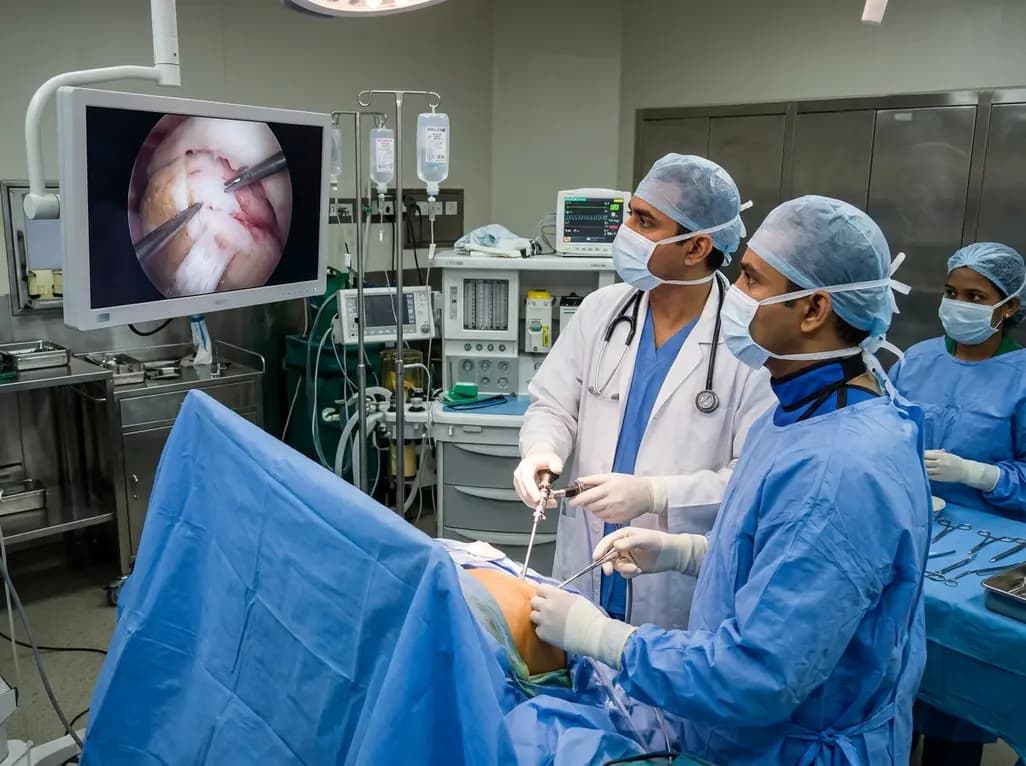
Discover how all-arthroscopic repair using a resorbable bioinductive bovine collagen implant offers a reproducible biologic solution for partial-thickness upper border subscapularis tears, enhancing healing while preserving native tendon architecture.
Today

A large-scale retrospective cohort study demonstrates that GLP-1 receptor agonists significantly reduce all-cause hospitalizations, alcohol-related admissions, major cardiovascular events, and mortality in patients with overweight or obesity and alcohol use disorder, providing profound clinical insights.
Today
