

Loading, please wait...
Loading, please wait...

Proximal phalanx fractures represent one of the most common skeletal injuries encountered in acute orthopedic and trauma settings. Clinicians frequently encounter these injuries in active manual laborers, young adults, and athletes. Historically, orthopedic surgeons often favored operative fixation with percutaneous Kirschner wires, lag screws, or miniature plates to restore immediate anatomical stability. However, surgical procedures inherently carry distinct risks, including digital stiffness, extensor tendon adhesions, infection, and secondary hardware removal. Consequently, clinicians have increasingly re-examined non-operative protocols to determine whether conservative treatment can reliably deliver equivalent long-term functionality without surgical morbidity. Recent prospective research highlights that non-surgical treatment provides an exceptionally viable alternative for acute extra-articular injuries. Furthermore, modern management emphasizes early protected movement rather than prolonged rigid immobilization. Because prolonged cast immobilization often leads to disabling joint contractures, structured non-operative pathways utilize functional orthotic designs. Therefore, hand specialists now seek robust evidence regarding patient-reported functional recovery, pain trajectories, and overall satisfaction. Understanding these non-operative outcomes allows clinicians to guide treatment recommendations effectively while preventing unnecessary surgical exposure.
The prospective cohort study conducted at Austin Health outpatient clinic established a standardized conservative pathway for acute extra-articular proximal phalanx fractures. Initially, clinicians evaluated each fracture to determine displacement and rotational deformity. When patients presented with unacceptable fracture alignment, surgeons performed closed reduction under local anesthesia (LAMP) to re-establish anatomical axis. Remarkably, half of the cohort successfully underwent this outpatient manipulation, demonstrating that local anesthesia provides adequate analgesia for definitive manual reduction. Following alignment confirmation, clinicians fitted patients with a specialized hand-based orthosis that positioned the metacarpophalangeal (MCP) joints in maximal flexion. This biomechanical positioning tightens the collateral ligaments and stabilizes the proximal fracture fragment through intrinsic tendon tension. In addition, the orthosis intentionally left the interphalangeal joints unrestricted, allowing immediate active digital motion. Hand therapists guided patients through progressive flexion exercises from day one. Consequently, this dynamic immobilization prevented tendon adherence along the phalanx while protecting the healing bone from deforming shear forces. Thus, early mobilization transformed traditional fracture care into an active biological healing process.
Evaluating patient-centered endpoints demonstrates the remarkable functional success of functional conservative immobilization. In the Austin Health cohort, twenty-eight patients completed the twelve-week follow-up protocol with comprehensive functional testing. Patients demonstrated rapid functional recovery across all standardized metrics, including the Michigan Hand Outcomes Questionnaire and pain scales. Specifically, patients successfully resumed normal hand use for occupational duties at a median of only three weeks. Meanwhile, individuals returned to competitive athletic activities and sports by ten weeks post-injury. Pain levels decreased dramatically throughout the rehabilitation period. Most patients reported complete pain resolution by eight weeks, achieving a median Numeric Pain Rating Scale score of one out of ten. Furthermore, total active motion reached ninety-two percent of the uninjured contralateral hand at the final evaluation. Although twenty-eight of thirty patients achieved successful union without complication, two individuals experienced loss of reduction, requiring prompt secondary surgical stabilization. Therefore, diligent clinical monitoring remains imperative during the initial two weeks of conservative treatment to capture rare early displacements.
Healthcare resource consumption represents a vital metric when evaluating the sustainability of non-operative orthopedic pathways. In contemporary healthcare systems, avoiding unnecessary hospital admissions and operating theater bookings preserves critical institutional capacity. The Austin Health prospective evaluation documented minimal clinical resource utilization throughout the conservative care pathway. Specifically, patients required a median of only one surveillance radiograph following the initiation of orthotic therapy. Moreover, patients attended a median of five clinical appointments across the entire twelve-week rehabilitation period. These outpatient appointments combined hand therapy reviews, splint adjustments, and physician oversight into unified multidisciplinary encounters. Because clinicians managed fractures entirely in an ambulatory setting, patients avoided the substantial financial costs and administrative delays linked to surgical theater reservations. In addition, every single participant reported complete treatment satisfaction at the study conclusion. These findings prove that conservative therapy delivers high-value orthopedic care. Consequently, hospitals can achieve outstanding clinical outcomes while substantially curbing expenditure for common musculoskeletal hand injuries.
Translating these prospective findings into everyday clinical practice offers immediate advantages for hospitals in both developed and emerging healthcare settings. In countries like India, where patients frequently bear out-of-pocket medical expenses, non-operative management protects households from catastrophic surgical debts. Furthermore, performing closed reductions under local anesthesia avoids general anesthesia risks and costly theater charges. Nevertheless, clinicians must maintain rigid selection criteria to ensure patient safety and optimal functional outcomes. Conservative treatment excels primarily in isolated, extra-articular fractures without severe comminution or intra-articular step-off. Surgeons must also verify rotational alignment through meticulous physical examination, ensuring fingers point toward the scaphoid tubercle during active composite flexion. When clinicians detect scissoring or malrotation, prompt manipulation becomes mandatory. Additionally, successful conservative outcomes depend directly upon patient adherence to home exercise regimens and orthosis wear. Hand therapists play an essential role by educating patients on digital edema control and progressive gliding exercises. Thus, structured outpatient conservative protocols combine clinical safety, cost efficiency, and exceptional patient satisfaction.
Clinicians primarily select extra-articular proximal phalanx fractures without severe comminution or gross instability for conservative management. Candidates should exhibit acceptable alignment after gentle closed reduction, including less than ten to fifteen degrees of angulation and zero rotational deformity. Furthermore, patients must demonstrate adequate cognitive ability and commitment to adhere to functional splinting protocols and progressive digital mobilization regimens throughout the required recovery timeline.
Positioning the metacarpophalangeal joint in maximal flexion tightens its collateral ligaments, which effectively prevents debilitating periarticular contractures during healing. Furthermore, this specific flexion posture tensions the lateral bands and extensor apparatus over the fracture site. Consequently, this biomechanical balance neutralizes deforming muscular forces on the proximal fragment, stabilizing bone alignment while allowing the interphalangeal joints to move freely without jeopardizing fracture union.
Surgeons should promptly convert to operative intervention if follow-up radiographs reveal a loss of reduction or progressive apex-volar angulation exceeding acceptable thresholds. Additionally, clinicians must intervene surgically if clinical evaluation demonstrates persistent digital rotational malalignment or digital overlapping during finger flexion. Finally, complex open wounds, extensive soft tissue compromise, or non-compliance with external splinting mandate formal surgical reduction and internal fixation.
Disclaimer: This content is for informational and educational purposes only and should not be considered medical advice. It does not replace clinical judgment or official diagnostic and treatment guidelines. Refer to the latest local and national guidelines for clinical practice.
References

Read summarized clinical updates, watch expert medical content, and earn CME certifications right from your smartphone.
Open your smartphone camera to scan and install.





A prospective study demonstrates that conservative management of extra-articular proximal phalanx fractures with closed reduction and functional orthosis achieves 92% active motion, rapid pain resolution, and 100% patient satisfaction with minimal healthcare visits.
Today
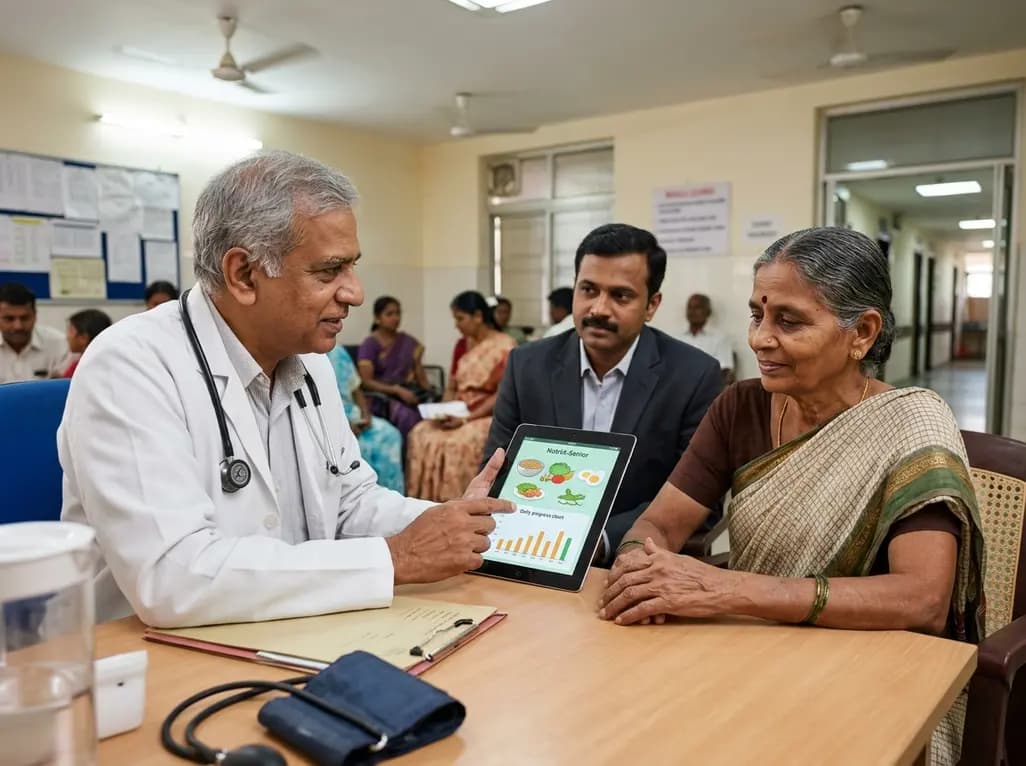
NutriA-Senior is a theory-informed mobile application designed to improve nutritional education in older adults with sarcopenia. A pilot usability study demonstrated high system usability and technical credibility, highlighting the growing value of mHealth tools in geriatric nutritional self-management.
Today

Ascertainment bias in cancer case-control studies inflates odds ratios and penetrance estimates when cases are drawn from high-risk clinics. A landmark modeling study demonstrates substantial bias ranging up to 23.72, highlighting the critical need for ascertainment adjustment in genetic risk counseling.
Today

Researchers demonstrate that central induction of synthetic torpor in non-hibernating rats provides striking cardioprotection, reducing myocardial infarct size by ~40% during ischaemia-reperfusion injury through endogenous survival signaling, independent of hypothermia.
Today
A landmark network meta-analysis of 92 RCTs clarifies carpal tunnel syndrome management across severity levels. While endoscopic release ranks highest for short-term symptom relief, non-surgical approaches like shockwave therapy and PRP demonstrate exceptional clinical value in mild-to-moderate neuropathy.
Today

A novel fluorine-functionalized near-infrared copper fluorescent probe selectively illuminates lung tissue, revealing critical links between hyperglycemia, ER stress, and pulmonary malignancy for improved early diagnosis.
Today
