.webp&w=384&q=75)

Loading, please wait...
Loading, please wait...

King George's Medical University (KGMU) recently introduced **conduction system pacing** as a modern alternative to traditional methods. This advanced technique helps the heart beat more naturally for patients requiring permanent devices. Dr. Ayush Shukla and his team successfully performed three implants during a special cardiology session. Specifically, the team placed the wires within the heart's natural electrical network to ensure physiological contraction. This achievement marks a significant step forward for rhythm treatment in Lucknow.
Conventional pacemakers usually place wires in the lower right chamber of the heart. Consequently, this can disrupt the heart's natural electrical flow and lead to dyssynchrony. Over time, it may reduce pumping efficiency or increase the risk of heart failure. However, **conduction system pacing** targets the heart's natural pathways directly. Therefore, it ensures better coordination between heart chambers and maintains a healthy contraction pattern. Furthermore, clinical studies suggest this method significantly reduces the risk of pacing-induced cardiomyopathy compared to apical pacing.
This method primarily benefits patients suffering from complete heart block. Because it mimics physiological activation, it supports improved long-term heart function. In addition, the cardiology department aims to make this technique a standard for eligible patients. KGMU Vice-Chancellor Prof. Soniya Nityanand praised the team for this significant clinical achievement. Moreover, the procedure offers hope for those requiring permanent devices to maintain a steady and natural heart rhythm.
Q1: How does this method differ from traditional pacemakers?
Traditional methods place wires in the right ventricle, while this technique utilizes the heart's natural electrical pathways for synchronized beating.
Q2: Who is the ideal candidate for this procedure?
Patients with complete heart block or those at high risk of heart failure from traditional pacing are excellent candidates for this method.
Disclaimer: This content is for informational and educational purposes only. It does not constitute medical advice or replace professional judgment. Refer to the latest local and national guidelines for clinical practice.
References

Read summarized clinical updates, watch expert medical content, and earn CME certifications right from your smartphone.
Open your smartphone camera to scan and install.





KGMU Lucknow introduces advanced conduction system pacing to provide a natural heart rhythm and improve long-term outcomes for patients needing pacemakers....
7 months ago
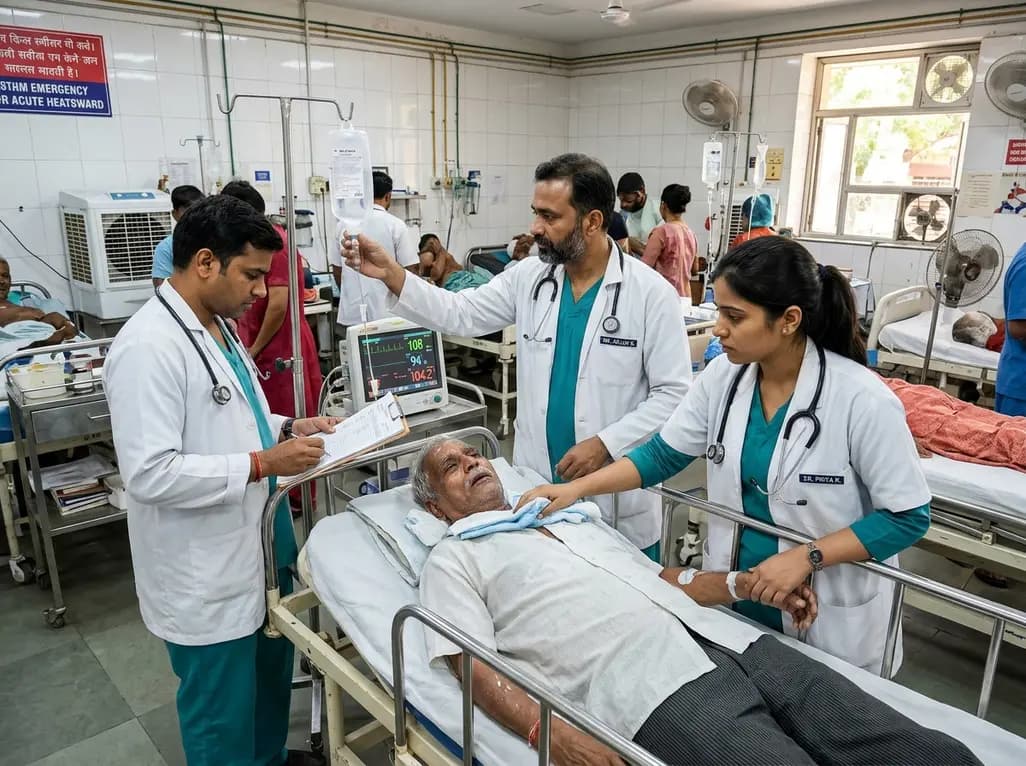
Recent epidemiological data reveals a dramatic surge in summer heat mortality driven by human-induced climate warming. This analysis explores the pathophysiological impacts on cardiac and renal systems, diagnostic dilemmas in death certification, and essential emergency cooling protocols for acute clinical care.
Today

Odisha has established India's first state-level clinical protocol specifically tailored for pregnant women with sickle cell disease. Developed with NHM and UNICEF, the framework provides structured antenatal screening, crisis mitigation, standardized referral pathways, and specialized interdisciplinary care.
Today

India is advancing preventive healthcare by integrating genomics, artificial intelligence, and quantum technologies. With the SANGAM programme sequencing one million Indian genomes, clinicians can unlock personalized therapies, detect cardiometabolic risks early, and curb the burden of diabetes and heart disease.
Today

A randomized controlled trial demonstrates that an eight-week dual-task training intervention significantly improves static and dynamic postural control over standard balance exercises in individuals with chronic ankle instability, addressing critical neurocognitive deficits during athletic and daily activities.
Today

A retrospective cohort study of 7,716 ICU patients from the MIMIC-IV database demonstrates that Gradient Boosting Decision Trees significantly outperform traditional SOFA scores in predicting in-hospital mortality among patients with sepsis and diabetes, with SHAP analysis providing clinical interpretability.
Today
