.webp&w=384&q=75)

Loading, please wait...
Loading, please wait...
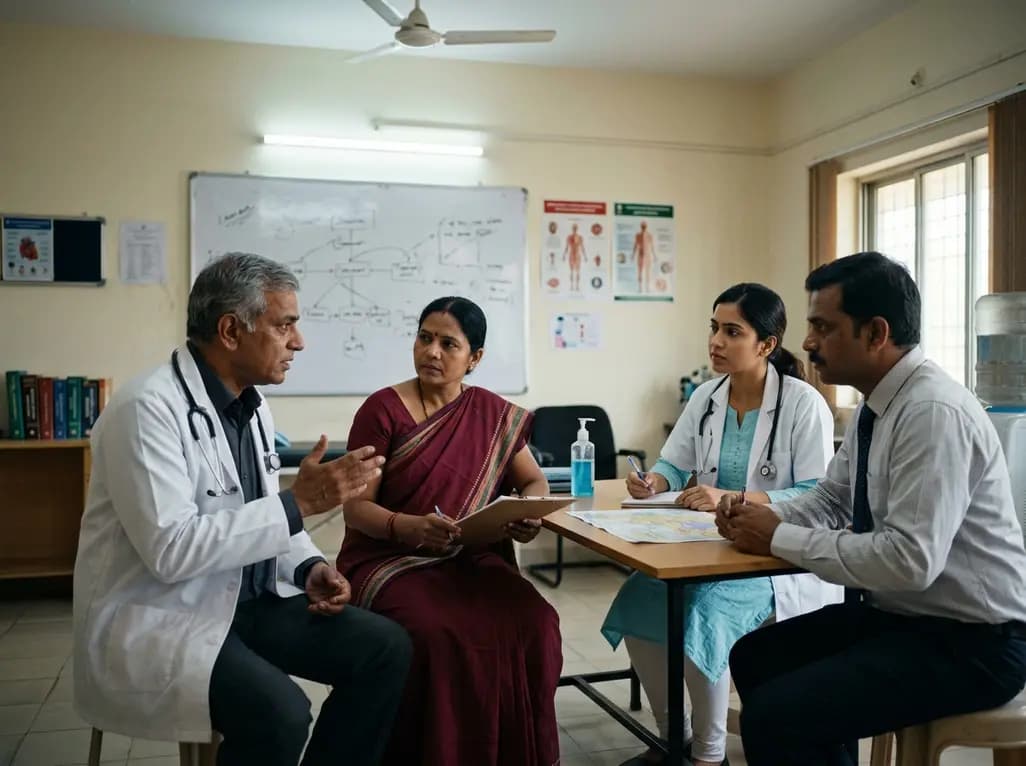
The COVID-19 pandemic revealed significant vulnerabilities in global health systems. However, it also sparked innovation in local emergency response. A recent qualitative study in San Antonio, Texas, highlights the transformative power of community-based health collaborations. By examining the actions of city officials, healthcare professionals, and local organizations, researchers identified strategies that allowed these groups to thrive under pressure. Consequently, these findings offer a blueprint for building more resilient public health infrastructures.
During the height of the pandemic, local stakeholders faced immense challenges. These included rigid state policies, limited budgets, and rapidly shifting medical contexts. Despite these hurdles, community-based health collaborations provided a way to bypass traditional silos. For instance, many organizations drew on preexisting relationships to speed up resource delivery. Moreover, stakeholders improvised strategic partnerships to reach the most severely impacted populations. Therefore, the ability to collaborate at a grassroots level proved more effective than top-down mandates alone.
The research emphasizes that trust and mutual respect serve as the foundation for any successful partnership. When stakeholders view community members as experts, the efficacy of the response increases. Furthermore, embedding equity into the design of these structures ensures that no group is left behind. Because local knowledge is context-specific, it allows for more responsive communication strategies. As a result, public health planners must invest in these relationships well before a crisis emerges. This proactive approach fosters the enduring partnerships required for rapid and effective decision-making.
Public health planning should formally integrate community leaders into decision-making roles. This shift moves away from viewing the community merely as a recipient of care. Instead, it recognizes them as active partners in crisis management. Additionally, investing in collaborative infrastructure during periods of stability is crucial. When the next health emergency occurs, these established networks will be ready to act immediately. By prioritizing community-based health collaborations, we can enhance the equity and efficacy of our future responses.
Grassroots partnerships are essential because they utilize local trust and specific knowledge that larger institutions may lack. These connections enable faster, more targeted interventions in underserved areas.
Healthcare systems can build trust by engaging community members as decision-makers and experts. Consistent, equitable collaboration during non-crisis periods establishes a reliable foundation for when emergencies arise.
Equity ensures that resources and communication are tailored to the needs of the most vulnerable groups. By embedding equity into the response structure, planners can reduce health disparities during a crisis.
Disclaimer: This content is for informational and educational purposes only. It does not constitute medical advice or a professional recommendation. Refer to the latest local and national guidelines for clinical practice.
References
Khan S et al. Breaking Down Silos and Building Partnerships at the Grassroots Level: Lessons from the COVID-19 Response Infrastructure in South Central Texas. Health Commun. 2026 Jun 08. doi: 10.1080/10410236.2026.2683899. PMID: 42260325.
World Health Organization. Supporting communities to improve preparedness and response to epidemics and pandemics. Feb 2025.
CDC. A Framework for Mobilizing Health Care to Respond to the Community Within the COVID-19 Pandemic. April 2021.

Read summarized clinical updates, watch expert medical content, and earn CME certifications right from your smartphone.
Open your smartphone camera to scan and install.





A qualitative study on San Antonio's COVID-19 response highlights the role of grassroots partnerships and community trust in effective crisis management....
4 months ago

Novel diimide and hydrazone scaffolds, particularly compound #C4, synergistically reactivate latent HIV-1 when combined with JQ1 or PKC activators. Demonstrating donor-matched proviral transcription ex vivo and non-canonical signaling, these findings advance shock and kill strategies toward reservoir eradication.
Today

A comparative cohort study evaluates vNOTES vs TLH hysterectomy for benign conditions, demonstrating shorter operative duration, faster return to daily activities, and equivalent female sexual function scores without increased dyspareunia.
Today

Review how tailored exercise programs benefit frail older patients with heart failure. Explore pathophysiological mechanisms, individualized training prescriptions, and strategies to overcome adherence barriers in clinical practice.
Yesterday

This comparative study evaluates posterior labral tears with and without glenohumeral instability, highlighting distinct demographic patterns, MRI underestimation in stable shoulders, and successful arthroscopic repair outcomes.
Yesterday

A clinical study demonstrates that early intervention with tocilizumab, either as monotherapy or bridged with corticosteroids, achieves significant proptosis reduction and resolves active inflammation in treatment-naive thyroid eye disease.
Today
