

Loading, please wait...
Loading, please wait...

The two main subtypes are inflammatory CAFs (iCAFs), which produce cytokines and chemokines, and myofibroblast-like CAFs (myCAFs), which focus on extracellular matrix deposition and actomyosin contractility.
PI3K/mTOR inhibitors can push fibroblasts toward an inflammatory iCAF state via FGF-2 release. In contrast, MEK (MAPK) inhibitors tend to drive them toward a myofibroblast-like myCAF state through interferon-dependent signaling.
CAF plasticity allows the tumor microenvironment to adapt to therapeutic cues. Understanding these shifts helps researchers develop strategies to prevent CAFs from adopting states that promote tumor survival or drug resistance.
Disclaimer: This content is for informational and educational purposes only. It does not constitute professional medical advice, diagnosis, or treatment. Always seek the advice of your physician or other qualified healthcare provider with any questions you may have regarding a medical condition. Refer to the latest local and national guidelines for clinical practice.
References
Xia Z et al. PI3K and MAPK Signaling Nodes Serve as Divergent Drivers of Phenotypic Plasticity in Cancer-Associated Fibroblasts in Colorectal Cancer. Cancer Res. 2026 Mar 12. doi: 10.1158/0008-5472.CAN-25-0766. PMID: 41817574.
Pitts TM et al. Dual Pharmacological Targeting of the MAP Kinase and PI3K/mTOR Pathway in Preclinical Models of Colorectal Cancer. PLoS ONE. 2014;9(11):e113037.
Brandão M et al. The Role of PI3K Inhibitors in Cancer Therapy: Current Evidence and Future Directions. Frontiers in Oncology. 2021;11:645362.

Read summarized clinical updates, watch expert medical content, and earn CME certifications right from your smartphone.
Open your smartphone camera to scan and install.





Recent research reveals how PI3K/mTOR and MAPK/ERK pathways drive CAF plasticity in CRC, impacting how tumors respond to targeted medical therapies....
7 months ago
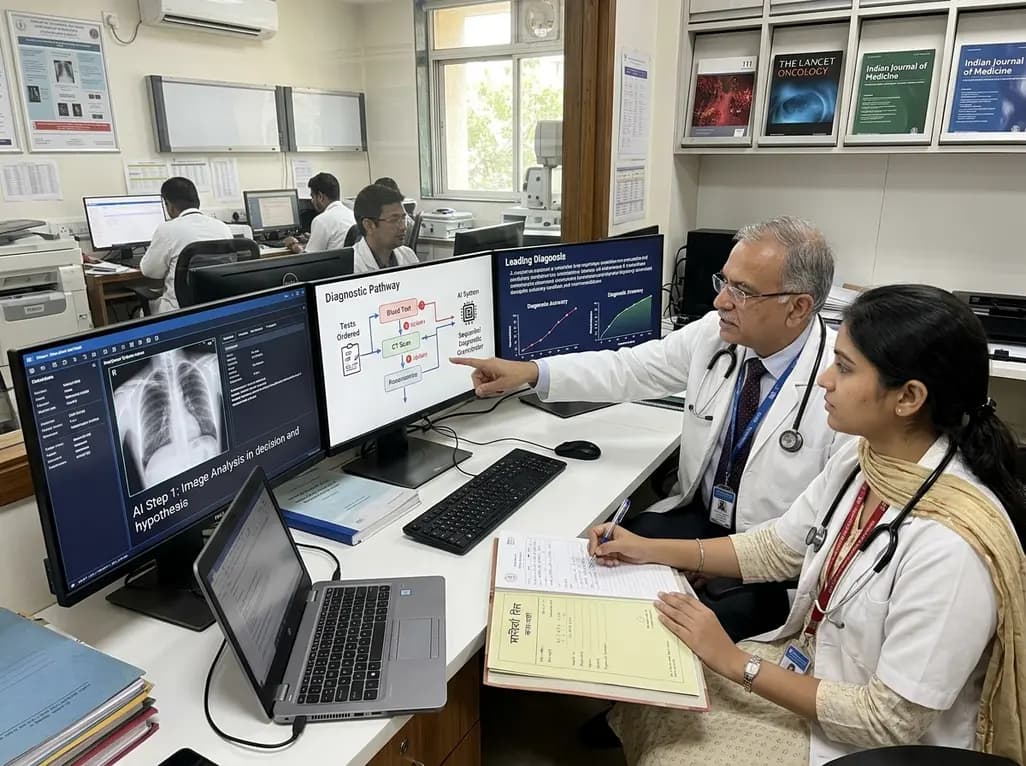
A breakthrough peer-reviewed study demonstrates that a sequential AI diagnosis system can mirror real-world clinical reasoning. By ordering stepwise tests and updating hypotheses dynamically, this multi-agent orchestrator achieved superior diagnostic accuracy while reducing investigative costs.
Today

A prenatal case highlights severe glutaric acidemia type II presenting as bilateral hyperechoic cystic kidneys at 18 weeks. Whole-exome sequencing revealed a novel homozygous ETFDH frameshift variant, demonstrating the power of rapid genetic testing in fetal renal anomalies.
Today

Review how tailored exercise programs benefit frail older patients with heart failure. Explore pathophysiological mechanisms, individualized training prescriptions, and strategies to overcome adherence barriers in clinical practice.
Yesterday

This comparative study evaluates posterior labral tears with and without glenohumeral instability, highlighting distinct demographic patterns, MRI underestimation in stable shoulders, and successful arthroscopic repair outcomes.
Yesterday

A clinical study demonstrates that early intervention with tocilizumab, either as monotherapy or bridged with corticosteroids, achieves significant proptosis reduction and resolves active inflammation in treatment-naive thyroid eye disease.
Yesterday
