.webp&w=384&q=75)

Loading, please wait...
Loading, please wait...

Healthcare professionals constantly encounter ethical, clinical, and legal tensions when implementing coercive measures in psychiatry. Restrictive practices such as physical restraint, mechanical immobilization, chemical sedation, and involuntary containment carry profound risks for patients and healthcare workers alike. Although clinical teams often view these measures as emergency tools to ensure immediate safety, containment frequently damages the therapeutic relationship. A qualitative study by Paradis-Gagné and colleagues investigates these complex dynamics across general psychiatric units and forensic facilities. Their grounded theory analysis demonstrates how nurses continually negotiate the boundary between compassionate care and mandatory institutional security. Consequently, understanding these frontline perspectives helps mental health teams minimize restrictive practices, foster proactive de-escalation, and protect human rights.
First, the clinical setting strongly dictates how healthcare staff perceive and apply containment. In general psychiatric wards, clinicians typically initiate restraints as acute crisis responses to sudden behavioral escalation, severe psychosis, or acute delirium. These inpatient environments experience rapid admissions and short hospital stays, which often disrupt consistent behavioral monitoring and early rapport building. In contrast, forensic psychiatric units function under perpetual legal scrutiny, judicial oversight, and public protection mandates. Nurses in forensic environments continually evaluate past criminal histories, formal legal restrictions, and potential violence risks alongside clinical symptoms. Therefore, custodial routines and security priorities often compete directly with individualized therapeutic goals. However, the study shows that nurses in both environments experience comparable emotional fatigue and moral distress during physical interventions. While forensic units maintain permanent architectural barriers and strict surveillance, general acute wards face unpredictable behavioral volatility and ward chaos. Hence, systemic ward pressures directly influence how healthcare teams identify imminent danger and justify restrictive actions.
Nurses across both care settings identify clear clinical rationales before initiating restrictive interventions. Primarily, bedside clinicians emphasize their professional obligation to prevent imminent physical violence against staff, peers, and patients themselves. When acute psychosis, extreme agitation, or severe intoxication triggers aggressive outbursts, clinicians consider physical restraint or rapid tranquilization an unavoidable last resort to avert catastrophic injury. Additionally, nurses cite their duty of care to protect vulnerable individuals from severe self-harm and suicide. Nevertheless, qualitative interviews demonstrate that paternalistic cultures often blur the boundary between protective care and behavioral enforcement. In many acute situations, persistent understaffing, sensory overstimulation, crowded wards, and staff exhaustion accelerate the transition to physical containment. Consequently, healthcare workers often justify containment retrospectively using institutional risk management frameworks rather than individualized patient needs. Recognizing these subtle rationalizations allows multidisciplinary teams to differentiate true emergencies from preventable containment habits, promoting greater clinical accountability and reflective practice.
Maintaining an authentic therapeutic relationship remains exceptionally difficult during and after restrictive containment. When nurses physically restrain a patient or administer involuntary medication, the foundation of mutual trust and dignity suffers substantial harm. Many patients view coercive interventions as traumatic betrayals, experiencing feelings of humiliation, helplessness, fear, and enduring institutional alienation. Similarly, nurses report profound moral residue, guilt, and emotional exhaustion following violent physical encounters with individuals in their care. To counter this therapeutic rupture, skilled nurses initiate transparent debriefing sessions once acute agitation resolves and emotional safety is restored. Specifically, clinicians calmly explain the safety rationale while validating the patient's feelings of fear, grief, and anger without defensiveness. Furthermore, collaborative dialogue helps patients identify early internal warning signs of distress before behavioral escalation recurs. Thus, dedicating clinical time to restorative communication can repair damaged rapport, transforming a traumatic containment episode into an opportunity for constructive therapeutic engagement.
The research underlines how an entrenched culture of control permeates modern inpatient psychiatric facilities. Historically, psychiatric institutions prioritized custodial supervision, institutional conformity, and risk aversion over individual autonomy and personal recovery. This paternalistic legacy still pressures psychiatric nurses to act as ward custodians and security enforcers rather than healing partners. In forensic settings, formal institutional policies dictate rigid routines, physical searches, and movement restrictions regardless of daily clinical progress. Meanwhile, acute general wards frequently adopt defensive clinical postures to shield the organization from adverse events, media scrutiny, and legal liability. When institutional control becomes the default philosophy, minor non-compliance often escalates into severe physical confrontations that compromise ward stability. Therefore, healthcare organizations must actively dismantle authoritarian cultures by adopting trauma-informed care and recovery-oriented models. Prioritizing relational security, patient agency, and mutual respect reduces reliance on containment, creating a safer clinical milieu for staff and service users.
Modern psychiatric clinical practice requires rigorous adherence to statutory rights-based standards that safeguard patient liberties and human dignity. For example, India's Mental Healthcare Act 2017 establishes explicit statutory provisions governing physical restraint and emergency management. Under Section 97 of this legislation, solitary confinement and patient seclusion are strictly banned across all mental health facilities. Furthermore, physical restraint is lawful only when authorized by a psychiatrist to prevent imminent physical harm to the individual or others. Clinical establishments must immediately document the clinical rationale, specific method, and exact duration in the patient's medical chart. In addition, healthcare facilities must inform the patient's nominated representative within twenty-four hours of applying physical restraint. Beyond regulatory compliance, clinical teams should implement proactive sensory rooms, verbal de-escalation protocols, and psychiatric advance directives. Consequently, prioritizing compassionate advocacy and structured crisis planning eliminates arbitrary containment routines while maintaining inpatient safety.
Coercive measures primarily stem from acute behavioral emergencies, including imminent physical violence, severe agitation, and self-harm risks. However, systemic issues such as ward overcrowding, acute understaffing, diagnostic paternalism, and defensive risk management cultures frequently accelerate reliance on physical restraints and involuntary medication across clinical units.
The Mental Healthcare Act 2017 strictly bans seclusion and solitary confinement in all establishments. Section 97 allows physical restraint only as an authorized last resort to prevent imminent harm. The psychiatrist must document the clinical rationale immediately, and staff must notify the nominated representative within twenty-four hours.
Nurses can minimize coercion by adopting proactive de-escalation techniques, trauma-informed care, and continuous therapeutic communication. Utilizing calming sensory spaces, respecting advance directives, and involving patients in collaborative crisis planning resolve behavioral tension safely. Regular team debriefing further identifies systemic triggers before physical intervention becomes necessary.
Disclaimer: This content is for informational and educational purposes only, and does not substitute professional medical advice, diagnosis, or treatment. Always seek the advice of your physician or another qualified healthcare provider with any questions you may have regarding a medical condition. Refer to the latest local and national guidelines for clinical practice.
References

Read summarized clinical updates, watch expert medical content, and earn CME certifications right from your smartphone.
Open your smartphone camera to scan and install.





A qualitative study examines nurses' perspectives on coercive measures in forensic and general psychiatry, revealing profound ethical dilemmas between therapeutic care and institutional control, and emphasizing the necessity of empathetic advocacy and restraint reduction.
Today

Self-performed ultrasound empowers patients to capture diagnostic-quality scans for remote clinical review. This review evaluates its accuracy, technological challenges, and integration hurdles.
Today

A 5-year retrospective study evaluates prenatal ultrasound detection of fetal cleft lip and palate. While overall detection reached 87%, accuracy varied from 99.3% in combined clefts to 50% in isolated cases. Combined defects showed elevated risks of concurrent structural anomalies and chromosomal abnormalities.
Today

An updated systematic review and meta-analysis of 7,875 patients reveals that routine microaxial left ventricular support during nonemergent high-risk PCI does not reduce mortality or ischemic complications, while significantly increasing major bleeding events.
Yesterday
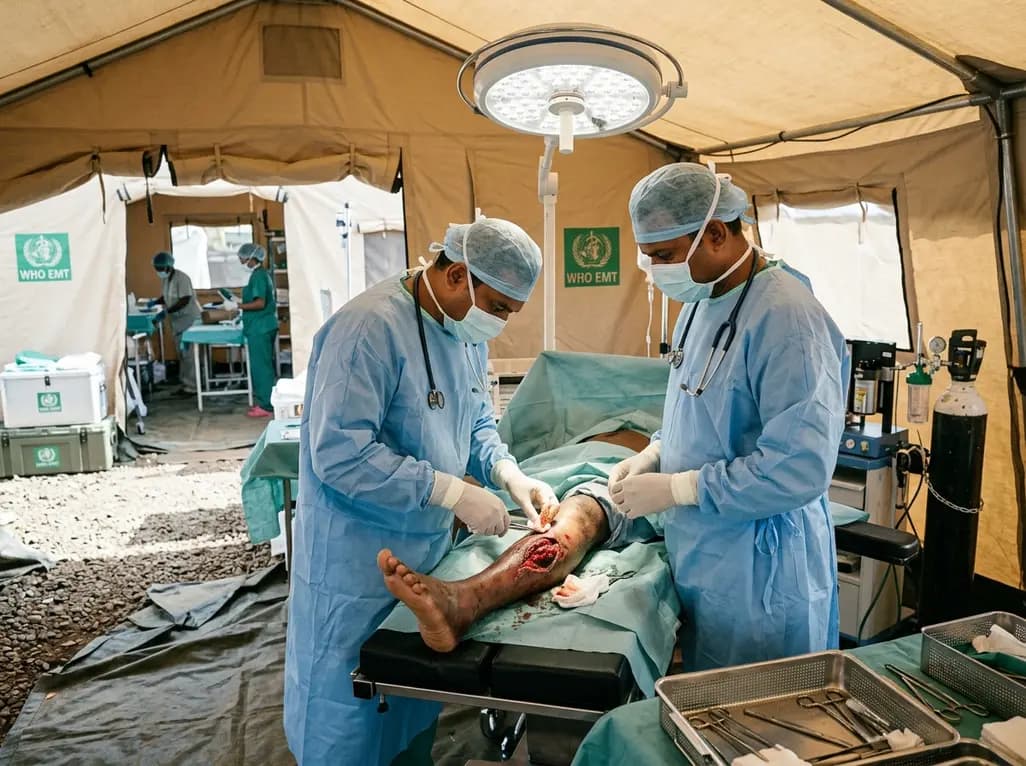
Following Cyclone Chido, a WHO EMT-2 field hospital performed 268 surgeries in Mayotte. While acute trauma is expected initially, 98% of cases were septic wounds of the extremities requiring secondary intention healing, revealing crucial operational insights for disaster surgical preparedness.
Today

The SED-SEEN-SEEP consensus outlines an Integrated Care Pathway for preclinical type 1 diabetes, structuring target screening, autoantibody confirmation, metabolic staging, and proactive follow-up to prevent diabetic ketoacidosis and facilitate early disease-modifying intervention.
Yesterday
