.webp&w=384&q=75)

Loading, please wait...
Loading, please wait...

Point-of-care imaging continues to redefine decentralized medicine across the globe. Specifically, self-performed ultrasound represents an innovative frontier that empowers untrained individuals to capture diagnostic sonographic images. This practice originated in extreme environments such as human spaceflight, where non-physicians required immediate diagnostic tools. Today, portable transducers and mobile devices allow patients to perform focused scans at home. Consequently, remote clinicians can evaluate progressive organ dysfunction and initiate timely therapeutic adjustments without requiring hospital visits.
Modern point-of-care sonography traces its foundational roots to space medicine. Astronauts on orbital missions historically utilized guided ultrasound protocols to assess acute trauma, ocular changes, and pulmonary congestion. Because space environments lack immediate specialist access, remote medical teams successfully instructed non-experts via satellite feeds. Recently, engineers miniaturized ultrasound hardware into handheld probes that interface seamlessly with smartphones. Therefore, researchers rapidly adapted these aerospace techniques to address terrestrial challenges. Chronic illnesses, such as congestive heart failure, demand frequent clinical reassessment. Repeated hospital readmissions create substantial financial burdens and expose vulnerable individuals to nosocomial pathogens. Thus, home-based sonography bridges this geographic gap effectively. In addition, rural communities face acute shortages of certified sonographers. By training non-expert users to handle portable equipment, healthcare networks extend advanced diagnostic monitoring into underserved environments. Patient autonomy increases markedly when individuals participate directly in their therapeutic surveillance. Ultimately, decentralized imaging shifts the care paradigm from episodic tertiary interventions to continuous, personalized home monitoring.
Recent evidence highlights remarkable diagnostic consistency between novice-acquired examinations and expert-performed sonograms. A comprehensive scoping review synthesizing twenty-six clinical studies revealed that novice users achieve robust diagnostic accuracy across multiple anatomical domains. Specifically, independently acquired scans yielded an overall diagnostic accuracy rate exceeding 70 percent. Furthermore, when expert clinicians provided remote teleguidance, user accuracy climbed above 85 percent. Bladder volume assessment, vascular access evaluation, and pulmonary parenchymal exams demonstrated notable reliability. In pulmonary medicine, non-expert users accurately recorded pleural sliding, distinct B-lines, and pleural effusions with minimal coaching. Independent blinded radiologists reported that novice-acquired image resolution remained non-inferior to professional baseline scans. Consequently, treating physicians reliably ruled out progressive fluid overload and interstitial syndromes from remote transmissions. Moreover, patient satisfaction remained universally high throughout these clinical investigations. Participants expressed genuine confidence in handling the probes and valued the flexibility of decentralized monitoring. Hence, patient-driven data collection provides reliable physiological insights that meaningfully support clinical decision-making.
Clinical protocols for remote patient sonography generally follow two distinct operational paradigms. First, autonomous acquisition relies on pre-recorded instructional modules, standardized physical landmarks, and automated transducer presets. Patients execute predefined anatomical sweeps independently and transmit the digital cine loops asynchronously for delayed specialist review. This workflow offers maximum scheduling flexibility and optimizes physician productivity. However, autonomous scanning exhibits lower sensitivity when complex acoustic windows obscure pathological features. In contrast, teleguided protocols utilize synchronized, bidirectional audiovisual platforms. Remote experts guide patient probe manipulation in real time, adjusting tilt, pressure, and gain dynamically. Consequently, teleguidance achieves significantly higher diagnostic yield and minimizes uninterpretable image acquisitions. Real-time feedback also reassures anxious individuals, accelerating their technical proficiency. Nevertheless, teleguided sessions demand reliable high-bandwidth internet connectivity and immediate specialist availability. As artificial intelligence evolves, integrated algorithms now provide automated probe positioning prompts without requiring live human mentors. Therefore, intelligent software promises to bridge the performance gap between autonomous and teleguided paradigms.
Despite encouraging clinical results, widespread implementation encounters substantial technical and physical roadblocks. For example, device hardware malfunctions and platform connectivity disruptions frequently interrupt remote examinations. Poor cellular bandwidth in rural zones impedes the smooth transmission of uncompressed DICOM datasets to central servers. In addition, low-resolution handheld transducers struggle to distinguish subtle parenchymal changes in patients with elevated body mass index. Physical restraints also restrict independent scanning capabilities. Frail geriatric individuals and patients with severe arthritic deformities often struggle to manipulate ultrasound probes around posterior thoracic areas. More critically, concealed pathologies present serious clinical safety risks. Because untrained patients lack comprehensive anatomical knowledge, they may inadvertently bypass critical adjacent lesions while focusing only on targeted organs. This sampling bias can delay necessary interventions for life-threatening conditions. Furthermore, variations in gel application produce artifacts that frustrate reviewing clinicians. While structured orientation sessions resolve minor positioning errors, persistent ergonomic hurdles continue to limit broad unsupervised adoption.
Integrating patient-performed imaging into routine practice requires careful navigation of regional medical governance and national statutory frameworks. In India, ultrasound equipment falls under stringent legislative supervision, most notably the Pre-Conception and Pre-Natal Diagnostic Techniques (PCPNDT) Act. The PCPNDT framework strictly regulates ultrasound machine registration, physical location, and operator qualifications to prevent misuse. Consequently, distributing handheld ultrasound transducers for home use faces formidable statutory boundaries within the country. Healthcare institutions cannot easily dispatch portable sonographic devices directly to patient residences without comprehensive regulatory clearance. Moreover, the National Medical Commission telemedicine practice guidelines establish explicit boundaries regarding diagnostic delegation and provider liability. Physicians must determine who bears malpractice responsibility when an unguided patient fails to capture an evolving pathological lesion. In addition, reimbursement structures currently lack dedicated tariff codes for patient-acquired tele-imaging. Despite these obstacles, supervised tele-ultrasound holds immense potential for tertiary outreach across rural Indian districts. Thus, hybrid tele-mentorship models offer a compliant path forward within India.
Self-performed ultrasound demonstrates acceptable diagnostic accuracy across targeted organ systems. Scoping review data indicates that autonomous patient scanning achieves at least 70 percent diagnostic accuracy. Furthermore, real-time expert teleguidance elevates overall diagnostic accuracy above 85 percent. Blinded comparisons confirm that novice-acquired images provide non-inferior diagnostic quality for focused assessments, such as evaluating lung congestion and urinary retention. However, comprehensive anatomical evaluations still require certified sonographers.
In India, ultrasound equipment is strictly governed by the Pre-Conception and Pre-Natal Diagnostic Techniques (PCPNDT) Act to prevent fetal sex determination. This legislation mandates strict machine registration, designated clinical premises, and certified operator credentials. Distributing handheld scanners to private homes faces severe statutory restrictions. Furthermore, current telemedicine guidelines require clear legal attribution of liability before clinicians can formally integrate patient-acquired sonographic images into medical records.
Teleguidance links untrained patients directly with experienced sonographers using secure, bidirectional audiovisual communication channels. The remote mentor delivers real-time verbal and visual cues to correct probe orientation, depth, and pressure. Consequently, teleguidance eliminates common acoustic artifacts and ensures proper anatomical window identification. Studies demonstrate that teleguided scans reach accuracy rates exceeding 85 percent, significantly outperforming unassisted autonomous scanning while reducing patient procedural anxiety.
Disclaimer: This content is for informational and educational purposes only and is not intended as medical advice. Healthcare professionals should exercise their clinical judgment, and patients should consult a physician regarding any health concerns or changes in therapy. Refer to the latest local and national guidelines for clinical practice.
References

Read summarized clinical updates, watch expert medical content, and earn CME certifications right from your smartphone.
Open your smartphone camera to scan and install.





Self-performed ultrasound empowers patients to capture diagnostic-quality scans for remote clinical review. This review evaluates its accuracy, technological challenges, and integration hurdles.
Today
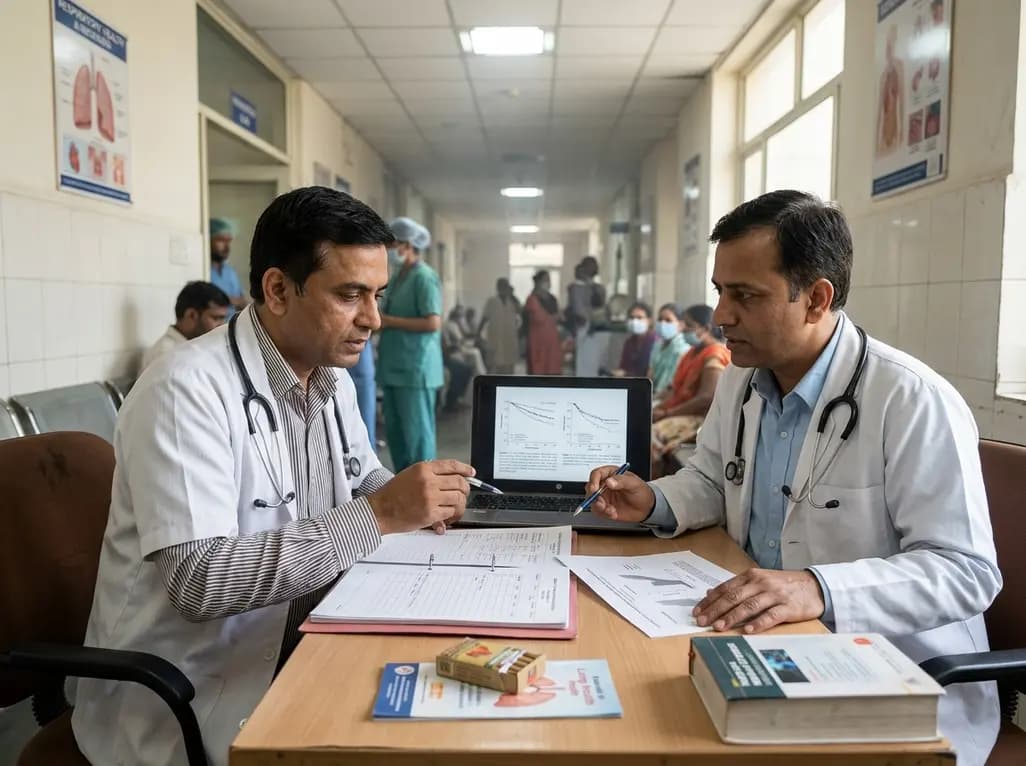
A large UK Biobank prospective study demonstrates that early-life tobacco smoke exposure significantly increases incident rheumatoid arthritis risk in adulthood. The association is mediated slightly by allostatic load and amplified substantially when combined with high polygenic risk.
Today

An updated systematic review and meta-analysis of 7,875 patients reveals that routine microaxial left ventricular support during nonemergent high-risk PCI does not reduce mortality or ischemic complications, while significantly increasing major bleeding events.
Today
Following Cyclone Chido, a WHO EMT-2 field hospital performed 268 surgeries in Mayotte. While acute trauma is expected initially, 98% of cases were septic wounds of the extremities requiring secondary intention healing, revealing crucial operational insights for disaster surgical preparedness.
Today
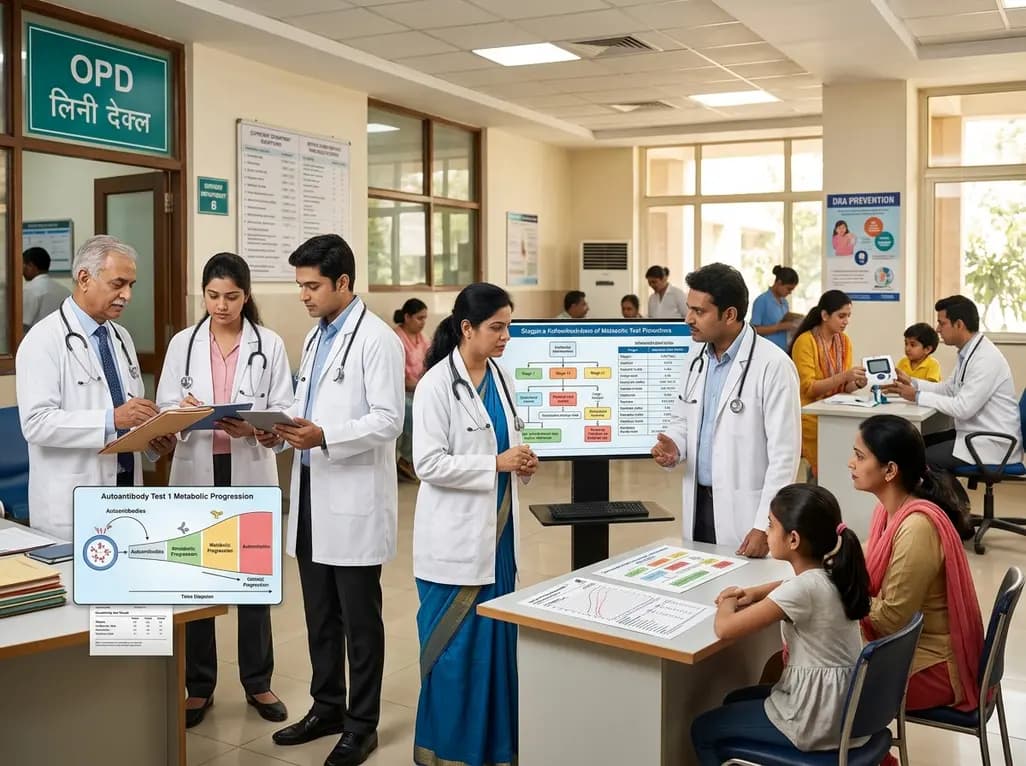
The SED-SEEN-SEEP consensus outlines an Integrated Care Pathway for preclinical type 1 diabetes, structuring target screening, autoantibody confirmation, metabolic staging, and proactive follow-up to prevent diabetic ketoacidosis and facilitate early disease-modifying intervention.
Today
