.webp&w=384&q=75)

Loading, please wait...
Loading, please wait...

Natural disasters regularly devastate regional healthcare systems and challenge emergency response teams worldwide. When Cyclone Chido struck Mayotte on December 14, 2024, it caused forty fatalities and injured approximately four thousand people. The catastrophic cyclone severely compromised local hospital facilities, precipitating a critical need for an external disaster surgical response. To restore surgical capabilities, the French Civil Protection deployed a World Health Organization classified Emergency Medical Team Type 2 field hospital. This mission yielded crucial clinical data regarding the realities of modern austere surgery. Although planners often associate acute disasters with immediate blunt trauma, field conditions generate vastly different clinical demands. Logistical mobilization timelines inevitably delay foreign medical arrivals, transforming acute lacerations into infected wounds. Consequently, deployed clinicians face an epidemiological evolution toward severe soft tissue sepsis and limb-threatening infections.
Field hospital deployment involves complex logistical hurdles that directly shape patient presentation. In Mayotte, the EMT-2 surgical team performed its first operation ten days after the cyclone made landfall. However, the team achieved complete operational readiness forty-six hours after landing on site. This rapid forty-six-hour setup demonstrates exemplary on-site engineering and clinical coordination. Nevertheless, the ten-day interval between disaster onset and the first surgical incision highlights inherent transport delays. International teams require diplomatic clearances, cargo aircraft mobilization, and local site clearing before setting up sterile operating theatres. During this unavoidable latency period, overwhelmed local practitioners must absorb the initial surge of acute hemorrhagic trauma. When external field hospitals open their doors, the initial wave of life-threatening mechanical injuries has largely passed. Instead, surgeons encounter secondary complications resulting from delayed access to emergency wound care. Therefore, disaster response agencies must anticipate this predictable delay when designing deployable surgical payloads. Planners must align team configurations with delayed presentation profiles rather than purely acute resuscitation kits.
The operational data from Mayotte revealed a striking epidemiological pattern during thirty-two active mission days. Deployed personnel performed 268 surgical procedures across 205 patients. Remarkably, septic indications comprised ninety-eight percent of all operative caseloads handled by the surgical detachment. This overwhelming infectious burden reflects the severe environmental contamination caused by tropical storms. Floodwaters, destroyed housing, and corrugated iron debris cause numerous lacerations and contaminated soft tissue injuries. In tropical climates, environmental bacteria rapidly colonize open wounds within hours. Because local health centers lacked power, clean water, and antibiotics, minor cuts swiftly progressed to severe soft tissue infections. Extremity injuries accounted for sixty-nine percent of all septic presentations, predominantly involving vulnerable hands and feet. Furthermore, diabetic patients and malnourished individuals suffered particularly aggressive tissue destruction. Thus, the field hospital functioned primarily as a high-volume debridement center rather than a trauma stabilization bay. Clinicians deploying to disaster zones must therefore anticipate severe surgical sepsis as their predominant operative workload.
Disaster surgery mandates strict technical discipline that diverges sharply from routine civilian surgical practice. In Mayotte, surgeons performed primary closure in only nine percent of treated cases. Conversely, secondary intention healing served as the primary strategy for seventy-eight percent of surgical wounds. Moreover, teams utilized negative pressure wound therapy in approximately five percent of cases and performed amputations in three percent. This intentional avoidance of primary closure aligns with established damage-control principles for contaminated wounds. Attempting early primary skin closure in disaster environments almost universally traps environmental pathogens inside closed facial planes. Consequently, premature suturing triggers anaerobic gangrene, extensive secondary necrosis, and systemic septic shock. Surgeons instead performed thorough excisional debridement, pulsed saline irrigation, and loose antiseptic gauze packing. This open wound management strategy allows continuous visual inspection of muscle viability while facilitating natural granulation tissue growth. Additionally, negative pressure dressings provided valuable wound bed preparation whenever portable suction units were available. Clinicians reserved amputations for unsalvageable, severely infected limbs where life took precedence over limb salvage.
Managing complex surgical casualties in field conditions requires extensive capacity for reoperations and continued inpatient care. In the Mayotte mission, readmission rates exceeded ten percent, and repeat procedures generated up to one-third of daily surgical activity. Because open infected wounds require scheduled dressing changes and serial washouts, bed turnover slows markedly over time. Consequently, surgical field hospitals experience a compounding inpatient workload that differs significantly from initial emergency department surges. Operating rooms must simultaneously accommodate scheduled repeat debridements alongside incoming emergency presentations. Furthermore, severe weather events can disrupt field hospital infrastructure during extended humanitarian deployments. In Mayotte, a subsequent cyclone forced the operational detachment to suspend all surgical activities for five consecutive days. Such forced closures delay planned wound inspections, increase infection recurrence risks, and strain hospital generator fuel reserves. Therefore, deployment planners must maintain robust inventories of sterile linen, dressing packs, intravenous antibiotics, and anesthetic agents. Response coordinators must also build redundancy into surgical staffing rotas to prevent provider fatigue during protracted secondary care phases.
The findings from this WHO-EMT-2 deployment provide crucial guidance for Indian disaster management authorities and emergency medical specialists. India faces recurring vulnerability to catastrophic cyclonic storms along its eastern and western coastlines, as well as seasonal monsoon inundations. Organizations such as the National Disaster Management Authority and the National Disaster Response Force frequently deploy medical teams to disaster zones. Similarly, Indian surgeons deployed to flood-affected regions encounter identical clinical patterns dominated by contaminated soft tissue lacerations and neglected extremity wounds. Because stagnant floodwaters contain heavy bacterial concentrations, they dramatically increase the hazard of rapid tissue necrosis. Therefore, Indian medical relief agencies must align their mobile surgical stockpiles with these practical field requirements. Mobilization manifests should prioritize high volumes of normal saline, povidone-iodine, surgical scalpel blades, and negative pressure dressing consumables. Furthermore, disaster management training programs across Indian medical institutions must reinforce damage-control soft tissue principles. Instructors must teach trainees to avoid primary closure in contaminated disaster wounds and expect high secondary reoperation rates. Implementing these evidence-based field hospital guidelines will ensure resilient surgical delivery during future climate emergencies.
Acute mechanical trauma typically dominates the earliest hours after a catastrophic event. However, logistical deployment timelines for mobile surgical teams often require several days before full clinical operations begin. Consequently, untreated lacerations, crush injuries, and soft tissue damage become heavily contaminated with environmental bacteria. By the time mobile teams deploy operating rooms, most patients present with established sepsis, tissue necrosis, and secondary wound complications that demand aggressive debridement.
Primary closure in austere disaster environments dramatically increases the risk of closed-space infection and gas gangrene. Most field injuries harbor gross dirt contamination, foreign bodies, and compromised tissue perfusion. Therefore, surgeons strongly prioritize staged radical debridement and healing by secondary intention or delayed closure. Furthermore, attempting early primary skin closure in contaminated disaster wounds frequently leads to wound dehiscence, systemic sepsis, extensive tissue loss, and avoidable subsequent amputations.
A high reoperation rate substantially increases the sustained clinical workload beyond the initial disaster influx. Because infected wounds and complex extremity injuries require repeat operative washouts, bed turnover slows down significantly. Consequently, field teams must maintain sufficient reserves of surgical dressings, intravenous antibiotics, anesthetic agents, and sterile theatre linen. Moreover, healthcare planners must schedule staffing rotations carefully to avoid clinician exhaustion while managing persistent repeat procedures.
Disclaimer: This content is for informational and educational purposes only... Refer to the latest local and national guidelines for clinical practice.
References

Read summarized clinical updates, watch expert medical content, and earn CME certifications right from your smartphone.
Open your smartphone camera to scan and install.





Following Cyclone Chido, a WHO EMT-2 field hospital performed 268 surgeries in Mayotte. While acute trauma is expected initially, 98% of cases were septic wounds of the extremities requiring secondary intention healing, revealing crucial operational insights for disaster surgical preparedness.
Today
Recent research demonstrates that hyperdiploid multiple myeloma is heterogeneous. A modal chromosome count of 49 or more and chromosome 3 gain independently predict superior survival, while co-occurring high-risk abnormalities negate this advantage, dictating precise risk stratification and transplant selection.
Today
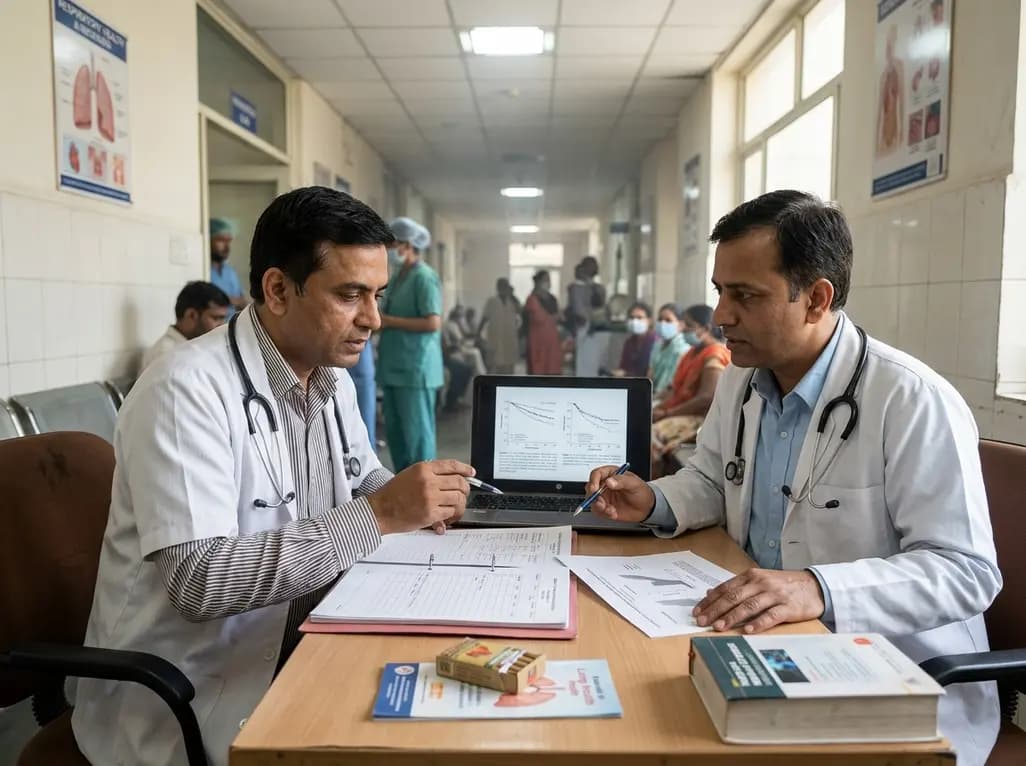
A large UK Biobank prospective study demonstrates that early-life tobacco smoke exposure significantly increases incident rheumatoid arthritis risk in adulthood. The association is mediated slightly by allostatic load and amplified substantially when combined with high polygenic risk.
Today

An updated systematic review and meta-analysis of 7,875 patients reveals that routine microaxial left ventricular support during nonemergent high-risk PCI does not reduce mortality or ischemic complications, while significantly increasing major bleeding events.
Today
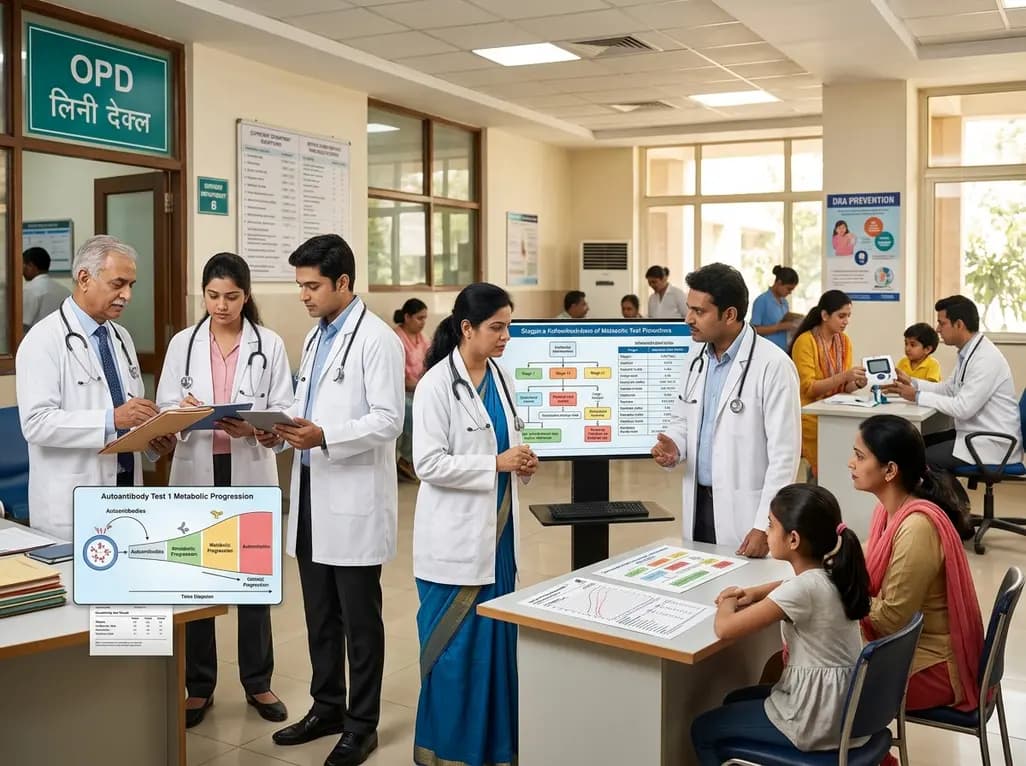
The SED-SEEN-SEEP consensus outlines an Integrated Care Pathway for preclinical type 1 diabetes, structuring target screening, autoantibody confirmation, metabolic staging, and proactive follow-up to prevent diabetic ketoacidosis and facilitate early disease-modifying intervention.
Today
