.webp&w=384&q=75)

Loading, please wait...
Loading, please wait...

Posterior spinal fusion for corrective alignment represents one of the most extensive and invasive operations performed in pediatric orthopedics. Managing acute pain following adolescent scoliosis surgery remains a formidable challenge for surgical and anesthetic teams. Extensive subperiosteal dissection, bony instrumentation, and ligamentous disruption trigger profound tissue trauma that elicits sharp somatic and deep visceral distress. Traditionally, intravenous patient-controlled analgesia with opioids alongside continuous epidural infusions formed the cornerstone of early recovery protocols. However, opioid-related adverse events, including respiratory depression, severe pruritus, postoperative nausea, and paralytic ileus, frequently hamper rehabilitation. Consequently, spine surgeons and anesthesiologists continuously seek safe, effective adjunctive modalities that can minimize reliance on systemic opioids. Local infiltration of multi-agent analgesic mixtures, commonly referred to as cocktail analgesia, has gained significant popularity across diverse orthopedic procedures such as total joint arthroplasty. Despite enthusiasm, robust evidence supporting subfascial infiltrations in pediatric deformity operations has remained scarce. Many previously published investigations relied strictly on retrospective observational cohorts with substantial methodological limitations. Therefore, prospective randomized evaluations are essential to verify whether intraoperative local infiltration provides genuine clinical advantages.
To establish definitive evidence, researchers conducted a double-blind randomized controlled trial assessing the efficacy and safety of an intraoperative, surgeon-directed subfascial analgesic cocktail. The trial enrolled forty-two adolescent patients diagnosed with idiopathic scoliosis who underwent posterior spinal fusion. The study investigators randomly assigned participants into two parallel arms with twenty-one patients in each group. Both cohorts demonstrated comparable baseline characteristics, including age, sex distribution, skeletal maturity, and preoperative Cobb angle curve severity. In the intervention arm, the operating spine surgeon infiltrated a customized pharmacological mixture into the deep subfascial layers during anatomical wound closure. This cocktail combined twenty milliliters of 0.75% ropivacaine, forty milligrams of methylprednisolone, and fifty milligrams of ketoprofen. In contrast, the control arm received an identical volume of sterile normal saline as a placebo control. The primary outcome was postoperative pain intensity evaluated via numerical rating scale scores at predetermined intervals. Secondary outcomes captured the postoperative time required to achieve independent ambulation, cumulative systemic opioid utilization measured as fentanyl equivalents, intravenous acetaminophen consumption, and all perioperative adverse events.
The trial findings revealed distinct temporal phases in analgesic performance between the intervention and placebo cohorts. Specifically, the surgeon-directed cocktail group demonstrated statistically significantly lower pain scores at one hour postoperatively compared with the saline control group. Furthermore, patients who received the subfascial injection achieved independent ambulation significantly earlier during inpatient recovery, mobilizing at an average of 2.5 days versus 3.3 days in the control cohort. This earlier physical mobilization represents a clinically desirable milestone that promotes pulmonary hygiene and reduces thromboembolic risks. However, the analgesic superiority observed immediately after extubation proved transient. By six hours post-surgery, numerical rating scale pain scores between the two cohorts converged, demonstrating no statistically significant variation. Subsequent assessments conducted across the initial three postoperative days similarly showed equivalent subjective pain levels. Furthermore, cumulative fentanyl and acetaminophen consumption did not differ between the two arms. Consequently, while the infiltration offered clear early benefit, it failed to confer durable pain relief during the subacute inpatient phase.
Understanding why the subfascial cocktail yielded only transient benefits requires examining the pharmacokinetic and pharmacodynamic properties of its constituent agents. Ropivacaine provides potent local sensory blockade by inhibiting sodium ion influx along peripheral nerve endings within the spinal musculature. However, its terminal elimination half-life and local duration of action rarely extend beyond several hours when administered as a single bolus without continuous infusion catheters. Additionally, methylprednisolone exerts potent anti-inflammatory effects by suppressing phospholipase A2 and mitigating local tissue edema, yet its tissue distribution within a heavily drained surgical bed remains unpredictable. Ketoprofen complements this pathway through cyclooxygenase inhibition, attenuating peripheral prostaglandin synthesis. Nevertheless, surgical drains placed following multilevel instrumented fusion routinely evacuate substantial volumes of extracellular fluid, inevitably removing locally deposited medications. Furthermore, extensive multilevel posterior instrumented fusion generates deep nociceptive input originating from vertebral bodies, facet joints, and dorsal root branches that lie far deeper than the superficial subfascial plane. Therefore, superficial or subfascial delivery cannot completely block profound central spinal nociception.
Reassuringly, the incorporation of corticosteroids and nonsteroidal anti-inflammatory agents directly into the surgical bed did not trigger adverse events. Theoretical concerns regarding local wound healing complications, deep surgical site infections, or delayed bony arthrodesis represent frequent arguments against intraoperative steroid and anti-inflammatory use. In this clinical trial, the authors reported comparable adverse event rates between the cocktail cohort and the control cohort through one year of surveillance. No excess wound breakdown, prolonged wound drainage, or neurological complications occurred among patients receiving the active injection. Moreover, the statistically meaningful reduction in time to unassisted ambulation highlights an important clinical gain. Because postoperative ambulation depends heavily on motor strength and subjective confidence, preserving quadriceps power while dulling early incision trauma enables physical therapists to initiate gait training sooner. Thus, even temporary alleviation of initial incisional pain can help patients overcome early postoperative kinesiophobia, establishing momentum for functional milestones without compromising structural safety.
Because surgeon-directed local cocktail therapy alone provides insufficient duration of analgesia, clinical teams must embed this technique within broad, multifaceted pain pathways. Modern enhanced recovery pathways after surgery combine diverse systemic, regional, and neuroaxial interventions acting synergistically across disparate pain targets. For instance, perioperative oral gabapentinoids, intravenous methadone, or low-dose intraoperative ketamine infusions effectively attenuate central sensitization and blunted NMDA receptor activation. Similarly, ultrasound-guided regional techniques, such as bilateral erector spinae plane blocks, deliver local anesthetics continuously or as extended-release liposomal formulations across multiple dorsal ramus territories. Intraoperative subfascial infiltration should therefore serve merely as one supplemental element within a broader multimodal regimen rather than a standalone solution. By coordinating targeted regional blockade, scheduled non-opioid systemic analgesics, and surgeon-delivered infiltration, surgical teams can achieve consistent opioid sparing, sustained comfort, and expedited discharge for young patients undergoing major spinal deformity correction.
The surgeon-directed cocktail comprised twenty milliliters of 0.75% ropivacaine, forty milligrams of methylprednisolone, and fifty milligrams of ketoprofen. The surgeon injected this combination directly into the subfascial tissues during layered posterior wound closure to target localized soft-tissue trauma and peripheral inflammation.
No, the randomized trial found no statistically significant difference in cumulative postoperative fentanyl usage between the cocktail and control groups. Total acetaminophen requirements were also similar, indicating that local infiltration alone does not yield intermediate or long-term systemic opioid sparing.
The analgesic effect faded because plain ropivacaine has a limited pharmacological duration of action. Furthermore, routine postoperative surgical wound drainage rapidly evacuates locally injected medications. Additionally, extensive spinal instrumentation produces deep osseous nociceptive signals that subfascial infiltrations cannot reach or suppress effectively.
Disclaimer: This content is for informational and educational purposes only and does not constitute medical advice, diagnosis, or treatment. Healthcare professionals should rely on their clinical judgment, institutional protocols, and current evidence-based literature when making patient care decisions. The views expressed do not necessarily reflect the official policy of any professional organization. While every effort is made to ensure accuracy, medical knowledge evolves rapidly, and readers are encouraged to verify information independently. Refer to the latest local and national guidelines for clinical practice.
References
Yamada T et al. Effect of a Surgeon-Directed Cocktail of Ropivacaine, Methylprednisolone, and Ketoprofen on Postoperative Pain and Ambulation in Adolescent Idiopathic Scoliosis Surgery: A Double-Blind Randomized Controlled Trial. Spine (Phila Pa 1976). 2025 Jul 01. doi: 10.1097/BRS.0000000000005314. PMID: 40152429.
Fletcher ND, Glotzbecker MP, Marks M, et al. Development of Consensus-Based Best Practice Guidelines for Postoperative Care Following Posterior Spinal Fusion for Adolescent Idiopathic Scoliosis. Spine Deform. 2020;8(5):953-964.
Ye J, Myung K, Packiasabapathy S, et al. Methadone-based multimodal analgesia provides the best-in-class acute surgical pain control and functional outcomes with lower opioid use following major posterior fusion surgery in adolescents with idiopathic scoliosis. Pediatr Qual Saf. 2020;5(6):e336.

Read summarized clinical updates, watch expert medical content, and earn CME certifications right from your smartphone.
Open your smartphone camera to scan and install.





A double-blind RCT evaluated surgeon-directed subfascial cocktail analgesia (ropivacaine, methylprednisolone, ketoprofen) in adolescent idiopathic scoliosis surgery. While early pain improved transiently and ambulation hastened modestly, long-term pain and opioid requirements showed no significant differences.
Today

A North Texas pilot study reveals that combining virtual physician consultations with in-person house calls safely manages adult pneumonia. By utilizing CRB-65 severity scores, clinicians effectively triaged patients, providing home-based recovery while directing higher-risk individuals to emergency care.
Today

A quasi-experimental study demonstrates that culturally tailored educational interventions significantly boost HPV knowledge and vaccination intentions. These findings provide actionable strategies for healthcare providers in India to overcome vaccine hesitancy and advance cervical cancer prevention.
Today

A comprehensive meta-analysis evaluates the association between Body Mass Index and outcomes following abdominal aortic aneurysm repair. Discover how overweight and obesity correlate with lower mortality while underweight status confers heightened risk, challenging conventional preoperative risk stratification.
Today

The SOLARIO trial shows that a short course (≤7 days) of systemic antibiotic therapy is noninferior to long courses (≥4 weeks) in orthopedic infections treated with local antibiotic carriers, with significantly fewer adverse events.
Today
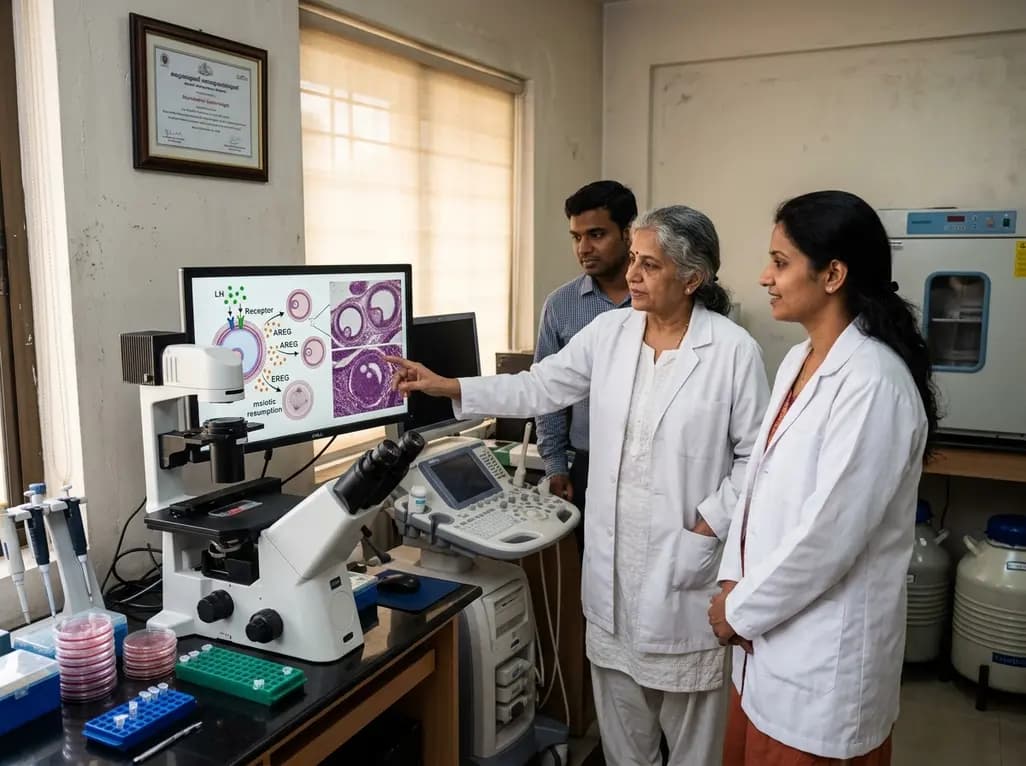
New research reveals that preovulatory follicles communicate via LH-induced paracrine signaling. Diffusible EGF ligands epiregulin and amphiregulin coordinate oocyte meiotic resumption across neighboring follicles, challenging traditional concepts of follicular autonomy.
Today
