.webp&w=384&q=75)

Loading, please wait...
Loading, please wait...

Managing postlingual profound sensorineural hearing loss requires timely surgical intervention. Today, cochlear implants in adults serve as the standard of care for restoring sound perception when conventional hearing aids fail to provide benefit. However, clinicians frequently encounter patients who have lived with prolonged auditory deprivation for decades. In many clinical settings, practitioners worry that prolonged lack of auditory stimulation irreversibly impairs neural outcomes. Therefore, researchers systematically analyzed postoperative performance among ninety-five postlinguistically deafened adult patients who received implants between 2020 and 2022. All participants met the minimum inclusion age of eighteen years. Furthermore, investigators tracked pure-tone average improvements across key speech frequencies, monosyllabic word recognition, and comprehensive sentence perception. They also assessed functional auditory performance using the validated Categories of Auditory Performance II scale. Consequently, the investigation delivers critical insights into how severe sensory deprivation influences neural recovery. Importantly, the analysis adjusted for confounding factors, including chronological age at surgery and prior hearing aid usage. These robust findings help otolaryngologists refine surgical selection criteria and guide realistic patient counseling.
The study demonstrated remarkable auditory gains following surgical intervention. Overall, patients achieved a mean pure-tone average improvement of 70.8 decibels across primary speech frequencies. This massive reduction in hearing thresholds confirms that modern electrode arrays successfully stimulate spiral ganglion neurons even after prolonged silence. In addition, patients achieved median speech recognition scores of 82 percent for monosyllabic words and 84 percent for sentences. These numbers prove that severe sensory deprivation does not preclude successful open-set auditory comprehension. Nevertheless, statistical analysis identified a modest inverse relationship between the total duration of deafness and tonal gain. Specifically, linear regression demonstrated an average loss of 0.331 decibels of tonal gain per year of unaddressed auditory deprivation. Thus, while prolonged acoustic silence diminishes peripheral sensitivity slightly, it rarely prevents functional audiometric rehabilitation. Clinicians must explain this distinction clearly during preoperative evaluations. Patients who delay intervention for decades can still attain high levels of sound detection. Therefore, otolaryngologists should not view extensive sensory deprivation as an absolute barrier to surgery.
Restoring acoustic awareness represents only the first milestone in post-implantation recovery. More importantly, recipients must translate raw electrical signals into distinct phonemes and connected speech. In this cohort, patients achieved outstanding sentence discrimination alongside strong monosyllabic word comprehension. However, the data revealed meaningful nuances regarding speech processing capacity. Multivariable regression indicated that recipient age at surgery influenced isolated monosyllabic word recognition. Conversely, age did not significantly affect sentence-level perception. This critical disparity suggests that contextual cognitive cues allow older recipients to decode complex conversational language effectively. Furthermore, patients presenting with thirty or more years of continuous auditory deprivation showed significantly lower scores on the functional Categories of Auditory Performance II scale. The difference reached statistical significance with a p-value of 0.015. Consequently, prolonged auditory deprivation primarily compromises nuanced central listening skills rather than simple sound detection. Clinicians must therefore incorporate comprehensive speech tracking tools during routine postoperative follow-up visits to benchmark individual linguistic trajectory and tailor ongoing therapy.
One of the most remarkable discoveries concerns the divergent response patterns between younger and older recipients. Specifically, among participants under 65 years, prolonged auditory deprivation correlated significantly with reduced tonal gain and diminished functional performance scores. In sharp contrast, older recipients aged 65 and above did not exhibit this adverse correlation. At first glance, this demographic disparity appears counterintuitive to conventional geriatric assumptions. However, physiological mechanisms readily explain this phenomenon. Younger adults who experience profound hearing loss earlier in life face auditory deprivation during critical phases of central auditory maturation. Consequently, unmitigated acoustic silence causes pronounced transneuronal degeneration and detrimental cortical reorganization in younger individuals. Older adults, by comparison, typically maintain intact central auditory pathways throughout their working decades before acquiring late-onset presbycusis. Therefore, older brains retain durable neurocognitive scaffolding that resists prolonged deprivation. As a result, younger candidates facing progressive hearing loss require prompt identification and expedited surgical referral before central pathways deteriorate irreversibly.
These findings reshape clinical candidacy guidelines for adult hearing restoration. Historically, some clinicians expressed reluctance when counseling adults with decades of severe hearing loss. However, current evidence proves that cochlear implants deliver substantial benefits across all adult age brackets. Clinicians must actively educate patients about the distinct physiological dangers of continuous sensory deprivation. In addition, general practitioners and otolaryngologists should avoid passive surveillance strategies in younger patients with deteriorating thresholds. Because central auditory processing exhibits increased vulnerability in younger demographics, unnecessary delays directly compromise long-term performance. Furthermore, counseling protocols must set clear and individualized expectations before surgery. While a candidate with thirty years of deprivation can achieve reliable sound awareness, their functional speech scores may require intensive practice. Therefore, surgeons should coordinate closely with audiologists to design tailored preoperative plans. Modern healthcare systems must eliminate administrative obstacles that delay timely implantation for vulnerable adult candidates seeking care.
Surgical device activation marks the beginning of an extensive neuroplastic journey. Following switch-on, the central nervous system must adapt to artificial electrical stimulation through systematic auditory retraining. Consequently, individualized postoperative rehabilitation protocols remain indispensable for maximizing communication outcomes. Patients with prolonged auditory deprivation especially require structured, hierarchically graded listening exercises. For example, therapists should initially focus on environmental sound identification and basic phoneme differentiation before advancing to open-set conversational tasks. Moreover, clinicians should strongly encourage bimodal stimulation or bilateral rehabilitation whenever residual contralateral hearing exists. Continuous acoustic input helps preserve bilateral auditory cortex architecture and prevents asymmetric cognitive decline. In addition, active family engagement plays a pivotal role during daily communication exercises at home. By maintaining rigorous auditory practice, recipients overcome initial perceptual distortion and rebuild fluent language processing pathways. Ultimately, structured rehabilitation bridges the functional gap caused by prolonged sensory deprivation, ensuring superior quality of life and independent communication.
Auditory deprivation reduces tonal gain slightly and lowers functional performance scores, especially after thirty or more years of unaddressed hearing loss. However, prolonged sensory silence does not prevent substantial auditory rehabilitation. Most recipients still achieve excellent open-set sentence comprehension and significant hearing threshold gains. Therefore, surgeons should never view prolonged deprivation as a contraindication, provided patients undergo thorough counseling regarding their individual recovery trajectory.
Younger adults show heightened vulnerability because severe hearing loss occurring earlier in life interrupts critical central auditory pathway maintenance. Consequently, prolonged auditory deprivation accelerates cortical reorganization and transneuronal changes in younger nervous systems. In contrast, older adults usually enjoy decades of robust acoustic input before experiencing hearing loss. Thus, mature neural pathways withstand sensory deprivation more resiliently, preserving foundational speech processing networks.
Yes, postlinguistically deafened adults with decades of severe hearing loss derive substantial clinical benefits from modern cochlear implantation. Although prolonged deprivation may modestly reduce word recognition scores and tonal gain, recipients consistently regain sound awareness and conversational comprehension. Furthermore, personalized auditory rehabilitation and dedicated speech therapy help patients adapt to electrical stimulation, significantly improving overall social engagement and long-term communicative independence.
Disclaimer: This content is for informational and educational purposes only... Refer to the latest local and national guidelines for clinical practice.
References

Read summarized clinical updates, watch expert medical content, and earn CME certifications right from your smartphone.
Open your smartphone camera to scan and install.





A study on cochlear implants in adults reveals that prolonged auditory deprivation impacts speech perception and tonal gain, especially in adults under 65. Timely implantation and auditory stimulation remain critical to preserve central processing and maximize postoperative hearing outcomes.
Today
Emerging neuroenergetic research reveals that cognitive fatigue stems from local metabolic constraints and regional aerobic glycolysis rather than global resource depletion. This paradigm shift offers valuable clinical insights for managing chronic mental exhaustion, post-viral syndromes, and neurodegenerative fatigue.
Today

A scoping review reveals how pregnancy affects phonation through laryngeal edema and reduced phonation time rather than major acoustic pitch alterations. Learn how to identify, evaluate, and manage vocal symptoms in expectant mothers.
Today

According to WHO data, average lifespan reached 73.3 years in 2023, recovering from pandemic lows. However, healthy life expectancy lags at 62.8 years due to surging noncommunicable conditions like cardiovascular disease and dementia, demanding proactive primary screening and sustained chronic care.
Today
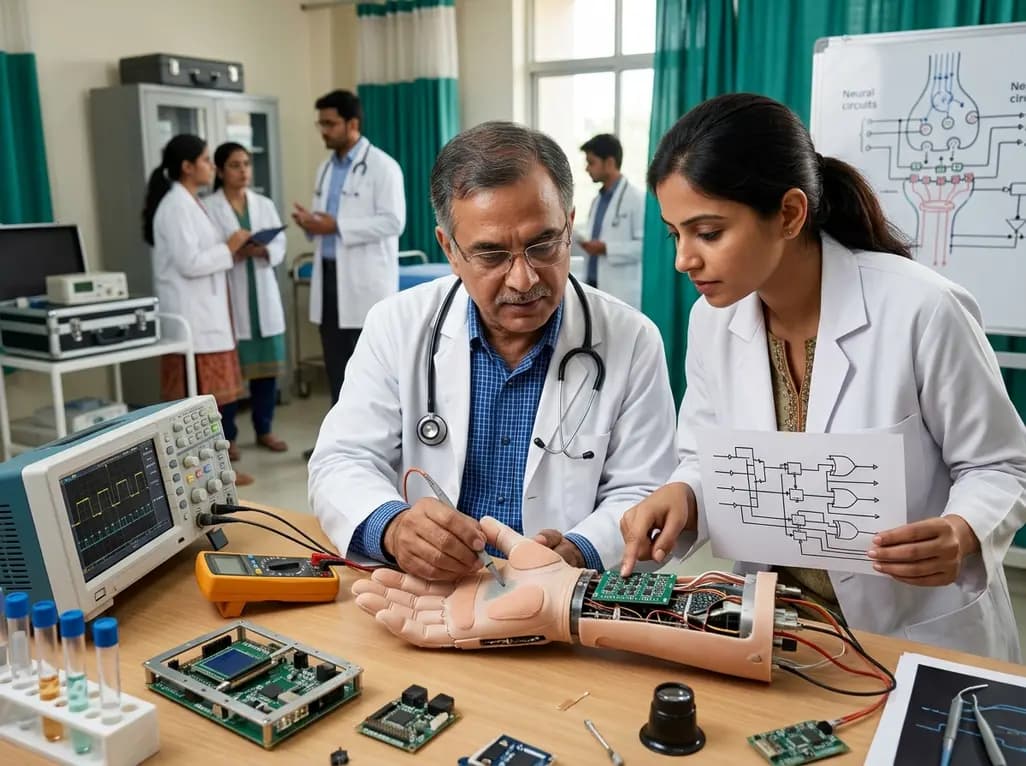
Researchers have engineered an artificial sensory-pain integrated receptor using a multi-threshold organic synaptic transistor. The system distinguishes benign touch from noxious stimuli, enabling safer, more responsive prosthetic limbs with built-in memory and simplified hardware architecture.
Today
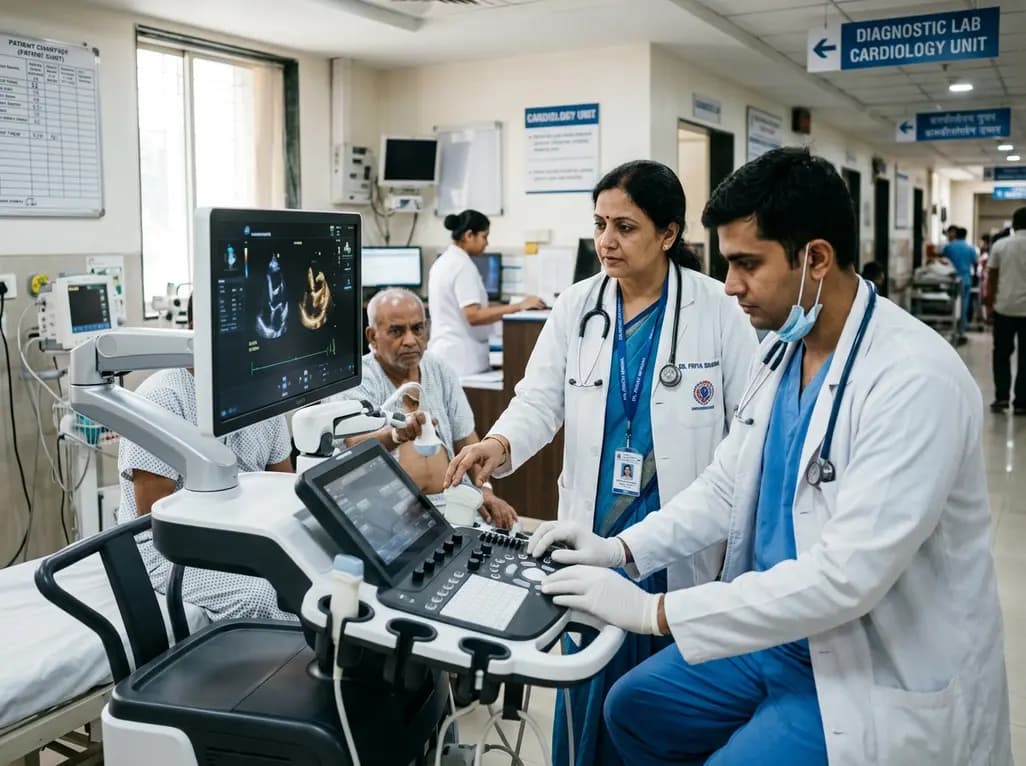
Medical robotics is transitioning beyond operative suites into diagnostics, cardiology, and endocrinology. Explore how innovations in tele-robotics, AI integration, and nanomedicine are overcoming geographical barriers and transforming precision healthcare delivery across India's evolving disease landscape.
Today
