

Loading, please wait...
Loading, please wait...

Co-occurring psychiatric illnesses and substance use disorders represent an escalating clinical challenge worldwide. Individuals coping with dual diagnoses experience high morbidity, frequent hospital admissions, and pronounced functional impairment. Despite these substantial clinical needs, overall patterns of care engagement often remain poorly documented. Recent data from the All of Us Research Program provide critical real-world evidence regarding co-occurring disorders healthcare utilization among diverse populations. The study evaluated longitudinal records from over eleven thousand affected adults. Ultimately, the findings uncover profound gaps in outpatient engagement and persistent structural inequities across multiple demographic sectors.
The All of Us Research Program evaluated electronic health records from 11,238 adult participants with verified co-occurring conditions. Notably, only 32.9% of these individuals received at least one documented substance use or mental health service between 2019 and 2023. Therefore, more than two-thirds of affected patients had no record of formal behavioral healthcare during the study period.
Among those who accessed clinical care, outpatient counseling and psychotherapy represented the largest volume of recorded encounters. Medication management and somatic services accounted for a secondary share of clinical touchpoints. However, overall utilization rates remained remarkably low across all service categories.
Consequently, these observational figures demonstrate a profound chasm between diagnostic burden and active clinical engagement. In addition, patients frequently relied on acute emergency services rather than routine ambulatory care. Clinicians must recognize that passive referral pathways fail to engage this population effectively. Instead, proactive outreach and assertive case finding must become routine components of ambulatory care.
Between 2019 and 2023, clinical practice models underwent radical shifts due to the global COVID-19 pandemic. Specifically, the All of Us cohort demonstrated a pronounced surge in telehealth encounters for psychiatric and substance use concerns. Virtual consultation platforms bridged urgent treatment gaps when physical facilities restricted in-person visits to curb disease transmission.
Furthermore, remote digital appointments eliminated traditional logistical obstacles for many patients. Virtual visits removed travel expenses, reduced public transit burdens, and diminished social stigma associated with visiting physical behavioral health facilities. Consequently, many established individuals maintained continuous therapeutic contact during periods of profound community disruption.
Nevertheless, digital delivery frameworks created distinct secondary challenges. Unequal broadband internet access and variable digital literacy restricted engagement among socioeconomically disadvantaged groups. In addition, acute substance stabilization and somatic assessments still require periodic hands-on medical evaluations. Healthcare systems must therefore sustain flexible hybrid care delivery frameworks. By pairing virtual convenience with scheduled physical appointments, practices can deliver comprehensive long-term management.
The study revealed stark demographic discrepancies in outpatient service utilization across age and gender categories. Interestingly, older adults exhibited significantly higher odds of engaging with healthcare services compared to younger peers. Participants aged 65 years and older demonstrated an adjusted odds ratio of 2.24 for service receipt relative to younger cohorts.
Conversely, female participants experienced significantly lower odds of documented service utilization, with an adjusted odds ratio of 0.72. This notable gender disparity underscores complex clinical realities. Women managing dual diagnoses often face heavy family caregiving burdens, intense social stigma, and persistent fears of child custody consequences. As a result, female patients frequently postpone or avoid formal behavioral treatment until crises occur.
Additionally, younger individuals often demonstrate low engagement with conventional clinical settings due to privacy apprehensions. Healthcare organizations must consequently develop tailored clinical programs. Clinicians should establish trauma-informed, gender-sensitive environments that offer safe spaces for female patients. Moreover, adolescent and young adult pathways must employ discrete digital outreach tools to foster earlier clinical trust.
Multivariable analyses revealed critical interaction effects among household income, disability status, and health insurance type. Participants who reported higher incomes and held commercial or multiple insurance plans demonstrated the highest odds of accessing therapy. In contrast, underinsured individuals and low-income patients faced severe barriers to clinical entry.
Furthermore, health insurance coverage did not universally guarantee adequate clinical utilization. High out-of-pocket deductibles and restrictive provider networks frequently dissuaded insured individuals from maintaining weekly therapy sessions. For patients living with co-occurring physical disabilities, transportation limitations and inaccessible clinic infrastructure compounded these financial hardships.
Consequently, systemic structural barriers continue to dictate clinical engagement more than individual medical need. When administrative burdens and copayments escalate, vulnerable patients inevitably disengage from ongoing treatment. Healthcare leaders must therefore advocate for structural parity in reimbursement frameworks. Eliminating copayments for behavioral healthcare and streamlining prior authorization protocols will ensure that low-income and disabled patients obtain timely clinical support.
Historically, medical systems have separated addiction treatment from psychiatric care, creating disjointed and inefficient clinical silos. This administrative division forces patients to navigate distinct facilities, disparate treatment philosophies, and uncoordinated provider teams. Inevitably, such fragmentation drives high attrition and poor clinical outcomes.
Fortunately, integrated behavioral health models offer a practical solution to these persistent structural failures. The collaborative care framework embeds mental health specialists and addiction counselors directly within primary care clinics. In this setting, general practitioners collaborate closely with behavioral clinicians to manage mood disorders and substance misuse simultaneously.
Moreover, integrating behavioral care into routine outpatient visits significantly reduces societal stigma. Patients feel far more comfortable discussing substance misuse within familiar primary care environments. Additionally, primary care clinicians can initiate evidence-based pharmacotherapies, including buprenorphine or naltrexone, alongside appropriate psychiatric medications. Ultimately, routine integrated screening and co-located multidisciplinary teams can transform clinical outcomes for dual-diagnosis populations.
Patients with dual diagnoses frequently encounter systemic barriers, including fragmented service delivery, pervasive societal stigma, and prohibitive out-of-pocket expenses. Furthermore, healthcare systems often separate addiction treatment from psychiatric care. This structural divide creates logistical hurdles, reduces patient follow-through, and worsens clinical outcomes across primary and specialized care settings.
Telehealth expands clinical reach by removing geographic barriers, reducing transportation expenses, and mitigating the stigma linked to attending addiction clinics. Additionally, virtual visits allow clinicians to conduct frequent check-ins, coordinate multidisciplinary interventions, and monitor treatment adherence effectively. Consequently, remote services foster steady therapeutic engagement for individuals managing dual diagnoses.
Primary care physicians should implement routine screening protocols using validated instruments for substance use and psychiatric symptoms. Moreover, adopting collaborative care frameworks allows clinics to integrate behavioral health specialists directly into outpatient routines. Clinicians must also address social determinants of health and assist patients in navigating complex insurance coverage systems.
Disclaimer: This content is for informational and educational purposes only and does not constitute medical advice, diagnosis, or treatment. It is intended to support, not replace, clinical judgment. Healthcare professionals must exercise their independent medical judgment when evaluating and treating patients. Refer to the latest local and national guidelines for clinical practice.
References

Read summarized clinical updates, watch expert medical content, and earn CME certifications right from your smartphone.
Open your smartphone camera to scan and install.





An All of Us cohort study of 11,238 adults reveals that only 32.9% with co-occurring substance use and mental health disorders accessed documented care from 2019 to 2023. Telehealth expanded reach, but persistent disparities across income, gender, and insurance highlight an urgent need for integrated clinical care.
Today
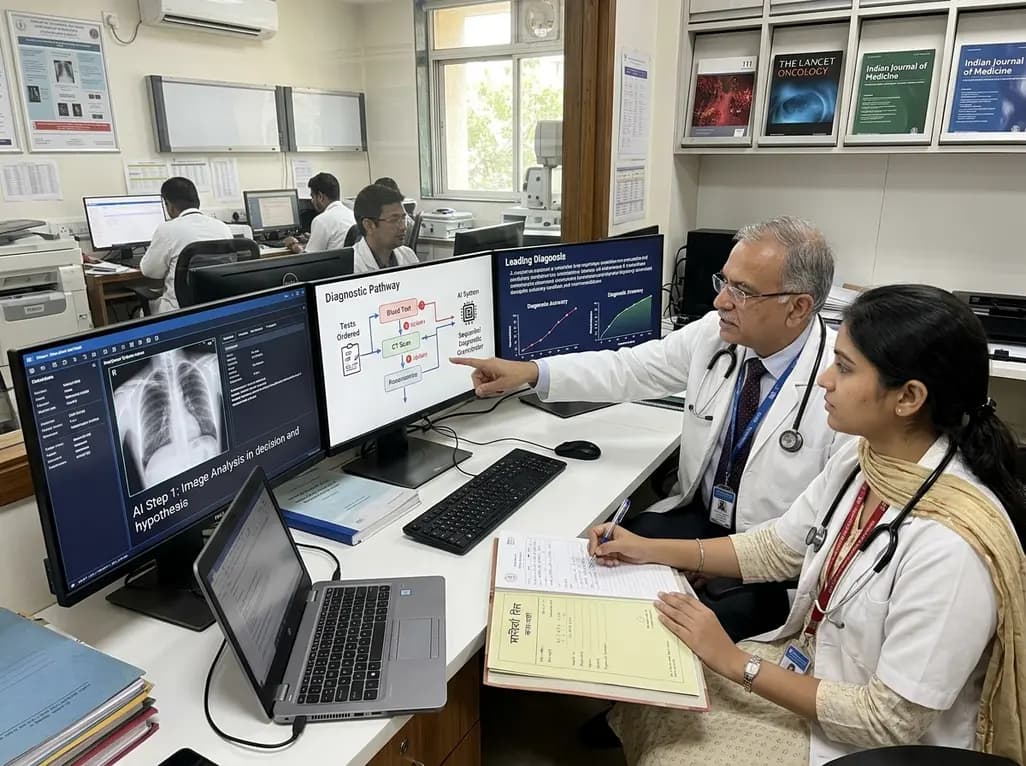
A breakthrough peer-reviewed study demonstrates that a sequential AI diagnosis system can mirror real-world clinical reasoning. By ordering stepwise tests and updating hypotheses dynamically, this multi-agent orchestrator achieved superior diagnostic accuracy while reducing investigative costs.
Today

A prenatal case highlights severe glutaric acidemia type II presenting as bilateral hyperechoic cystic kidneys at 18 weeks. Whole-exome sequencing revealed a novel homozygous ETFDH frameshift variant, demonstrating the power of rapid genetic testing in fetal renal anomalies.
Today

Review how tailored exercise programs benefit frail older patients with heart failure. Explore pathophysiological mechanisms, individualized training prescriptions, and strategies to overcome adherence barriers in clinical practice.
Yesterday

This comparative study evaluates posterior labral tears with and without glenohumeral instability, highlighting distinct demographic patterns, MRI underestimation in stable shoulders, and successful arthroscopic repair outcomes.
Yesterday

A clinical study demonstrates that early intervention with tocilizumab, either as monotherapy or bridged with corticosteroids, achieves significant proptosis reduction and resolves active inflammation in treatment-naive thyroid eye disease.
Yesterday
