.webp&w=384&q=75)

Loading, please wait...
Loading, please wait...

The assessment of CMV transmission valacyclovir risk remains a priority for obstetricians managing primary cytomegalovirus (CMV) infections. Recent clinical evidence suggests that high-dose valacyclovir therapy can significantly lower the risk of vertical transmission when administered during the periconceptional period or the first trimester. A retrospective study conducted at University Hospital Tübingen between October 2023 and June 2025 investigated how glycoprotein B2 (gB2)-specific immunoglobulin (Ig)-G antibodies refine this prediction.
Moreover, clinicians often struggle to identify which patients under antiviral treatment still face a residual risk of transmission. Therefore, the researchers evaluated the presence of gB2 antibodies through immunoblot analysis. These antibodies act as a potential biomarker for fetal risk. Consequently, this study offers a more nuanced approach to prenatal counseling for pregnant women diagnosed with a primary infection.
Furthermore, the study highlights that while valacyclovir (8g/day) is effective, it does not eliminate the risk entirely. However, the data indicate that specific antibody profiles, such as gB2-specific IgG, help in refining the fetal prognosis. For example, the presence or absence of these antibodies may correlate with the timing of the infection and the subsequent likelihood of placental crossing. Thus, combining antiviral therapy with advanced serological monitoring provides a more comprehensive management plan.
Additionally, previous meta-analyses have shown that valacyclovir reduces transmission rates by approximately 60% to 70%. Nevertheless, the integration of gB2 antibody testing represents a significant advancement in diagnostic precision. Because of these findings, medical educators emphasize the need for early diagnosis and tailored interventions in high-risk pregnancies.
While valacyclovir significantly reduces the CMV transmission valacyclovir risk, it does not eliminate it. Recent studies show a reduction in transmission rates, but residual risk remains, making monitoring essential.
Glycoprotein B2 (gB2) antibodies are specific markers used in immunoblot analysis to help predict the risk of maternal-fetal transmission, allowing for more precise fetal risk assessment during primary infection.
Valacyclovir treatment is most effective when initiated early following a primary CMV infection, specifically during the periconceptional period or the first trimester of pregnancy.
Disclaimer: This content is for informational and educational purposes only. It does not constitute medical advice or a professional physician's opinion. Always seek the advice of your physician or another qualified health provider with any questions you may have regarding a medical condition. Refer to the latest local and national guidelines for clinical practice.
References
Kagan KO et al. Predictive value of gB2 antibodies for maternal-fetal transmission after primary cytomegalovirus infection treated with valacyclovir. Ultrasound Obstet Gynecol. 2026 Mar 30. doi: 10.1002/uog.70206. PMID: 41906968.
Chatzakis C et al. Secondary Prevention of Fetal Cytomegalovirus Infection Through Valacyclovir Administration in Maternal Primary Infections During the Periconceptional Period and First Trimester of Pregnancy. Gynecol Obstet Fertil Senol. 2025;53(7-8):341-348.
Shahar-Nissan K et al. Valaciclovir to prevent vertical transmission of cytomegalovirus after maternal primary infection during pregnancy: a randomised, double-blind, placebo-controlled trial. Lancet. 2020;396(10253):779-785.

Read summarized clinical updates, watch expert medical content, and earn CME certifications right from your smartphone.
Open your smartphone camera to scan and install.





A new study explores how gB2-specific IgG antibodies help predict maternal-fetal CMV transmission risk in women treated with high-dose valacyclovir....
6 months ago

A multicenter study from Southeastern Türkiye identified rare alpha-1 antitrypsin deficiency variants, including the homozygous Malton genotype, among COPD patients. Half were never-smokers, highlighting the critical need for comprehensive genetic screening beyond common S and Z alleles.
Today
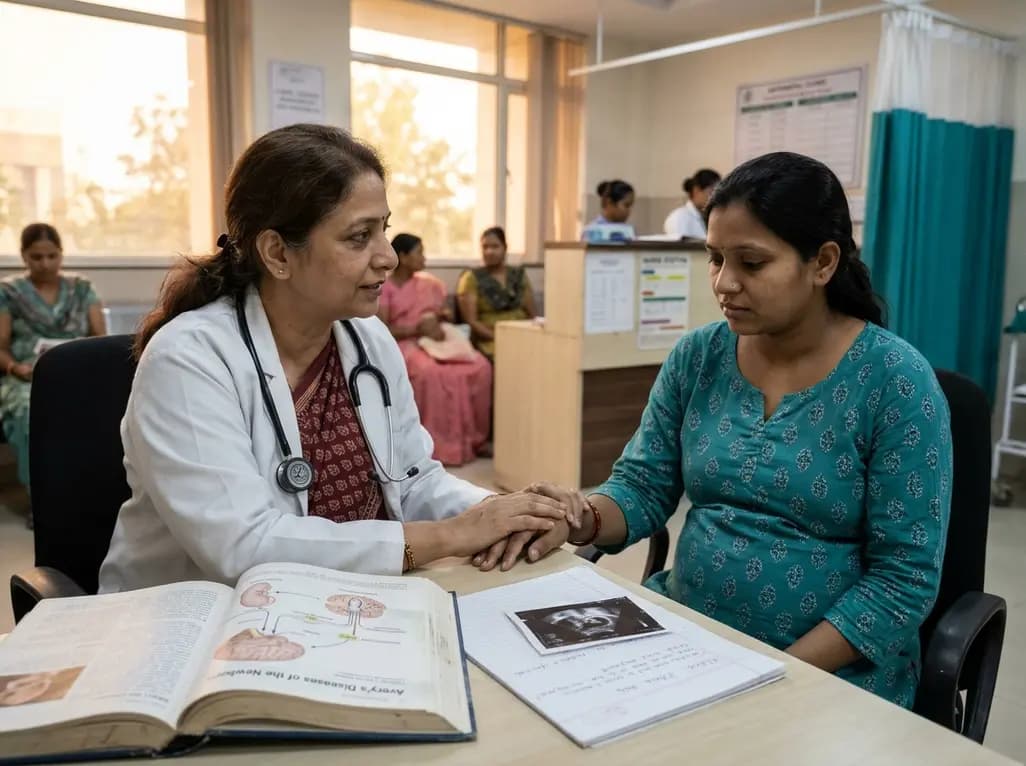
A comprehensive scoping review synthesises evidence linking prenatal maternal mental health to long-term offspring neurodevelopment, evaluating neuroendocrine, inflammatory, and epigenetic pathways while highlighting clinical screening and future research priorities.
Today

The Directorate General of Health Services directs Indian states to halt the hazardous reuse and reprocessing of single-use medical devices. Discover regulatory implications under the Drugs and Cosmetics Act, critical infection risks, legal liabilities, and operational changes required across clinical specialties.
Today
A 25-year multi-institutional cohort reveals high recurrence rates in pediatric giant cell tumor of bone, particularly in patients with open physes and bone marrow edema on preoperative MRI. Early surveillance and careful balance between growth plate preservation and tumor clearance are essential.
Today

India is advancing preventive healthcare by integrating genomics, artificial intelligence, and quantum technologies. With the SANGAM programme sequencing one million Indian genomes, clinicians can unlock personalized therapies, detect cardiometabolic risks early, and curb the burden of diabetes and heart disease.
Today
