.webp&w=384&q=75)

Loading, please wait...
Loading, please wait...

Modern psychiatric care is experiencing a profound paradigm shift as clinicians embrace the concept of neurodiversity. For decades, traditional psychiatric paradigms evaluated conditions like autism spectrum disorder predominantly through a deficit-based lens. However, embracing neurodiversity in clinical practice requires clinicians to understand diverse neurological profiles as natural variations of human cognitive architecture rather than pathological deficits. A recent editorial in child psychiatry highlights how hospital-based group initiatives, such as an inclusive choir, serve as an illuminating model for clinical care. Consequently, clinicians must translate neurodiversity concepts into daily clinical interventions without neglecting individual therapeutic needs.
Neurodiversity proposes that neurological differences represent natural biological variation rather than intrinsic defects requiring correction. In recent years, autistic self-advocates and clinicians have called for greater recognition of neurodivergent strengths. However, healthcare practitioners often struggle to apply these ideals beyond monitoring clinical terminology. Respecting neurodiversity does not mean clinicians should ignore functional challenges or distress. Instead, neurodiversity in clinical practice demands that practitioners validate cognitive styles while addressing specific adaptive difficulties.
Furthermore, clinicians must re-examine the historical emphasis on behavioral normalization. In traditional settings, therapy often targeted the suppression of autistic traits, including self-stimulatory behaviors. However, current evidence indicates that forced masking exacerbates anxiety and precipitates autistic burnout. Therefore, clinicians must foster therapeutic environments that respect individual identities. Practitioners should recognize that neurodivergent individuals often experience distress due to environmental mismatches rather than intrinsic failure. This perspective encourages clinical teams to view behavioral manifestations through a contextual and ecological lens rather than an exclusively pathological one. By understanding this dynamic, pediatricians and psychiatrists cultivate a strengths-based, affirming clinical atmosphere.
To illustrate neurodiversity-affirming care in action, researchers recently described a unique hospital-based choir comprising autistic youth, healthcare professionals, and amateur singers. In this collaborative environment, a professional director guided participants through complex vocal pieces without demanding identical styles. This initiative serves as an exceptional clinical metaphor. In a polyphonic choir, singers do not produce the same note simultaneously; instead, distinct vocal registers blend together to generate rich harmony.
Nevertheless, achieving this musical cohesion required persistent adaptation. The choir was not free from friction or sensory overstimulation. Participants encountered genuine challenges regarding auditory sensitivity, executive functioning demands, and social coordination. However, the leadership addressed these hurdles through proactive environmental accommodations and individualized support. Rather than forcing autistic participants to conform rigidly to conventional choral norms, the structure adapted to accommodate diverse profiles. Consequently, this model demonstrates that neurodiversity-affirming programs achieve ambitious collaborative goals when professionals provide deliberate, flexible scaffolding.
Traditional psychiatric assessments rely heavily on comprehensive problem lists and diagnostic symptom checklists. While structured diagnostic criteria remain essential for identifying co-occurring conditions, they frequently fail to capture relational strengths. Clinicians often concentrate exclusively on correcting social deficits, which can alienate neurodivergent youth and families. Conversely, collaborative initiatives like the inclusive choir demonstrate the therapeutic power of shared, goal-directed activities.
Moreover, fostering shared experiences allows neurodivergent individuals to build meaningful social connections naturally. When clinicians emphasize relational scaffolding, patients engage in social interactions without the pressure of forced conformity. In addition, these inclusive environments offer valuable learning opportunities for neurotypical peers and clinicians. By participating alongside autistic youth, professionals gain firsthand insight into diverse communication styles and sensory coping mechanisms. Therefore, mental health services must broaden their focus beyond symptom reduction to include relational enrichment, peer belonging, and environmental adaptation.
A common clinical dilemma involves balancing neurodiversity affirmation with the clinician's fundamental duty to alleviate suffering. Patients and families seek clinical guidance because they experience distress, functional impairment, or developmental roadblocks. Simply validating a patient's neurodivergent identity, while vital, is rarely sufficient to address severe executive dysfunction, debilitating anxiety, or sensory overload.
Thus, clinicians must navigate this balance with nuanced clinical judgment. Affirming neurodiversity serves as the foundation of the therapeutic alliance, but effective clinical care must address tangible daily goals. For example, therapists can assist autistic individuals in acquiring self-advocacy skills, emotional regulation strategies, and daily routines. Importantly, clinicians should formulate treatment targets in partnership with the patient, aligning interventions with personal values rather than societal conformity. Collaborative goal-setting fosters agency, self-determination, and psychological resilience across pediatric and adult transitions. This balanced methodology ensures that affirming care empowers patients to achieve fulfilling lives.
Healthcare providers can implement actionable adjustments to make their clinical practices more neurodiversity-affirming. First, clinics should evaluate their physical environments to minimize sensory distress. Reducing harsh fluorescent lighting, dampening acoustic reverberation, and offering tactile regulation tools significantly decrease patient anxiety during visits. Sensory-friendly adjustments also extend to waiting rooms, triage areas, and examination suites to ensure comprehensive accessibility. Furthermore, clinicians should adopt flexible scheduling to prevent prolonged waiting times that challenge executive functioning and endurance.
Additionally, communication methods should adapt to patient preferences. Providers can utilize visual aids, written summaries, and unambiguous language to facilitate informed decision-making. Clinicians should also routinely screen for co-occurring mental health conditions, such as depression, ADHD, and anxiety disorders, which often co-exist with autism. By treating these co-occurring conditions proactively, practitioners alleviate secondary distress without attempting to erase baseline neurodivergence. Ultimately, these practical adaptations optimize clinical outcomes and reinforce mutual respect.
The integration of neurodiversity concepts represents an evolving frontier for child and adolescent psychiatry. Psychiatric training curricula must expand beyond traditional deficit models to incorporate neurodiversity-affirming frameworks. Trainees need practical exposure to strength-based assessments and collaborative intervention models. Furthermore, psychiatric researchers should actively involve neurodivergent individuals in study design, ensuring that research questions reflect community priorities.
In summary, clinical perspectives on neurodiversity challenge practitioners to look beyond diagnostic symptom tallies and embrace relational complexity. Much like a well-directed choir, effective psychiatric care creates space for every individual voice to contribute meaningfully to the ensemble. By combining scientific rigor with authentic acceptance, clinicians provide compassionate, effective care that respects cognitive diversity while addressing real-world clinical needs.
Neurodiversity-affirming care is a clinical approach that views neurological differences, such as autism and ADHD, as natural variations of human cognition. Rather than attempting to eliminate core neurodivergent traits, clinicians focus on validating identity, adapting environments, enhancing strengths, and treating distressing co-occurring conditions in collaboration with patients.
Clinicians balance affirmation and intervention by establishing treatment goals aligned with the patient's personal aspirations. Affirming identity builds therapeutic trust, while evidence-based therapies target functional obstacles such as anxiety, executive dysfunction, and sensory distress. This approach avoids forced behavioral masking while actively supporting meaningful, self-directed life goals.
Clinics can reduce sensory triggers by dimming harsh fluorescent lights, minimizing auditory noise, and offering sensory tools. Operationally, providers can offer visual schedules, clear written instructions, and flexible appointment times. These practical modifications significantly lower anxiety, improve communication, and enhance overall healthcare accessibility for neurodivergent individuals.
Disclaimer: This content is for informational and educational purposes only and should not be considered medical advice. Healthcare professionals should make clinical decisions based on each patient’s unique profile and official clinical guidelines. Refer to the latest local and national guidelines for clinical practice.
References

Read summarized clinical updates, watch expert medical content, and earn CME certifications right from your smartphone.
Open your smartphone camera to scan and install.





Explore how adopting neurodiversity in clinical practice helps pediatricians and psychiatrists move beyond deficit models to balance identity affirmation with tailored clinical support for autistic individuals.
4 weeks back

Systemic amyloidosis management is undergoing a therapeutic revolution. This clinical review synthesizes updates from the International Society of Amyloidosis, detailing novel plasma cell therapies, TTR stabilizers, silencers, translational models, and artificial intelligence in drug development.
Today

A retrospective study of 824 patients undergoing over 2,200 intradetrusor onabotulinumtoxinA injections identifies sex- and etiology-specific predictors of 2-week post-void residual, highlighting the influence of baseline residual volumes, toxin dosage, and distinct urodynamic parameters on urinary retention risk.
Today
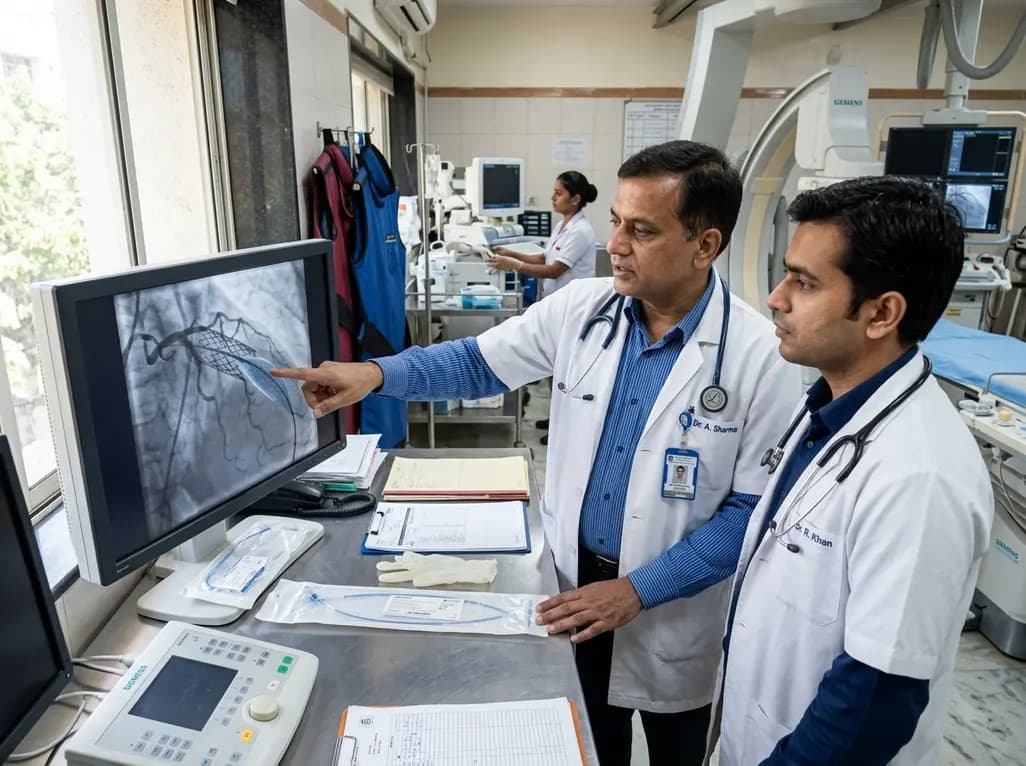
The US FDA has granted approval to the SELUTION SLR drug-eluting balloon for treating coronary in-stent restenosis. This milestone introduces a sustained-release sirolimus platform that eliminates the need for additional permanent metallic stents while maintaining robust vascular healing and luminal patency.
Today

Posttraumatic pisotriquetral instability is a rare wrist injury causing severe hypothenar pain and weakness. Explore clinical examination, imaging, and pisiformectomy.
Today

A comprehensive review analyzes periconceptional GLP-1 receptor agonist exposure, revealing reassuring data on congenital anomalies and adverse perinatal outcomes while emphasizing the need for cautious patient counseling.
Today
