.webp&w=384&q=75)

Loading, please wait...
Loading, please wait...

Modern healthcare is rapidly shifting toward personalized medicine. Clinical mass spectrometry omics, encompassing proteomics, lipidomics, and metabolomics, is at the forefront of this transformation. While traditional diagnostics often focus on DNA and RNA, analyzing downstream functional molecules provides a more accurate picture of a patient's current biological state. Consequently, this approach allows for more precise disease identification and tailored therapeutic strategies.
Recent improvements in sample preparation and automation have made large-scale studies more feasible. Scientists can now integrate data from different modalities to unlock a comprehensive view of complex biological processes. Furthermore, unsupervised integration methods provide deep insights into healthy and disease states. Therefore, healthcare providers can expect significant leaps in diagnostic accuracy in the near future. Moreover, these technologies are becoming increasingly accessible for routine clinical practice.
Transitioning from genomic research to the analysis of protein and lipid effectors is a major step forward. This shift ensures that clinicians base their decisions on the actual functional molecules driving disease. As a result, many medical centers are adopting these multi-omic workflows to enhance patient outcomes. However, successful implementation requires standardized protocols and rigorous validation across different clinical settings. Thus, the field is currently at a tipping point for broad clinical adoption.
Mass spectrometry allows for the direct measurement of proteins, lipids, and metabolites. These molecules provide real-time information about a patient’s health status, which DNA tests alone cannot offer.
Integrating these data modalities provides a holistic view of the body's functional landscape. It helps identify complex biomarkers and metabolic patterns that assist in personalized treatment planning.
Disclaimer: This content is for informational and educational purposes only. It does not constitute medical advice or a substitute for professional healthcare. Refer to the latest local and national guidelines for clinical practice.
References
Arad M et al. Towards large-scale mass spectrometry-based omics for clinical applications. Expert Rev Proteomics. 2026 Mar 14. doi: 10.1080/14789450.2026.2646657. PMID: 41830423.
Zhang L et al. Advances in the Clinical Application of High-throughput Proteomics. Explor Res Hypothesis Med. 2024;9(3):209-220.
Abdelaziz EH et al. Multi-omics data integration and analysis pipeline for precision medicine: Systematic review. Comput Biol Chem. 2024;113:108254.

Read summarized clinical updates, watch expert medical content, and earn CME certifications right from your smartphone.
Open your smartphone camera to scan and install.





A review of mass spectrometry-based proteomics, lipidomics, and metabolomics, focusing on their integration into clinical practice for personalized medicine...
7 months ago

An elderly man with partially repaired Tetralogy of Fallot presented with STEMI caused by coronary embolism rather than atherosclerosis. Successful treatment with sustained mechanical aspiration thrombectomy underscores the vital need for high clinical vigilance in adult congenital heart disease.
Today

Demanding exhaustive hormonal profiling can inadvertently discourage clinical studies involving females. Methodological standards must align with the specific scientific question to expand, not restrict, equitable evidence for women.
Today

A recent study demonstrates that spinal oxygen sensors do not require mitochondrial electron transport to trigger sympathetic excitation during acute hypoxia, revealing new insights into how mitochondrial oxidative stress modulates autonomic tone in cardiovascular and neurological diseases.
Today
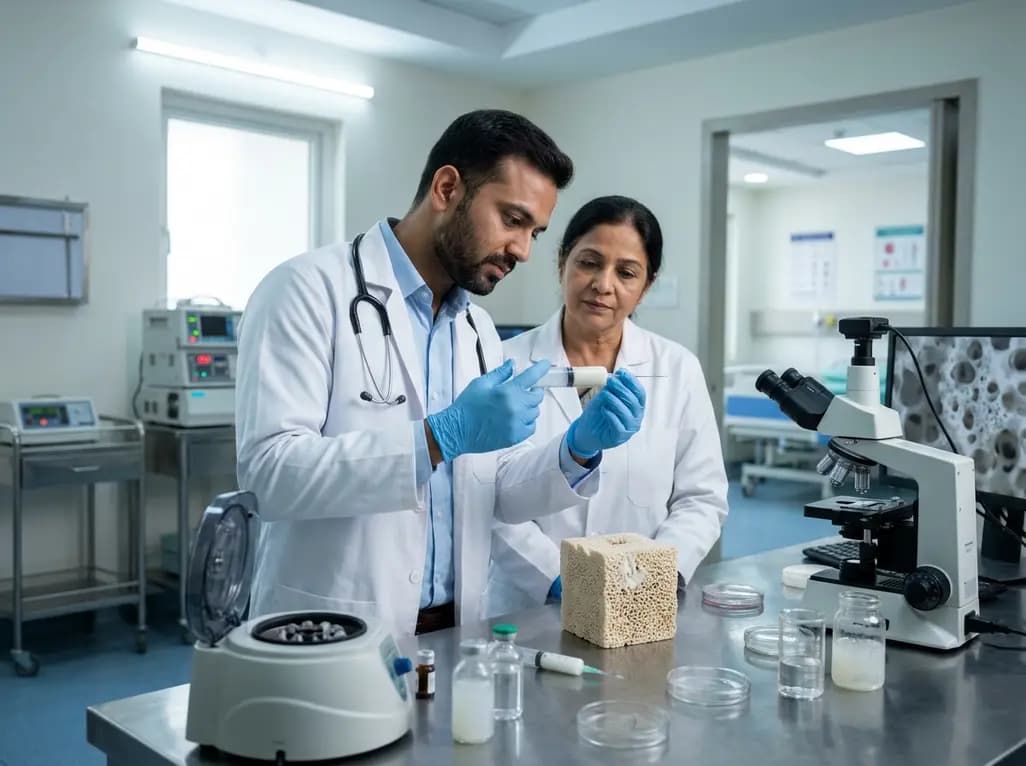
A novel calcium polyphosphate coacervate enables injectable bone implants with in situ hierarchical porosity via phase separation and gas foaming, significantly enhancing cell proliferation, energy metabolism, and osteogenic differentiation for minimally invasive bone defect repair.
Today

Following regulatory scrutiny from FSSAI regarding promotional representations and lean muscle preservation claims, Dr. Reddy's Laboratories and Nestlé Health Science are currently reviewing the branding and marketing strategy for their joint nutritional supplement Celevida GLP+.
Today
