

Loading, please wait...
Loading, please wait...

Cleft lip and palate represents one of the most common congenital craniofacial anomalies encountered across India and worldwide. Although early surgical repair reconstructs anatomical boundaries, persistent functional challenges often impair verbal communication. Clinicians frequently encounter cleft palate voice disorders that involve hypernasality, compensatory articulation, and secondary laryngeal dysphonia. Phonation, articulation, and resonance function as closely coupled physiological subsystems during continuous speech. When velopharyngeal valve closure fails, acoustic energy leaks directly into the nasal cavity. Consequently, speech displays excessive nasal resonance and reduced oral air pressure. Furthermore, speakers unconsciously alter laryngeal mechanics to compensate for this lost intraoral pressure. These maladaptive adjustments place chronic physiological strain on delicate vocal fold tissues. Therefore, individuals with repaired clefts frequently exhibit atypical acoustic voice profiles alongside prominent resonance disturbances. Objective multidimensional assessments provide crucial insight into these interrelated physiological deficits. By recognizing how resonance deviations correlate with phonatory stability, multidisciplinary teams can tailor therapeutic interventions more effectively. Ultimately, timely rehabilitation preserves vocal health, optimizes articulation clarity, and improves long-term psychosocial outcomes for adult patients.
Velopharyngeal dysfunction primarily results from anatomical deficiency, physiological incompetence, or learned articulation errors following primary cleft repair. During typical speech, coordinated palatal and pharyngeal muscle contractions close the velopharyngeal sphincter. However, structural shortening or aberrant levator muscle positioning prevents complete sphincter closure in individuals with repaired clefts. Consequently, acoustic energy and aerodynamic airflow escape continuously into the nasal cavity during oral sound production. This continuous air leak markedly diminishes the intraoral pressure required for plosive and fricative consonants. To overcome this functional deficit, patients frequently adopt compensatory articulation behaviors such as glottal stops and pharyngeal fricatives. Specifically, speakers generate acoustic resistance within the larynx or pharynx rather than in the oral cavity. Because the vocal folds adduct forcefully to produce compensatory glottal stops, the laryngeal mucosa experiences chronic mechanical trauma. Over time, this vocal hyperfunction triggers secondary laryngeal pathology, such as vocal nodules and vocal fatigue. Therefore, uncorrected velopharyngeal insufficiency initiates a cascade of mechanical strain that severely compromises acoustic voice quality. Clinicians must recognize these pathophysiological links to intervene before irreversible vocal fold injury occurs.
Modern speech assessment relies heavily on objective acoustic instruments rather than subjective perceptual ratings alone. Speech-language pathologists routinely utilize nasometry to calculate nasalance scores during vowel and sentence production. Nasalance reflects the acoustic ratio of nasal energy to total oral and nasal sound energy. In addition, examiners evaluate distinct vowel environments, such as high vowel /i/ and low vowel /a/, to assess resonance variations. Meanwhile, voice specialists implement the Dysphonia Severity Index to provide a comprehensive, multiparametric evaluation of vocal fold physiology. The Dysphonia Severity Index combines four distinct measurements: maximum phonation time, highest fundamental frequency, lowest vocal intensity, and percentage jitter. Jitter quantifies short-term frequency perturbations, reflecting vocal fold vibratory irregularity and mucosal biomechanical stability. Furthermore, maximum phonation time and lowest vocal intensity directly indicate respiratory-phonatory efficiency and glottal closure integrity. A lower Dysphonia Severity Index score corresponds to more severe dysphonia and compromised vocal function. By combining nasometry with the Dysphonia Severity Index, clinicians evaluate resonance and laryngeal function simultaneously. Consequently, this objective combination provides an exceptional diagnostic battery for monitoring adult cleft patients.
A recent clinical investigation compared twenty-one adult participants with repaired cleft lip and palate against twenty-one matched healthy controls. All cleft participants presented with compensatory articulation patterns alongside persistent resonance concerns. Researchers recorded significant between-group differences across objective nasalance scores for both /a/ and /i/ vowels. Specifically, participants with cleft lip and palate demonstrated significantly higher nasalance values, confirming persistent velopharyngeal impairment. In addition, the cleft cohort exhibited significantly lower Dysphonia Severity Index scores than their unaffected peers. Detailed parameter breakdown revealed shortened maximum phonation times, restricted high fundamental frequency limits, and elevated lowest intensity levels in cleft adults. Furthermore, jitter percentages were significantly elevated, indicating prominent vocal fold vibratory irregularity and chronic acoustic instability. Crucially, statistical analysis demonstrated strong correlations between elevated nasalance scores and deteriorating voice parameters. Higher nasalance values directly correlated with worsening frequency perturbation and poorer composite voice indices. Therefore, these empirical findings confirm that resonance imbalance directly parallels vocal degradation in adults with cleft lip and palate. These objective data highlight the vital necessity of integrated speech-voice diagnostics.
These significant correlations carry decisive implications for multidisciplinary cleft teams in India and worldwide. When managing adult cleft patients, otolaryngologists, plastic surgeons, and speech-language pathologists must coordinate diagnostic evaluations closely. Surgical teams should evaluate vocal fold status before performing secondary pharyngeal flap or sphincter pharyngoplasty procedures. Conversely, speech pathologists must identify laryngeal hyperfunction before initiating intensive articulation drills. If compensatory glottal stops persist, aggressive articulation therapy may exacerbate vocal fold strain and accelerate mucosal injury. Therefore, therapeutic protocols must first prioritize eliminating glottal stops through gentle phonation techniques and resonant voice training. In addition, clinicians should utilize objective tools such as videostroboscopy to monitor vocal fold microtrauma during therapy. Secondary surgical correction of velopharyngeal insufficiency can then restore adequate oral airflow and relieve upstream aerodynamic pressure demands. Ultimately, combined behavioral therapy and structural reconstruction restore balanced resonance while safeguarding laryngeal health. This comprehensive approach ensures clear, intelligible speech and protects vocal endurance across demanding vocational and social settings.
Velopharyngeal dysfunction allows continuous acoustic energy and airflow leakage into the nasal cavity during speech production. Consequently, speakers lose the intraoral air pressure necessary to articulate clear pressure consonants. To compensate for this mechanical deficit, patients often adduct their vocal folds forcefully to produce substitute glottal stops. This chronic compensatory strain causes vocal fold hyperfunction, mucosal irritation, and eventual dysphonia. Therefore, structural resonance failure directly drives secondary laryngeal voice disorders over time.
The Dysphonia Severity Index provides an objective, multiparametric measurement of vocal fold function and phonatory control. It synthesizes maximum phonation time, highest fundamental frequency, lowest vocal intensity, and percentage jitter into a single standardized score. In cleft palate evaluation, this index detects subtle vocal strain, aerodynamic inefficiency, and mucosal vibration irregularities. Consequently, clinicians can objectively quantify phonatory impairment, track therapeutic recovery over time, and evaluate the vocal impact of secondary surgical interventions accurately.
Compensatory articulation errors frequently persist into adulthood because patients learned these maladaptive motor patterns during early childhood speech development. Even after successful surgical palatoplasty closes the anatomical cleft, ingrained neural motor programs continue driving pharyngeal and glottal sound substitutions. Furthermore, many adult patients in developing regions lack access to consistent postoperative speech rehabilitation during childhood. Therefore, structured adult speech therapy remains essential to retrain articulation placement and eliminate chronic vocal hyperfunction effectively.
Disclaimer: This content is for informational and educational purposes only and should not be considered medical advice. Always consult with a qualified healthcare professional regarding any medical condition or treatment. Refer to the latest local and national guidelines for clinical practice.
References

Read summarized clinical updates, watch expert medical content, and earn CME certifications right from your smartphone.
Open your smartphone camera to scan and install.





A study in adults with repaired cleft lip and palate reveals significant correlations between nasalance scores and acoustic voice parameters via the Dysphonia Severity Index, highlighting how velopharyngeal insufficiency and compensatory articulation directly induce vocal fold strain and dysphonia.
Today

A cross-sectional study of 543 patients evaluated the clinical and economic impact of hemophilia inhibitors, revealing higher annual bleeding rates, increased treatment complexity, and severe orthopedic disability, highlighting the need for routine inhibitor screening and modern prophylactic strategies.
Today

Doctors at AIIMS New Delhi have achieved a historic milestone by performing India's first open prenatal myelomeningocele repair on a 25-week unborn fetus. This landmark multidisciplinary procedure provides vital neuroprotective benefits, lowers hydrocephalus risks, and transforms maternal-fetal medicine nationwide.
Today

A randomized crossover trial reveals that daily fresh watermelon consumption significantly reduces baseline TMAO levels and favorably modulates lipid profiles, lowering triglycerides and LDL cholesterol in adults with overweight and obesity.
Today
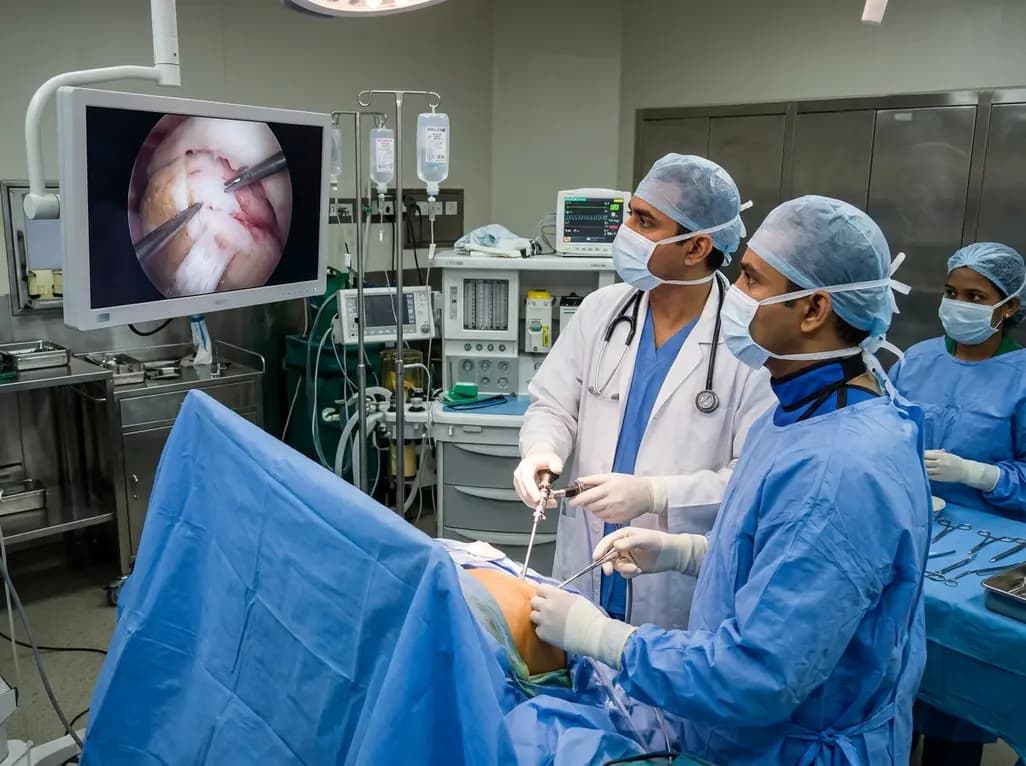
Discover how all-arthroscopic repair using a resorbable bioinductive bovine collagen implant offers a reproducible biologic solution for partial-thickness upper border subscapularis tears, enhancing healing while preserving native tendon architecture.
Today

A large-scale retrospective cohort study demonstrates that GLP-1 receptor agonists significantly reduce all-cause hospitalizations, alcohol-related admissions, major cardiovascular events, and mortality in patients with overweight or obesity and alcohol use disorder, providing profound clinical insights.
Today
