.webp&w=384&q=75)

Loading, please wait...
Loading, please wait...
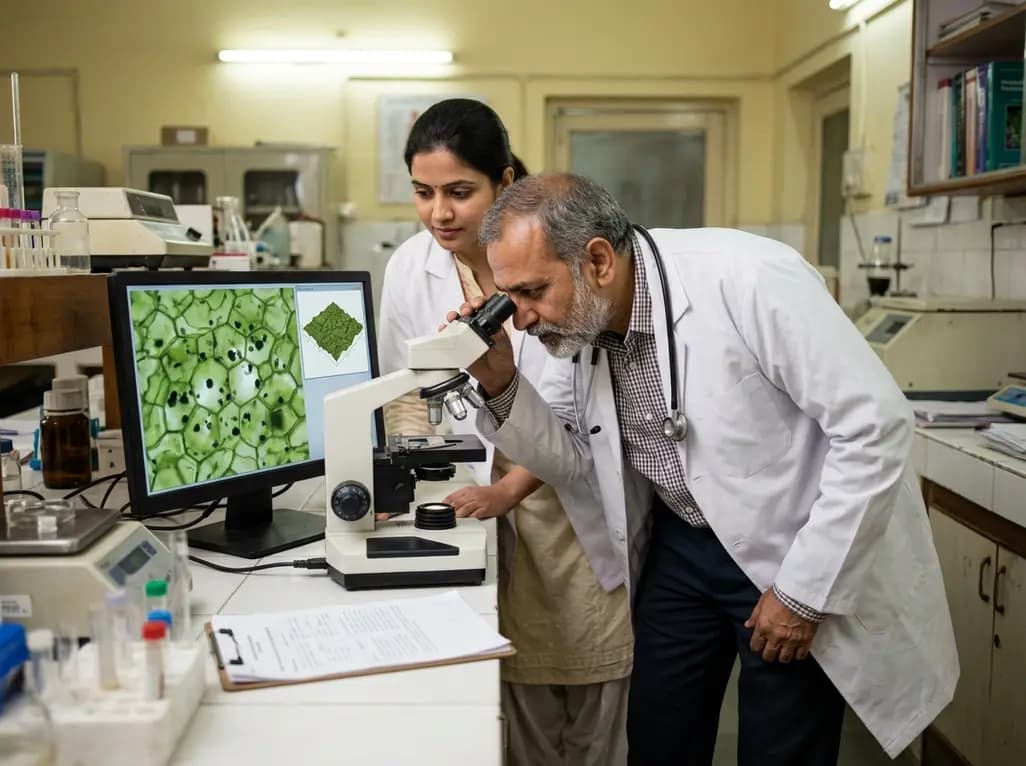
For years, scientists viewed the plant cell wall as a rigid filter. This barrier typically restricts particles based on a strict size exclusion limit. However, a recent study reveals that chromium colloid bioavailability is not solely determined by particle size. Using rice as a model system, researchers found that oversized chromium (Cr) colloids can bypass these physical defenses through a process of surface-driven remodeling. This breakthrough explains the pervasive accumulation of heavy metals in plant tissues.
Heavy metal contamination in staple crops is a major public health concern in India. High concentrations of chromium often appear near mining and industrial clusters. Understanding this entry mechanism is crucial for developing safer agricultural strategies and protecting the food chain from toxic contaminants.
The study demonstrates that microscopic roughness plays a pivotal role in particle entry. Specifically, rougher surfaces dramatically amplify the contact area between the colloid and the cell wall. This allows for dense, multipoint associations, inducing a strong enthalpy-driven affinity. Consequently, the rigid polysaccharide network of the cell wall undergoes spontaneous structural deformation.
This adaptive loosening opens a physical pathway for oversized particles. Ultimately, these findings challenge the traditional size-threshold paradigm of biological barriers. They prove that surface topography is a critical trigger for systemic metabolic trade-offs in plants. Furthermore, these findings emphasize that topography determines how contaminants infiltrate biological systems.
Therefore, assessing environmental risks requires a closer look at the physical characteristics of pollutants. This knowledge helps clinicians understand the environmental origins of heavy metal exposure in their patients. It also aids in predicting which agricultural regions might face higher risks of crop-based toxicity.
Chromium accumulation in staple crops like rice poses a direct risk of toxicity. Chronic exposure to hexavalent chromium is linked to cancer and organ damage. Understanding its uptake helps in assessing long-term exposure risks through the Indian diet.
Rough surfaces create more contact points with the cell wall. This association forces the plant's rigid polysaccharide network to loosen and deform. As a result, it creates a temporary opening that allows larger particles to enter the plant tissue.
Disclaimer: This content is for informational and educational purposes only. It does not constitute professional medical advice, diagnosis, or treatment. Always seek the advice of your physician or other qualified health provider with any questions regarding a medical condition. Refer to the latest local and national guidelines for clinical practice.
References

Read summarized clinical updates, watch expert medical content, and earn CME certifications right from your smartphone.
Open your smartphone camera to scan and install.





A new study reveals that surface roughness enables oversized chromium colloids to penetrate plant cell walls, challenging traditional size-threshold paradig...
4 months ago

An elderly man with partially repaired Tetralogy of Fallot presented with STEMI caused by coronary embolism rather than atherosclerosis. Successful treatment with sustained mechanical aspiration thrombectomy underscores the vital need for high clinical vigilance in adult congenital heart disease.
Today

Demanding exhaustive hormonal profiling can inadvertently discourage clinical studies involving females. Methodological standards must align with the specific scientific question to expand, not restrict, equitable evidence for women.
Today

A recent study demonstrates that spinal oxygen sensors do not require mitochondrial electron transport to trigger sympathetic excitation during acute hypoxia, revealing new insights into how mitochondrial oxidative stress modulates autonomic tone in cardiovascular and neurological diseases.
Today

A novel calcium polyphosphate coacervate enables injectable bone implants with in situ hierarchical porosity via phase separation and gas foaming, significantly enhancing cell proliferation, energy metabolism, and osteogenic differentiation for minimally invasive bone defect repair.
Today

Following regulatory scrutiny from FSSAI regarding promotional representations and lean muscle preservation claims, Dr. Reddy's Laboratories and Nestlé Health Science are currently reviewing the branding and marketing strategy for their joint nutritional supplement Celevida GLP+.
Today
