.webp&w=384&q=75)

Loading, please wait...
Loading, please wait...

Caring for children with pediatric sensory impairments requires substantial psychological resilience from families. The parental acceptance questionnaire serves as an essential psychometric instrument to assess caregiver psychological flexibility and coping capacity. In clinical practice, clinicians frequently encounter parents navigating emotional distress and chronic caregiving responsibilities. Consequently, having validated assessment tools helps multidisciplinary teams identify vulnerable families early. A recent psychometric study evaluated the Chinese version of this scale across diverse caregiver cohorts.
Psychological flexibility represents the ability to adapt to situational demands while staying committed to personal values. In pediatric healthcare, parents facing childhood medical conditions frequently experience elevated parenting stress and emotional exhaustion. Therefore, evaluating psychological flexibility allows healthcare providers to measure functional coping rather than mere symptom presence. The original instrument operationalizes the core processes of Acceptance and Commitment Therapy into six actionable dimensions. These dimensions include cognitive defusion, acceptance, present-moment awareness, self-as-context, values clarification, and committed action. Consequently, clinicians obtain a comprehensive profile of how caregivers handle adverse circumstances. When caregivers maintain psychological flexibility, they foster healthier parent-child interactions and adhere more consistently to medical recommendations. Furthermore, identifying specific areas of psychological inflexibility enables tailored psychosocial interventions. Additionally, routine screening facilitates proactive referrals to psychological counseling before caregiver burnout compromises pediatric rehabilitation. Thus, introducing culturally adapted versions of this tool bridges a critical gap in family-centered pediatric medicine and mental health care.
Adapting psychometric tools for non-Western populations requires rigorous methodological steps to ensure semantic and cultural equivalence. Researchers conducted a multi-phase investigation to translate the English instrument into simplified Chinese. Initially, bilingual experts completed forward and backward translations to preserve conceptual nuances. Following this step, fifteen independent experts evaluated content validity to confirm item relevance and clinical precision. Furthermore, researchers conducted cognitive debriefing and face validity testing with forty parents of children with and without hearing loss. This iterative process ensured that all eighteen items remained easily comprehensible across educational levels. Subsequently, the investigators launched a cross-sectional study across two large cohorts. The sample comprised 204 parents of children with hearing loss and 336 parents of children with typical hearing. Additionally, all participants completed a re-assessment after an eight-week interval. As a result, the authors established robust test-retest reliability and longitudinal stability for the adapted instrument in routine clinical environments.
The statistical evaluation yielded compelling evidence regarding the structural integrity and reliability of the translated questionnaire. Exploratory factor analysis and parallel analysis confirmed that eighteen items accurately reflect six distinct behavioral processes. Moreover, confirmatory factor analysis demonstrated excellent goodness-of-fit for both the traditional six-factor model and a hierarchical bifactor model. In the bifactor framework, a dominant general factor accounted for the majority of the common variance. Specifically, the general factor demonstrated an omega coefficient of 0.95 and a hierarchical omega of 0.80. The proportion of uncontaminated correlations reached 0.88, which confirms strong unidimensionality. In contrast, the specific subscales showed modest independent reliability, with hierarchical omega values ranging between 0.41 and 0.49. Therefore, researchers recommend using the total composite score as the primary diagnostic metric. Clinicians should interpret subscale scores cautiously as qualitative process indicators rather than independent dimensions. Furthermore, the questionnaire correlated strongly with standardized measures of well-being, confirming concurrent validity.
Pediatric hearing impairment presents distinct communication hurdles and longitudinal rehabilitation challenges for families. Parents often experience profound anxiety regarding speech development, educational placement, and device adherence. Consequently, caregiver psychological flexibility directly influences how families manage these ongoing stressors. In this study, the questionnaire effectively differentiated between parents experiencing high versus low parenting stress across both cohorts. Caregivers with greater psychological inflexibility reported significantly higher levels of general psychological distress and depressive symptoms. Conversely, parents with greater acceptance and committed action maintained higher levels of personal well-being despite clinical demands. Thus, assessing acceptance allows healthcare providers to recognize caregivers who struggle to process emotional distress. Additionally, pediatric audiologists and otolaryngologists can use these findings to establish holistic rehabilitation pathways. When clinical teams support parental emotional adaptability, children achieve better language outcomes and psychosocial development. Furthermore, tracking these scores over time helps clinicians assess whether family-focused counseling alleviates emotional burden. Ultimately, addressing caregiver distress strengthens long-term therapeutic engagement.
Integrating psychological screening into pediatric and otolaryngology clinics provides measurable advantages for patient management. Healthcare teams in developing and developed nations often focus exclusively on audiometric thresholds and surgical interventions. However, parental adherence to speech therapy and hearing aids depends heavily on caregiver emotional resilience. Therefore, clinicians should incorporate brief self-report questionnaires during regular follow-up visits. The eighteen-item format requires only a few minutes to complete, making it feasible for busy outpatient practices. When screening reveals low psychological flexibility, providers can refer caregivers to targeted behavioral therapy sessions. Specifically, Acceptance and Commitment Therapy workshops teach parents to accept difficult emotions while taking values-based actions for their children. Moreover, pediatricians and family physicians can utilize these insights to coordinate multidisciplinary support services. Consequently, addressing caregiver well-being directly enhances the efficacy of sensory rehabilitation protocols. In addition, early psychosocial support prevents long-term family dysfunction and reduces overall healthcare utilization. Healthcare systems must therefore prioritize comprehensive, family-centered models of chronic disease management.
While the current findings validate the scale in Chinese cohorts, further research must evaluate diverse socioeconomic settings. Cultural beliefs surrounding disability and parental duty vary widely across different geographic regions. Consequently, cross-cultural studies will establish whether the bifactor scoring structure remains consistent internationally. Future trials should also examine the utility of this instrument among parents of children with other neurodevelopmental conditions, such as autism or cerebral palsy. Furthermore, longitudinal clinical trials must assess whether changes in parental acceptance scores predict long-term child developmental milestones. Integrating standardized psychometric tools into electronic health records will also help clinicians track caregiver well-being continuously over time. As healthcare paradigms shift toward value-based, holistic care, assessing family mental health will become standard practice. Thus, validated tools provide the empirical foundation needed to optimize pediatric rehabilitation globally.
The parental acceptance questionnaire evaluates psychological flexibility specifically within the context of parenting. It measures six core behavioral processes derived from Acceptance and Commitment Therapy, including acceptance, cognitive defusion, and committed action. Clinicians use this instrument to determine how effectively caregivers handle parenting stress and emotional distress when managing pediatric health conditions. Higher scores indicate greater psychological flexibility and functional coping.
Parental psychological flexibility significantly influences how caregivers adapt to the demands of pediatric hearing rehabilitation. Parents with higher flexibility accept diagnosis-related emotional distress without resorting to maladaptive avoidance strategies. Consequently, these caregivers maintain consistent adherence to hearing aid usage, speech therapy sessions, and educational accommodations. This emotional resilience fosters supportive home environments, which directly enhances the child's long-term communication and language development.
Clinicians should primarily rely on the total composite score when interpreting the questionnaire in clinical practice. Advanced bifactor analyses demonstrate that a strong general factor accounts for most common variance, confirming robust unidimensionality. In contrast, individual subscales possess lower independent reliability. Therefore, providers should treat subscale scores only as supplementary qualitative indicators to guide specific therapeutic discussions during Acceptance and Commitment Therapy interventions.
Disclaimer: This content is for informational and educational purposes only and should not be considered medical advice. Always consult a qualified healthcare professional regarding clinical conditions or treatment options. Refer to the latest local and national guidelines for clinical practice.
References
1. Li S et al. Reliability and Validity of the Chinese Version of the Parental Acceptance Questionnaire (6-PAQ) Among Parents of Children With or Without Hearing Loss. J Clin Psychol. 2026 Aug 29. doi: 10.1002/jclp.70209. PMID: 42667679.
2. Greene RL, Field CE, Fargo JD, Twohig MP. Development and validation of the parental acceptance questionnaire (6-PAQ). J Contextual Behav Sci. 2015;4(3):170-175.
3. Ong CW, Whicker JJ, Muñoz K, Twohig MP. Measuring Psychological Inflexibility in Adult and Child Hearing Loss. Int J Audiol. 2019;58(10):643-650.

Read summarized clinical updates, watch expert medical content, and earn CME certifications right from your smartphone.
Open your smartphone camera to scan and install.





A psychometric validation study confirms that the Chinese version of the Parental Acceptance Questionnaire (6-PAQ-C) reliably measures psychological flexibility among parents of children with and without hearing loss, supporting better family-centered interventions.
4 weeks back

Emerging neuroenergetic research reveals that cognitive fatigue stems from local metabolic constraints and regional aerobic glycolysis rather than global resource depletion. This paradigm shift offers valuable clinical insights for managing chronic mental exhaustion, post-viral syndromes, and neurodegenerative fatigue.
Today

A scoping review reveals how pregnancy affects phonation through laryngeal edema and reduced phonation time rather than major acoustic pitch alterations. Learn how to identify, evaluate, and manage vocal symptoms in expectant mothers.
Today

According to WHO data, average lifespan reached 73.3 years in 2023, recovering from pandemic lows. However, healthy life expectancy lags at 62.8 years due to surging noncommunicable conditions like cardiovascular disease and dementia, demanding proactive primary screening and sustained chronic care.
Today
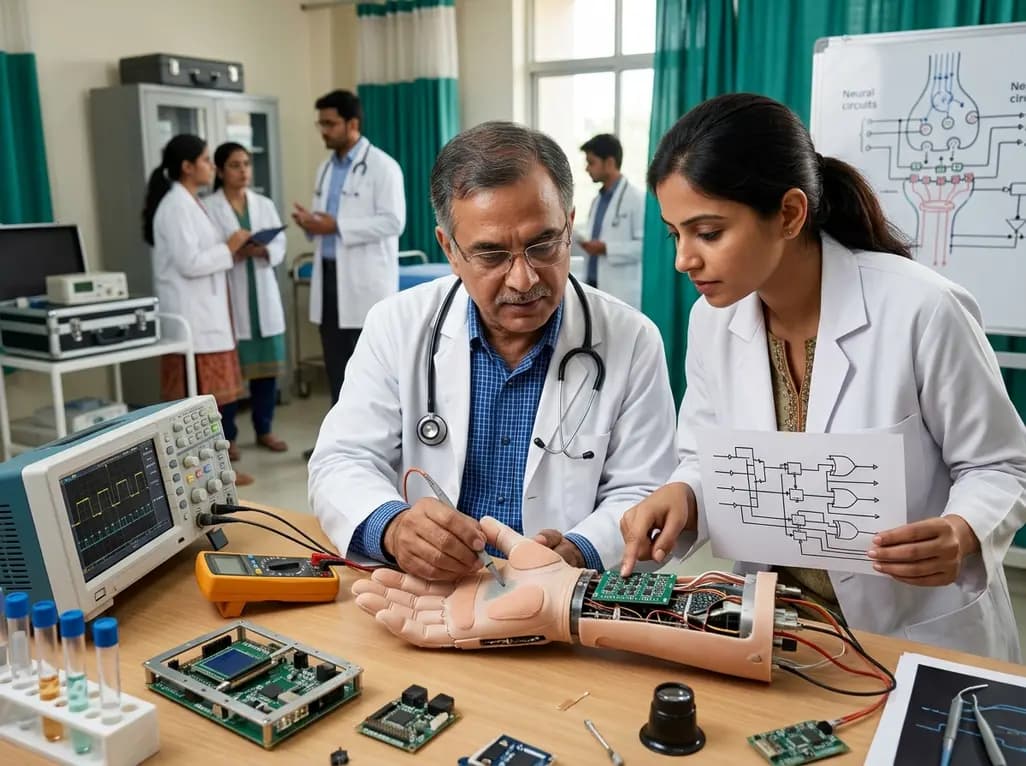
Researchers have engineered an artificial sensory-pain integrated receptor using a multi-threshold organic synaptic transistor. The system distinguishes benign touch from noxious stimuli, enabling safer, more responsive prosthetic limbs with built-in memory and simplified hardware architecture.
Today

Medical robotics is transitioning beyond operative suites into diagnostics, cardiology, and endocrinology. Explore how innovations in tele-robotics, AI integration, and nanomedicine are overcoming geographical barriers and transforming precision healthcare delivery across India's evolving disease landscape.
Today
