

Loading, please wait...
Loading, please wait...

China's rapid acceleration in regenerative medicine has established a distinctive dual-track governance structure. Clinicians worldwide are observing how the implementation of China Order 818 is systematically transforming the cell therapy landscape. Specifically, this regulation creates a statutory mechanism for investigator-initiated clinical translational research in tertiary academic hospitals. Furthermore, it separates hospital-based innovative medical technologies from conventional drug registration routes. As oncologists and hematologists evaluate novel cellular interventions, this pathway offers vital insights into accelerating translational medicine while maintaining strict patient safety.
The regulatory oversight of cellular therapies historically struggled to differentiate between medical procedures and commercial pharmaceutical products. Consequently, the Chinese State Council promulgated Decree 818 to formalize clinical research and translational applications within certified healthcare institutions. Under this dual-track model, the National Health Commission governs hospital-centered biomedical innovations, while the National Medical Products Administration oversees standard commercial drug registrations. Therefore, hospital investigators can evaluate emerging autologous or gene-modified cell treatments under a dedicated administrative filing mechanism. Moreover, eligible studies must take place exclusively within qualified Grade 3A medical centers possessing accredited review boards and rigorous scientific monitoring systems. In addition, sponsors must maintain legal establishment within China and secure stable research funding. Investigators cannot levy fees on research participants during the investigational phase. However, once clinical research demonstrates reproducible safety and therapeutic efficacy, institutions may apply for official translational authorization. This dual-track architecture prevents exploratory research from languishing in protracted development pipelines. Ultimately, it provides an accelerated avenue for cell therapies targeting refractory malignancies and hematologic disorders.
The operational reality of this regulatory pathway becomes clear when analyzing the clinical projects filed across the earliest administrative batches. Cumulatively, regulatory authorities approved 112 pioneer clinical research initiatives across nine successive batches. Notably, the overwhelming majority of these approved projects focus on personalized cell therapies, gene editing platforms, and targeted regenerative technologies. Oncology and hematology represent the largest clinical domains within this portfolio. For example, investigators are studying next-generation chimeric antigen receptor therapies and tumor-infiltrating lymphocytes for intractable solid tumors. In addition, somatic gene-editing applications for hereditary hemoglobinopathies and metabolic conditions have gained significant traction. Researchers must adhere to stringent quality control standards, ensuring cellular manipulation outside the body maintains biological fidelity. Furthermore, clinical centers must archive complete experimental datasets for thirty years, guaranteeing lifelong traceability for genetic interventions. Therefore, these first nine batches establish a robust clinical evidence base. They prove that systematic filing oversight can sustain rapid clinical entry without sacrificing procedural rigor. As a result, academic investigators obtain unprecedented institutional support to evaluate advanced therapeutic concepts.
China designed this statutory mechanism around the core philosophy of wide entry with strict exit. Specifically, the framework encourages broad scientific exploration during early human studies while establishing formidable safety gates prior to widespread clinical adoption. By adopting an expedited filing process for qualified tertiary hospitals, the policy removes bureaucratic barriers that often delay investigator-initiated trials. However, the subsequent transition from clinical research to routine clinical translation demands exhaustive empirical substantiation. Investigators must provide compelling non-clinical safety profiles, validated cellular manufacturing analytics, and verified clinical endpoints before seeking translational approval. Moreover, regulatory authorities mandate proactive pharmacovigilance and prolonged post-intervention monitoring protocols. If adverse events or genomic off-target mutations emerge, regulatory bodies enforce immediate trial suspensions and substantial financial penalties. Consequently, the exit gate filters out substandard interventions while advancing genuinely effective technologies into clinical care. This balanced paradigm addresses the longstanding tension between medical urgency and patient protection. Furthermore, it creates a transparent audit trail for cellular interventions, ensuring that experimental innovations undergo continuous evaluation throughout their lifecycle.
International medical communities frequently contrast hospital exemption models with centralized pharmaceutical licensing pathways. For instance, the European Union utilizes hospital exemptions under strict national oversight, whereas the United States maintains centralized investigational new drug applications. In India, the Central Drugs Standard Control Organization and the Indian Council of Medical Research govern advanced therapies through comprehensive national guidelines. Indian regulatory bodies distinguish academic clinical research from commercial pharmaceutical trials to foster domestic biotechnology solutions. For example, indigenous breakthroughs like commercial autologous CAR-T therapies highlight India's burgeoning capacity in cellular engineering. Nevertheless, Indian clinical trialists often encounter administrative delays when transitioning academic discoveries into approved clinical protocols. Therefore, the Chinese experience with institutionalized filing pathways provides valuable structural insights for Indian regulators and clinicians. By establishing clear qualification standards for research hospitals and creating formal translational bridge mechanisms, regulatory agencies can accelerate clinical development timelines. In addition, this approach protects vulnerable patient populations from unproven commercial therapies while supporting legitimate investigator-initiated breakthroughs in specialized academic oncology departments.
The evolution of institutional translational pathways carries profound implications for clinicians managing hematologic malignancies and advanced solid tumors. Frequently, clinicians exhaust conventional chemotherapy, radiotherapy, and targeted immunotherapies in patients with refractory disease. Under streamlined translational systems, qualified oncology centers can rapidly offer novel cellular constructs to patients who lack therapeutic alternatives. For instance, multi-targeted CAR-T cells, universal off-the-shelf natural killer cells, and in vivo gene editing can reach bedside evaluation far more swiftly. Furthermore, close collaboration between academic researchers and clinical oncologists fosters rapid feedback cycles, accelerating iterative vector optimization. However, treating physicians must maintain intense clinical vigilance regarding unique cellular toxicities. Immune effector cell-associated neurotoxicity syndrome and cytokine release syndrome demand standardized management protocols in specialized intensive care units. Consequently, institutional readiness requires multidisciplinary coordination among oncologists, hematologists, intensivists, and laboratory specialists. As global biotechnology landscapes evolve, clinicians must familiarize themselves with emerging regulatory paradigms that govern the delivery of transformative cell and gene therapies.
Order 818 establishes a hospital-based clinical research and translation pathway overseen by health commissions rather than drug administrators. Investigators test innovative cell and gene technologies within accredited Grade 3A hospitals using an administrative filing system. Unlike traditional commercial drug development, this framework treats interventions as advanced medical procedures. Consequently, it accelerates bedside translational research while maintaining rigorous institutional oversight, strict ethics controls, and comprehensive long-term patient follow-up.
Medical institutions cannot charge patients any fees during the experimental research phase under this framework. Initiating sponsors and participating tertiary hospitals must secure independent research funding to cover all procedural, laboratory, and clinical care costs. Only after an intervention demonstrates robust clinical safety and therapeutic efficacy can institutions secure formal clinical translation authorization. Consequently, hospitals may establish patient billing only after receiving this explicit national health authority translation approval.
The dual-track model demonstrates how national frameworks can accelerate academic investigator-initiated trials while preventing unregulated clinical commercialization. In India, where institutions balance ICMR research guidelines and CDSCO regulatory pathways, establishing structured hospital-based translational mechanisms could streamline early clinical evaluation of indigenous cell therapies. Furthermore, enforcing mandatory 30-year data preservation and strict accreditation for advanced therapy centers ensures patient safety while nurturing domestic biomedical innovation in oncology and hematology.
Disclaimer: This content is for informational and educational purposes only... Refer to the latest local and national guidelines for clinical practice.
References

Read summarized clinical updates, watch expert medical content, and earn CME certifications right from your smartphone.
Open your smartphone camera to scan and install.





China's Order 818 establishes a pioneering dual-track regulatory framework for cell and gene therapies. By decoupling hospital-based clinical translation from traditional drug pathways, it fosters rapid biomedical innovation while enforcing strict exit criteria and comprehensive 30-year patient safety oversight.
Today

A recent study highlights bilateral peripheral CT venography as a rapid, noninvasive, and safe technique for assessing central venous lesions in hemodialysis patients with dysfunctional arteriovenous fistulas, demonstrating 100% technical feasibility and high concordance with invasive imaging.
Today

A landmark study evaluates artificial intelligence models and prompting strategies in qualitative lupus pregnancy research, revealing that few-shot prompting in advanced LLMs reliably captures maternal experiences, clinical anxieties, and perinatal outcomes across diverse languages.
Today
A comprehensive computational and clinical analysis evaluates incretin anti-obesity therapies, comparing oral orforglipron with injectable semaglutide and tirzepatide. Findings from head-to-head trials and multi-criteria decision analysis guide personalized clinical management.
Today
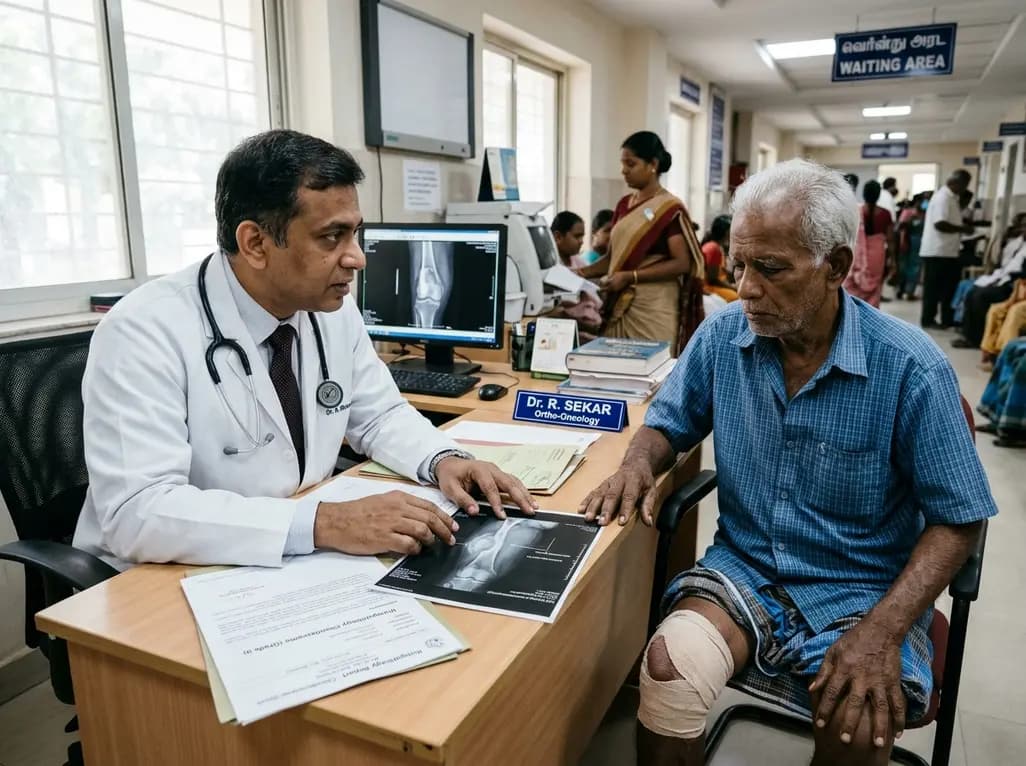
A recent single-institution analysis identifies advanced patient age and progressive systemic disease as primary negative prognostic factors for five-year survival in chondrosarcoma, underscoring the urgent necessity of precise risk stratification, clear surgical margins, and dedicated oncologic follow-up.
Today
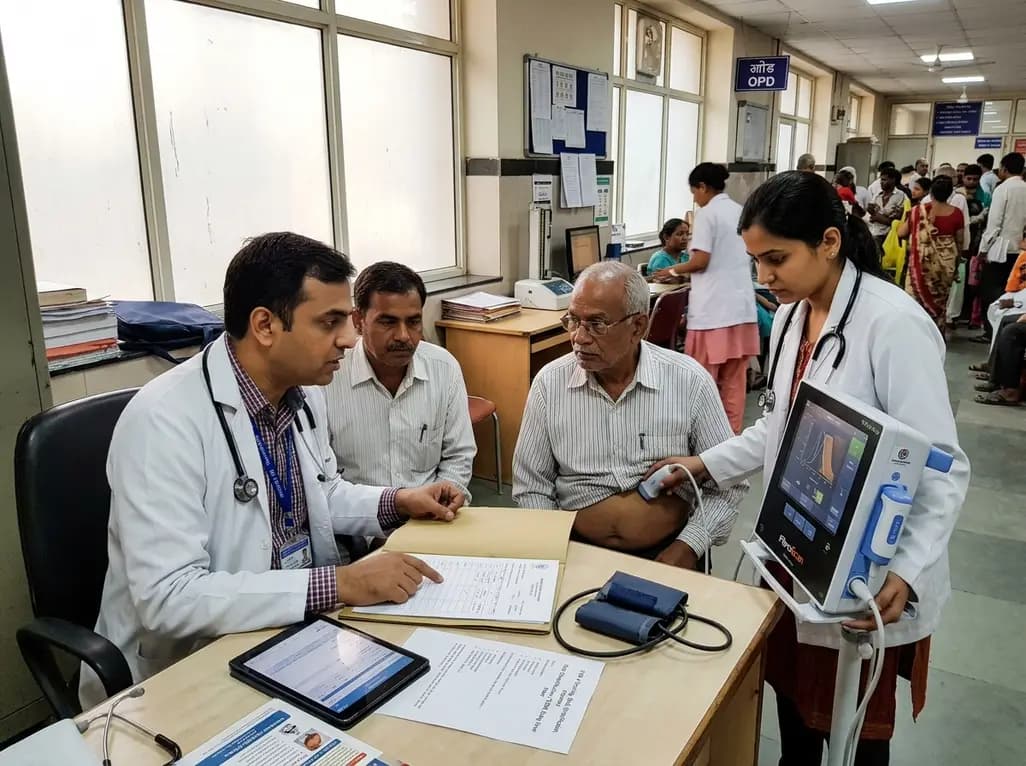
Metabolic dysfunction-associated steatotic liver disease affects nearly 70% of Indian adults with type 2 diabetes. Implementing systematic risk stratification with FIB-4 scoring, transient elastography, and patient-centric digital engagement transforms early detection into sustainable, long-term clinical care.
Today
