.webp&w=384&q=75)

Loading, please wait...
Loading, please wait...

Childhood obesity in India has escalated into a significant public health emergency. According to the World Obesity Atlas 2026, the country now ranks second globally in children living with high BMI. Currently, over 41 million school-age children are affected. Consequently, healthcare providers must prepare for a surge in early-onset chronic conditions. Furthermore, the report suggests that the world will miss the 2025 global targets for halting this rise. India remains off track even with the extended 2030 deadline.
The long-term health implications for these children are profound. By 2040, nearly 56 million Indian children may be living with overweight or obesity. Similarly, disease indicators linked to high BMI are set to rise sharply. For example, cases of BMI-related hypertension could reach 4.21 million by 2040. Additionally, metabolic dysfunction-associated steatotic liver disease (MASLD) cases are projected to hit 11.88 million. Therefore, early screening and management are essential to mitigate these cardiovascular and metabolic risks.
Several lifestyle factors drive this epidemic. Notably, 74% of Indian adolescents fail to meet recommended physical activity levels. Furthermore, sub-optimal breastfeeding practices affect 32.6% of infants. Additionally, only a small fraction of children receive balanced school meals. Because these factors are preventable, clinical interventions must focus on family-centered lifestyle modifications. Clinicians should also monitor maternal BMI. About 13.4% of women in India live with high BMI, which influences the metabolic health of future generations.
Q1: What are the primary chronic diseases linked to high BMI in Indian children?
Key conditions include hypertension, hyperglycemia, high triglycerides, and metabolic dysfunction-associated steatotic liver disease (MASLD). These conditions are projected to rise significantly by 2040 due to high obesity rates.
Q2: Why is the 2026 report particularly concerning for India?
India ranks second only to China in the total number of affected children. The rapid increase suggests that India is off track for global obesity targets, despite the international community extending deadlines to 2030.
Disclaimer: This content is for informational and educational purposes only. It does not constitute medical advice or replace professional judgment. Refer to the latest local and national guidelines for clinical practice.
References

Read summarized clinical updates, watch expert medical content, and earn CME certifications right from your smartphone.
Open your smartphone camera to scan and install.





India ranks second globally in childhood obesity, with 41 million children affected. The World Obesity Atlas 2026 warns of a surge in chronic diseases by 20...
7 months ago

Review how tailored exercise programs benefit frail older patients with heart failure. Explore pathophysiological mechanisms, individualized training prescriptions, and strategies to overcome adherence barriers in clinical practice.
Today
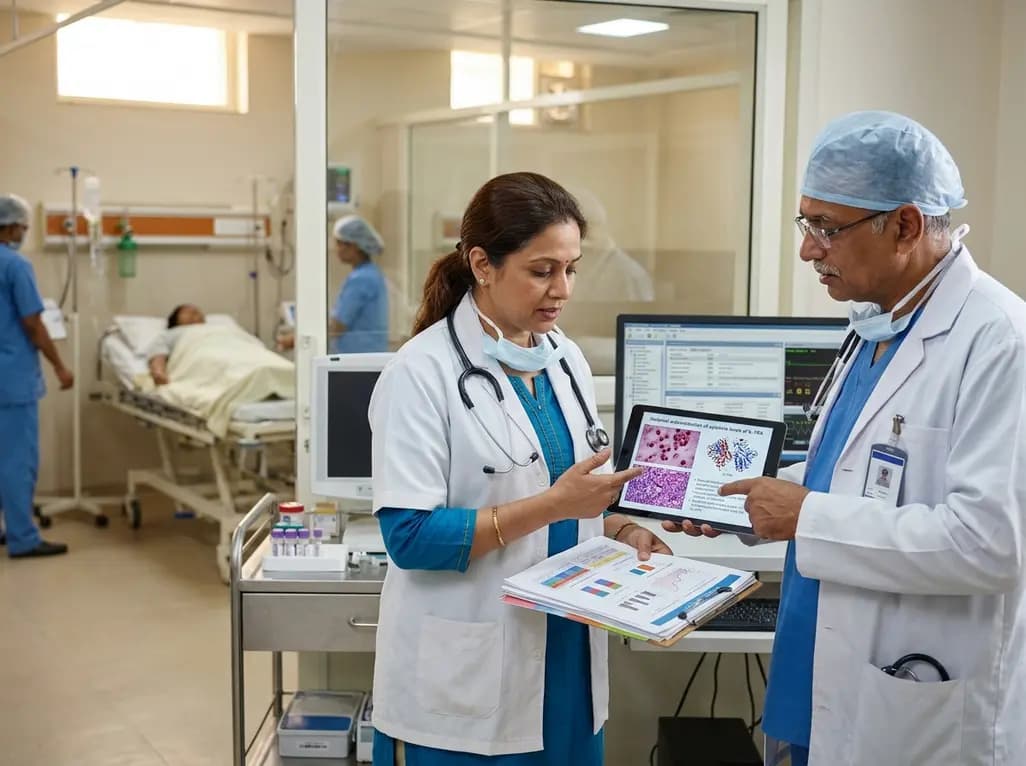
Recent clinical studies reveal maternal autoantibodies targeting IL-1RA as potential triggers for preterm labor, opening avenues for targeted cytokine therapies. Concurrently, new perioperative findings show inhaled cannabis increases propofol requirements during upper endoscopy compared to oral edible consumption.
Today

In high-risk pulmonary embolism complicated by severe anemia and active uterine bleeding, systemic thrombolysis is contraindicated. Large-bore aspiration thrombectomy provides rapid hemodynamic rescue without fibrinolysis, supported by inferior vena cava filter placement and multidisciplinary critical care.
Today

This comparative study evaluates posterior labral tears with and without glenohumeral instability, highlighting distinct demographic patterns, MRI underestimation in stable shoulders, and successful arthroscopic repair outcomes.
Today

A clinical study demonstrates that early intervention with tocilizumab, either as monotherapy or bridged with corticosteroids, achieves significant proptosis reduction and resolves active inflammation in treatment-naive thyroid eye disease.
Today
