.webp&w=384&q=75)

Loading, please wait...
Loading, please wait...

Childhood maltreatment represents a pervasive public health challenge with profound somatic and psychiatric repercussions. Clinicians frequently encounter adult patients who struggle with chronic pain, affective disorders, and diminished functional capacity rooted in early developmental trauma. However, conventional observational studies often fail to distinguish true causal effects from environmental confounding and genetic vulnerability. To resolve these uncertainties, researchers evaluated genomic data from 129,017 participants in the UK Biobank. Their investigation provides robust evidence showing that early adversity fundamentally reshapes lifelong health trajectories.
Researchers examined five distinct subtypes of childhood maltreatment to elucidate their underlying genetic underpinnings. Specifically, the team analyzed emotional neglect, emotional abuse, physical neglect, physical abuse, and sexual abuse. Consequently, the investigators identified moderate to strong pairwise genetic correlations across these adverse exposures. These shared polygenic foundations indicate that distinct forms of childhood trauma share substantial biological overlap. Furthermore, the findings demonstrate that genetic susceptibility to environmental adversity operates through shared neurobiological pathways. Nevertheless, each maltreatment subtype maintains distinct characteristics that influence individual vulnerability. Genetic correlation analyses confirmed that these exposure patterns remain remarkably consistent across sexes. Therefore, the biological liability toward adversity involves complex interactions between inherited predispositions and household environment. Understanding this architecture helps clinicians appreciate that the health burden of trauma reflects systemic biological alterations rather than isolated psychological stress.
Genome-wide association analyses revealed several novel genetic loci associated with specific childhood maltreatment subtypes. In sex-combined evaluations, the researchers discovered a significant genomic locus uniquely tied to sexual abuse. Subsequently, sex-stratified investigations uncovered distinct sex-dependent associations that warrant close clinical attention. For instance, the authors detected one novel locus for sexual abuse in males. In contrast, female-specific analyses identified separate loci associated with emotional neglect and sexual abuse. Thus, inherited risk factors and neuroendocrine vulnerabilities may modulate the reporting and experiencing of trauma differently across genders. In addition, these sex-stratified markers highlight how neurobiological susceptibility pathways differ between men and women. By identifying these specific genomic loci, the research emphasizes that trauma responses involve measurable molecular pathways. Healthcare providers must acknowledge that both biological sex and genetic architecture influence how early stress manifests throughout life.
Beyond identifying genomic markers, the investigators utilized Mendelian randomization to determine whether childhood maltreatment directly causes adult disease. Because Mendelian randomization relies on randomly allocated genetic variants, it minimizes traditional epidemiological confounding and reverse causation. Strikingly, the causal analyses demonstrated that childhood maltreatment significantly increases the risk of multiple high-burden somatic disorders. Specifically, the study proved a causal relationship between early maltreatment and adult low back pain. Furthermore, the analysis established a direct causal pathway leading to migraine headaches and sensorineural hearing loss. Chronic systemic neuroinflammation and dysregulated hypothalamic-pituitary-adrenal axis signaling likely drive these physical manifestations. Consequently, physicians evaluating patients with refractory pain syndromes or early sensory loss should recognize early adversity as a plausible upstream driver. These findings shift the clinical paradigm by proving that physical suffering often originates from early psychosocial injury.
The genetic analyses demonstrated that childhood maltreatment correlates significantly with ten out of 16 high-burden medical conditions after rigorous multiple testing correction. Most notably, Mendelian randomization confirmed a direct causal effect of childhood maltreatment on major depressive disorder. In addition, the study revealed a distressing causal link between early adversity and reduced adult lifespan. The premature mortality observed in exposed individuals highlights the cumulative toll of sustained biological allostatic load. Moreover, early trauma accelerates cellular aging, promotes metabolic dysregulation, and increases healthcare resource utilization. Therefore, the societal and individual costs of unresolved trauma extend far beyond psychiatric morbidity. As a result, early adversity functions as a foundational determinant of life expectancy and overall vitality. Health systems must consequently prioritize trauma-informed care models to interrupt this multi-system biological decline.
These robust genetic findings demand a systemic shift in how healthcare providers screen and manage chronic conditions. First, clinicians must incorporate trauma-informed history-taking into routine adult evaluations. When adult patients present with comorbid depression, intractable back pain, and migraines, practitioners should suspect underlying developmental adversity. Furthermore, pediatricians and family physicians must champion proactive prevention programs to protect vulnerable children. Multidisciplinary interventions that support vulnerable families can effectively interrupt the intergenerational cycle of abuse. In addition, health policies must support trauma-focused cognitive behavioral therapies and social safety nets. By addressing adverse exposures during formative childhood years, health systems can prevent debilitating somatic illnesses decades later. Ultimately, investing in early childhood protection represents a powerful medical intervention for reducing long-term chronic disease morbidity.
Childhood maltreatment alters neuroendocrine regulation, elevates systemic inflammation, and disrupts stress-response pathways. Consequently, these persistent biological perturbations damage tissues over decades. Mendelian randomization proves that these adverse exposures directly elevate the risk for chronic pain, sensory impairment, and depression independently of traditional environmental confounding factors.
The study demonstrated significant causal associations between childhood maltreatment and major depressive disorder, migraine, low back pain, and hearing loss. Furthermore, the genetic analyses established a direct causal relationship between early childhood adversity and a shortened overall lifespan, alongside substantial increases in lifetime healthcare utilization.
Clinicians should implement trauma-informed care when evaluating adults with refractory chronic pain, recurrent migraines, or treatment-resistant mood disorders. Recognizing early maltreatment as an etiological driver allows healthcare teams to incorporate psychotherapy, lifestyle interventions, and social support rather than relying solely on pharmacological disease management.
Disclaimer: This content is for informational and educational purposes only and does not constitute medical advice, diagnosis, or treatment. It is intended to support, not replace, the relationship between healthcare professionals and their patients. Clinicians should use their independent professional judgment when evaluating and treating patients. Pharmaceutical products, dosages, and treatment protocols should be verified against current medical literature and manufacturer prescribing information. Healthcare practices and regulatory standards may vary by jurisdiction. Refer to the latest local and national guidelines for clinical practice.
References

Read summarized clinical updates, watch expert medical content, and earn CME certifications right from your smartphone.
Open your smartphone camera to scan and install.





A landmark UK Biobank study demonstrates that childhood maltreatment has distinct genetic architectures and causally increases the risks of depression, migraine, low back pain, and hearing loss while reducing adult lifespan.
Today

A North Texas pilot study reveals that combining virtual physician consultations with in-person house calls safely manages adult pneumonia. By utilizing CRB-65 severity scores, clinicians effectively triaged patients, providing home-based recovery while directing higher-risk individuals to emergency care.
Today

A quasi-experimental study demonstrates that culturally tailored educational interventions significantly boost HPV knowledge and vaccination intentions. These findings provide actionable strategies for healthcare providers in India to overcome vaccine hesitancy and advance cervical cancer prevention.
Today

A comprehensive meta-analysis evaluates the association between Body Mass Index and outcomes following abdominal aortic aneurysm repair. Discover how overweight and obesity correlate with lower mortality while underweight status confers heightened risk, challenging conventional preoperative risk stratification.
Today

The SOLARIO trial shows that a short course (≤7 days) of systemic antibiotic therapy is noninferior to long courses (≥4 weeks) in orthopedic infections treated with local antibiotic carriers, with significantly fewer adverse events.
Today
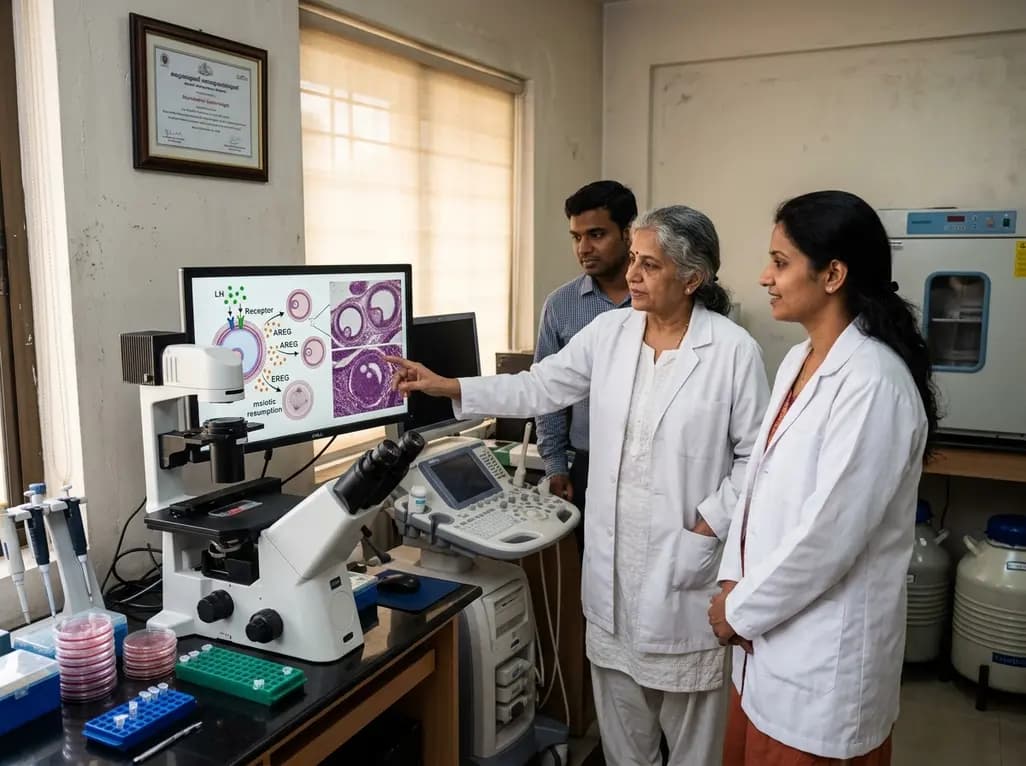
New research reveals that preovulatory follicles communicate via LH-induced paracrine signaling. Diffusible EGF ligands epiregulin and amphiregulin coordinate oocyte meiotic resumption across neighboring follicles, challenging traditional concepts of follicular autonomy.
Today
