.webp&w=384&q=75)

Loading, please wait...
Loading, please wait...

Health authorities in Ernakulam have recently detected a significant Chikungunya outbreak in Kerala. Specifically, clusters emerged in Kunnukara and Chengamanad panchayats with nine confirmed cases. Furthermore, officials identified nearly 19 suspected cases across these specific local regions. Consequently, medical professionals must remain alert regarding the clinical presentation of this viral disease. Additionally, the Kerala health department has intensified surveillance to contain the spread effectively.
Clinical symptoms include sudden high fever and debilitating joint pain, especially in the hands and ankles. Patients may also present with muscle pain, headache, and skin rashes. Therefore, physicians should prioritize early diagnosis through laboratory confirmation. However, they must caution patients against self-medicating with painkillers without a formal prescription. Acetaminophen remains the preferred first-line treatment until clinicians can effectively rule out dengue fever. Adequate hydration and rest under mosquito nets are essential for recovery.
The Kerala Public Health Act 2023 now mandates strict mosquito control measures across the state. For instance, authorities can impose fines up to Rs 10,000 for identified breeding sites. Consequently, healthcare providers should educate patients on eliminating stagnant water around their homes. Institutions and offices must also observe weekly dry days to reduce mosquito populations. Collective action remains vital to mitigate the current health risk effectively. Moreover, early reporting of symptoms can prevent larger community outbreaks during the summer season.
Q1: What are the primary diagnostic indicators for Chikungunya?
A1: High fever and severe joint pain in the extremities are the hallmark signs. Some patients also develop maculopapular rashes during the acute phase.
Q2: How can transmission be prevented in infected patients?
A2: Patients should rest under mosquito nets, even during the daytime. This prevents mosquitoes from biting them and spreading the virus to others.
Q3: Why is self-medication discouraged for Chikungunya patients?
A3: Taking non-steroidal anti-inflammatory drugs (NSAIDs) can be dangerous if the patient actually has dengue. Clinicians must rule out dengue before prescribing certain painkillers.
Disclaimer: This content is for informational and educational purposes only. It does not constitute medical advice or replace professional judgment. Refer to the latest local and national guidelines for clinical practice.
References

Read summarized clinical updates, watch expert medical content, and earn CME certifications right from your smartphone.
Open your smartphone camera to scan and install.





Ernakulam identifies Chikungunya clusters in Kunnukara and Chengamanad. Health officials urge vigilance and adherence to clinical protocols for management....
6 months ago
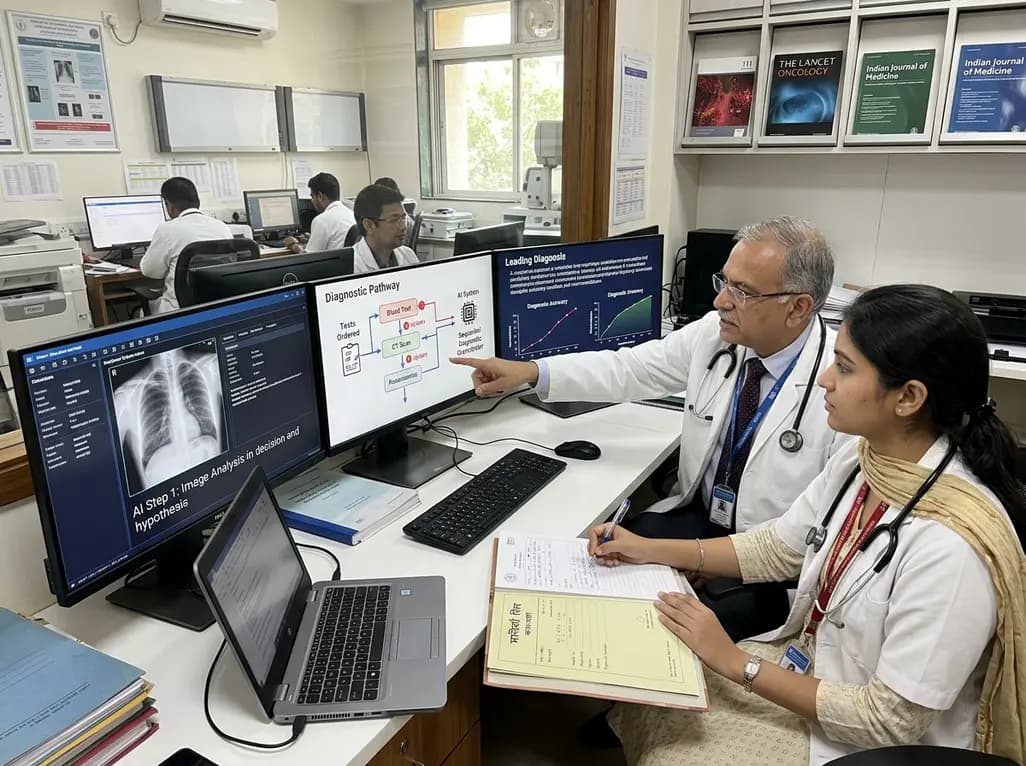
A breakthrough peer-reviewed study demonstrates that a sequential AI diagnosis system can mirror real-world clinical reasoning. By ordering stepwise tests and updating hypotheses dynamically, this multi-agent orchestrator achieved superior diagnostic accuracy while reducing investigative costs.
Today

A prenatal case highlights severe glutaric acidemia type II presenting as bilateral hyperechoic cystic kidneys at 18 weeks. Whole-exome sequencing revealed a novel homozygous ETFDH frameshift variant, demonstrating the power of rapid genetic testing in fetal renal anomalies.
Today

Review how tailored exercise programs benefit frail older patients with heart failure. Explore pathophysiological mechanisms, individualized training prescriptions, and strategies to overcome adherence barriers in clinical practice.
Yesterday

This comparative study evaluates posterior labral tears with and without glenohumeral instability, highlighting distinct demographic patterns, MRI underestimation in stable shoulders, and successful arthroscopic repair outcomes.
Yesterday

A clinical study demonstrates that early intervention with tocilizumab, either as monotherapy or bridged with corticosteroids, achieves significant proptosis reduction and resolves active inflammation in treatment-naive thyroid eye disease.
Yesterday
